Blog

International

Thailand’s Ancient Capitals

Sukhothai (The Dawn of Happiness)

A long bus ride (the one where we heard in detail the history of the Rama Kings!) took us 250 miles south of Chiang Rai to the Sukhothai Historical Park, a 45 square mile UNESCO World Heritage Site encompassing the ruins of a monumental ancient Buddhist city that rivals Angkor in Cambodia. A small Khmer military outpost built in the late 12th or early 13th century Sukhothai was, originally, similar in design to Angkor, with Hindu temples and intricate canals.

Over a period of about three hundred years, 11th-13th centuries, people from the region which is now south central China gradually migrated into the northern and central regions of what is now present day Thailand. These were the Tai people, called “Siam” by outsiders. They intermarried with the local inhabitants and established tiny city-states subordinate to Khmer rule in the areas in and around Sukhothai. As the Khmer Empire declined owing to years of warfare with their neighbors to the east, the Tai moved quickly to assert their autonomy and then their independence from their Khmer overlords.
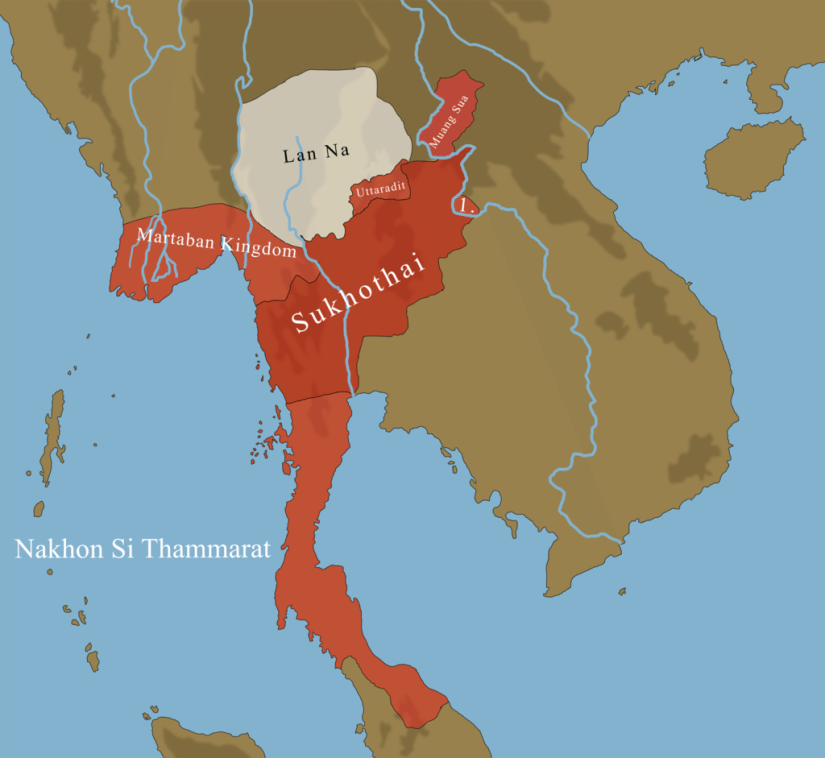
The Kingdom of Sukhothai, ~1300 (Thames Mapping, CC BY-SA 4.0 https://creativecommons.org/licenses/by-sa/4.0, via Wikimedia Commons)

In 1238 a feudal lord, later known as King Si Inthrathit, united several city states into a single kingdom at Sukhothai and successfully defended it against the Khmer. A son of his, King Ram Khamhaeng, consolidated the kingdom, expanded its boundaries to the south and east, established Theravada Buddhism as the official religion and initiated trade with China.

For nearly 200 years Sukhothai flourished, partly because of its central location between the Khmer Empire to the southeast and the Burmese Kingdom of Pagan to the northwest. Although its diverse economy was based on agriculture, it became famous for the production of high quality glazed ceramics and exported them throughout Southeast Asia. It was also a center for the arts.

Under royal patronage Buddhism thrived. By the end of the 14th century Sukhothai was one of the largest Buddhist centers of the world. Buddhist monks were recruited from distant lands to live in the city with its exquisite monumental structures. Architects, engineers, skilled artisans came to build and decorate its temples and monasteries. The paintings, carvings and architecture associated with these temples and monasteries have a unique grace and eloquence, a style so distinct from Khmer and other regional styles that it is given its own name by art historians: “Sukhothai style.”
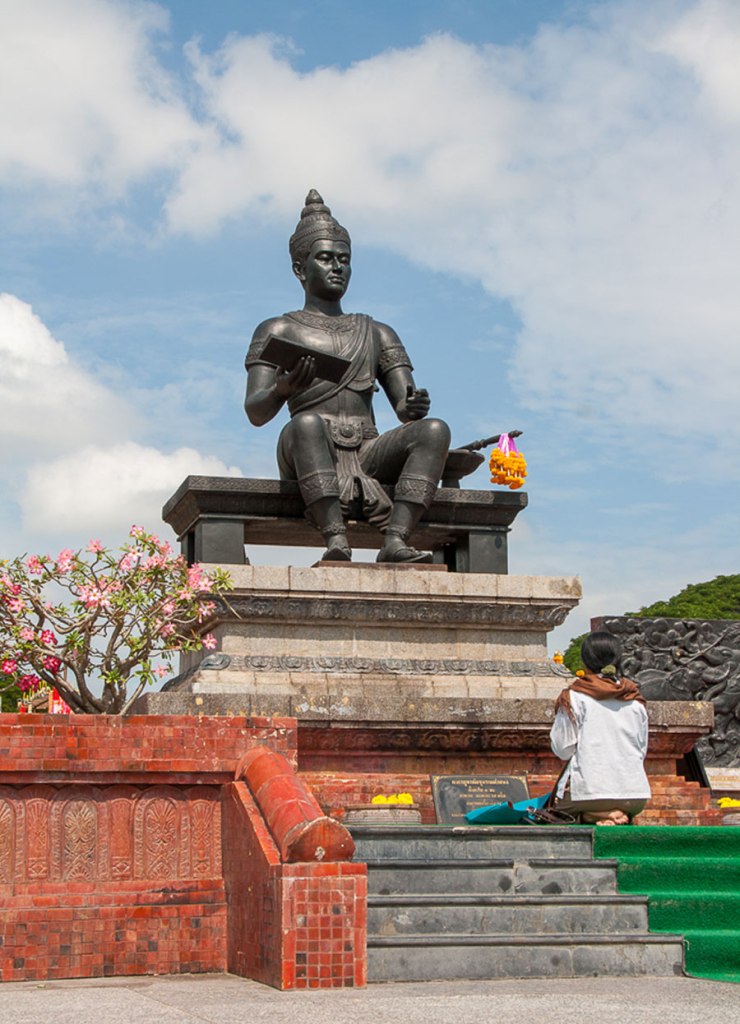
Kind Ram Khamhaeng, creator of the Thai alphabet

King Ram Khamhaeng is considered to be the author of the Thai alphabet. Hundreds of stone inscriptions found at the site give detailed accounts of the economy, religion, social organization and governance of the Kingdom of Sukhothai. It’s political and administrative systems are considered uniquely egalitarian for the time.

The prosperity and social harmony enjoyed by the inhabitants of Sukhothai derived in large measure from its amazing and innovative accomplishments of hydraulic engineering. Sophisticated dams, reservoirs, ponds and canals were created; water was controlled during times of drought or flooding. This management of water on a large scale served a variety of agricultural, economic and ritual functions. In this respect, Sukhothai is very akin to Angkor.

So much of what is considered uniquely Thai in art and architecture, language and writing, religion and law, was invented and developed in the Kingdom of Sukhothai that modern day Thais revere it as the birthplace of the Thai state. Sukhothai was its first capital city and King Ram Khamhaeng the Founding Father of the Thai Nation. In Sanscript, Sukhothai means “the dawn of happiness.” School children still memorize lines from a stone inscription dated 1283:

This land of Sukhothai is thriving. There are fish in the water and rice in the fields. The lord of the realm does not levy toll on his subjects. They are free to lead their cattle or ride their horses and to engage in trade; whoever wants to trade in elephants, does so; whoever wants to trade in horses, does so; whoever wants to trade in gold and silver , does so.


More images of Sukhothai ruins.

Ayutthaya (1351-1757)

After the death of King Ram Rhamhaeng, its vassal kingdoms began to break away from the Sukhothai mandala and a new rival Thai state to the south, Ayutthaya, began to challenge its political supremacy. Although by 1378 Sukhothai acknowledged itself a vassal state to this new power it continued to be ruled by local aristocrats and the two states merged only gradually over the next 150 years. Sukhothai’s rigorous military tradition, centralized administration, architecture, religious practice and language significantly influenced those of Ayutthaya.

The patchwork of city states that was the early Ayutthaya kingdom was centralized (1455) after its expansionist policies rendered it too large to be governed by the mandala system. By the mid 15th century it had acquired not only Sukhothai (and, in the process, sacked Angkor, thus ending its 600 years of existence) but a portion of the Malay Peninsula. Later it incorporated parts of Burma, Cambodia and the northern Thailand cities (Lan Na kingdom).
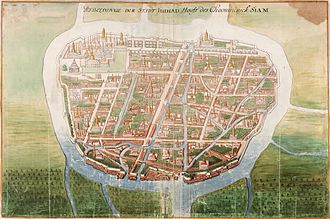
Painting of the city of Ayutthaya by a Dutch cartographer, ~1665

The city of Ayutthaya was situated at the head of the Gulf of Siam on an island surrounded by three rivers connecting the city to the sea, but far enough upstream to be protected from attack by the sea going warships of other nations. Halfway between India and China, it became an important center of trade and diplomacy at the regional and global levels. Europeans, initially the Portuguese but later Dutch, French, and English trading companies were given permission to trade in the kingdom. Enclaves of foreign traders and missionaries were established. Foreigners from many lands served in the civil and military administrations. The result was one of the world’s largest (probably a million inhabitants at its peak) and most cosmopolitan urban areas of its time.

As befits a wealthy, cosmopolitan connecting point between the East and the West, the arts – performance, literature, architecture – flourished in Ayutthaya. Theatrical performances of classical drama and dance (khon) originated in the Royal Court and were initially performed only there, but later spread and importantly influenced the development of the art in all of mainland Southeast Asia. Although in ruins, the large temples and monasteries are testimony to the technological skill of their builders. They were decorated with the highest quality of crafts, an eclectic mixture of regional art styles with those from India, Persia and Europe. This fusion of styles in art and architecture has characterized succeeding Thai eras.
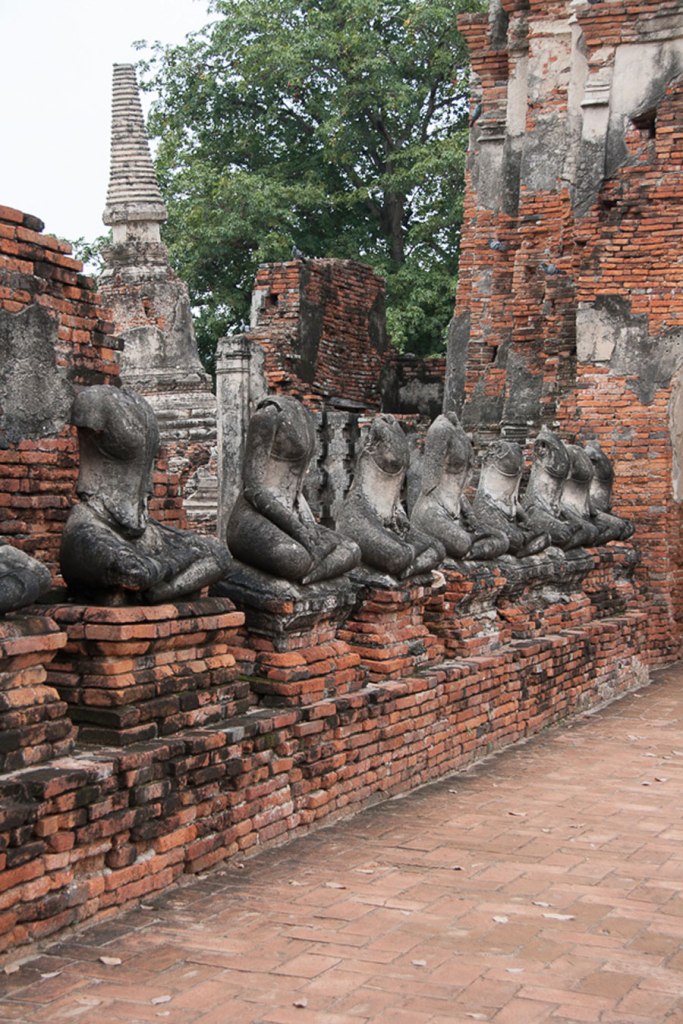
At the ruins of Ayutthaya are row upon row of burned, headless Buddha statues. The Burmese believed that beheading Buddha images reduced the power of their enemies.

The Historic City of Ayutthaya is another UNESCO World heritage site. The ruins here are really ruins, all that remains after the Burmese sacked and burned the city for seven days and seven nights in 1767. Centuries long wars with Burma (now Myanmar) and nearly continuous dynastic struggles finally destroyed the Ayutthaya Kingdom. It’s art treasures, the libraries containing its literature and the archives of historical records were almost totally destroyed. What is known about the kingdom and its 34 rulers has been gleaned from old maps, such as the one shown above, and accounts of foreign visitors.

More images of Ayutthaya ruins.

International

Thailand’s Northern Cities II

Chiang Rai

Chiang Rai is the northernmost major city in Thailand, the capital of Chiang Rai Province, a “golden triangle” area between Laos and Myanmar (formerly Burma). Once a hub of opium production, it is now a transit point for Rohingya refugees from Myanmar. The city, founded in the late 13th C., was part of the Lanna Kingdom for centuries. It was conquered by and remained under Burmese rule for 200 years before becoming a vassal state of Siam, then finally incorporated into Thailand in 1933.

Several mountain ranges cross northern and western Thailand and extend across the borders with Laos and Myanmar; they are essentially the foothills of the Himalayas. In the higher elevations live a number of ethnic minority groups referred to as the “hill tribes.” They have traditionally been subsistence farmers of the “slash and burn” school, leaving when the land is depleted. These isolated communities are culturally and linguistically diverse. Following the pattern of hill people across the globe, these are poorer, disadvantaged groups compared with the dominate Thai who occupy the fertile valleys and they are often treated as outsiders, lacking rights in housing and legal status.

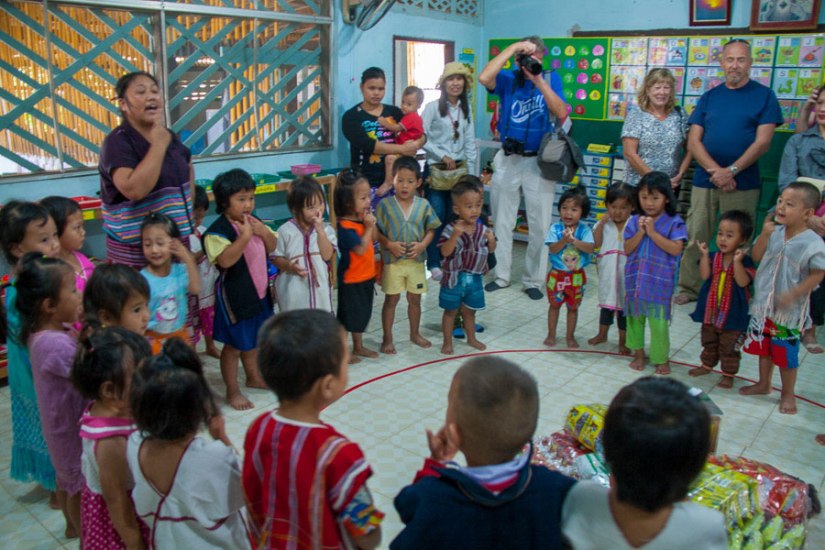
As part of World Spree’s “local connections program” we briefly visited a tiny hill tribe village outside of Chiang Rai spending most of the time at a preschool that was clearly in need of the support we indirectly provided. Cultural tourism has become an increasing source of income for the hill tribes. The village itself offered little in the way of attractions or shopping opportunity- the usual source of tourism revenue – but one enterprising woman donned traditional (Akha, I think) dress to pose for photographs and earn a few baht from the visitors. Click on an image to expand it.


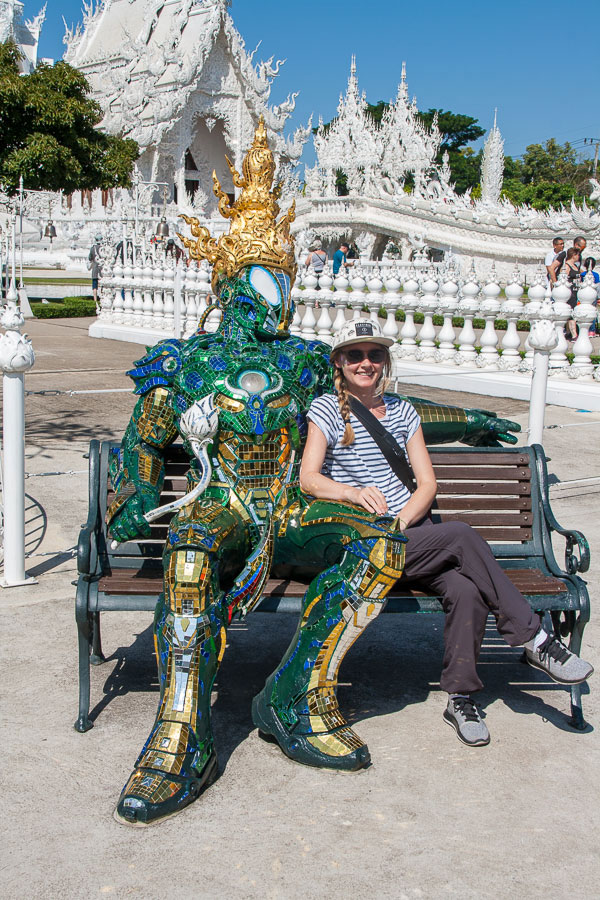
At the other end of the spectrum is Wat Rhon Khun which Wikipidea describes as ” a privately owned art exhibit in the style of a Buddhist temple.” Popularly known as The White Temple it is a fascinating collection of modern Thai Buddhist architecture and art, the life long project of a wealthy Chiang Rai artist, but it is not clear whether it is a monument to Buddha or to the artist.


The Emerald Buddha

Thailand is about 95% Buddhist and there are many statues of the Buddha throughout the country: large and small, ancient and modern, simple and elaborate, private and public. Only one, however, is considered to be the sacred palladium of Thailand, a potent religious symbol that gives legitimacy to the king and protection to the nation. It is a relatively small (19” wide x 24″ high) statue of the meditating Buddha seated in the half lotus position, made of a semi-precious stone, perhaps jasper or jade.

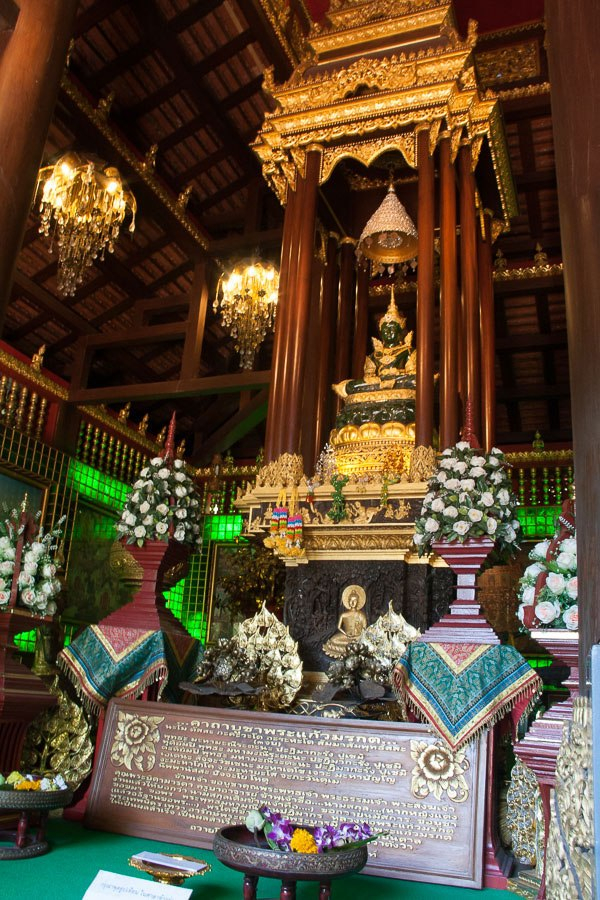
This replica of the Emerald Buddha is in Chiang Rai where the original was discovered.

The older a Buddha image is the more power it is believed to have. The Chronicle of the Emerald Buddha is a text that traces the mythology and fabled travels of the image from the beginning of the common era, but its emergence as a historical reality is dated 1434. After lightening destroyed the chedi (stupa) of a temple in Chiang Rai a Buddha statue was found among the ruins. An ordinary looking Buddha covered in stucco, it was placed in the temple along with many other such statues. Some months later the head monk noticed that under the chipped stucco was a brilliant green color and ordered the stucco to be chipped away from the entire statue. It was seen to be made of one solid piece of green crystal without marks or imperfection. The Buddha quickly became an object of devote veneration and was coveted by kings, moved from one capital to another as their fortunes rose and fell, warring with each other and neighboring kingdoms. It was taken to Bangkok by the first king of the current Chakri Dynasty, Rama I, in 1784 who built a temple to house it on the site of the Grand Palace. It still resides there, in Wat Phra Kaew, where it continues to serve as a significant religious-political symbol legitimizing the power of the king, its caretaker.
I did not see the authentic Emerald Buddha but a replica residing in Wat Phra Kaew, Chiang Rai, where the original image was found. (The name of the temple was changed from Wat Pa Yah, meaning bamboo forest temple, when the Buddha was discovered.) The copy, which is very close but not an exact replica of the original, was carved from Canadian jade in China and installed in 1991 in honor of the 90th birthday of the Princess Mother. The name of the new image translates to Chiang Rai Jade Buddha.

More images from Chiang Rai and the White Temple here.

International

Thailand’s Northern Cities I

Chiang Mai

Chiang Mai, in northern Thailand, is the country’s second largest city. In the 14th century it was the capital city of a powerful Lanna Kingdom, an Indianized state, which ruled the area from the 13th to the 18th century and left a strong cultural heritage in language, food, art, architecture and music. Most memorable were our visits to a sacred temple situated on a hill overlooking the city and the Elephant Conservation Center in Lampang.

Wat Phra That Doi Suthep

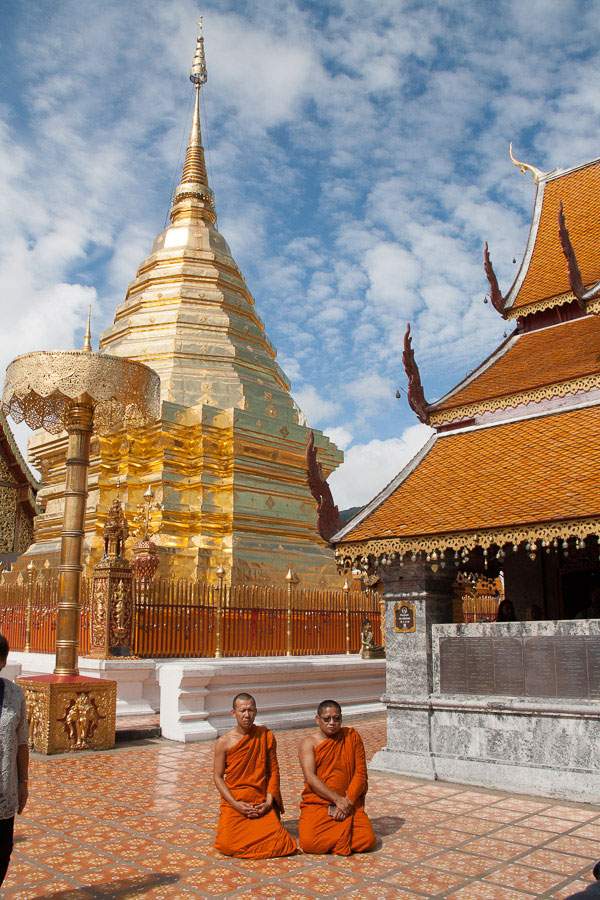
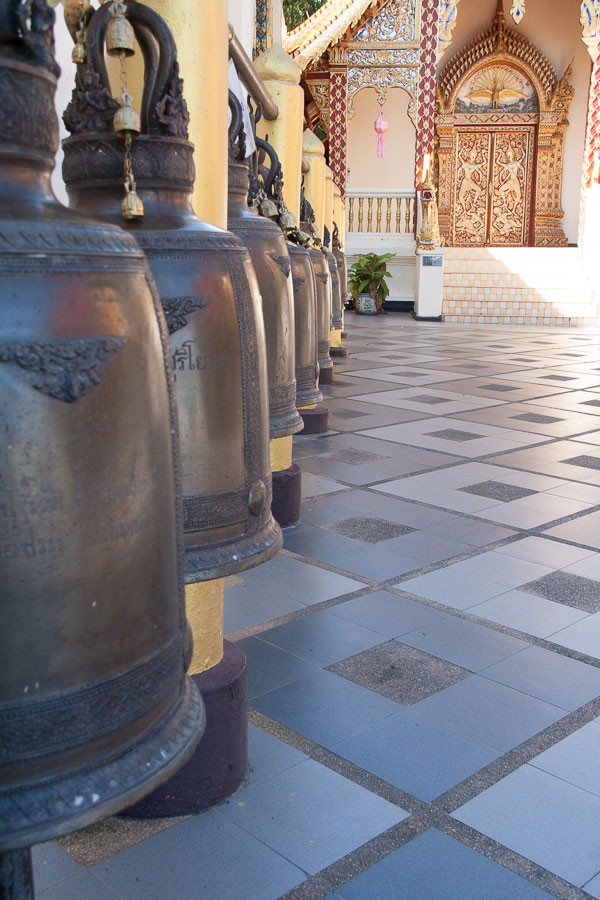
This temple is considered one of the most sacred sites in Thailand where “pilgrim-tourists” come from Thailand, Singapore, China and India at a rate of about 120,000 per month. According to popular legend the temple was built ~1383 to hold a relic of the historic Buddha. A piece of the Buddha’s shoulder bone was placed on the back of a white elephant who was then released into the jungle. The elephant climbed Suthep mountain, trumpeted three times at the top and then dropped dead. This was interpreted as an omen and the first stupa was built. Over time many more holy shrines, pagodas, statues and bells were added and it is now a complex and extravagant site. Phra implies Buddha and That means a relic. Doi is the Northern Thai word for mountain, so the name of the temple tells what is there and where it is located.


Elephant Conservation Center

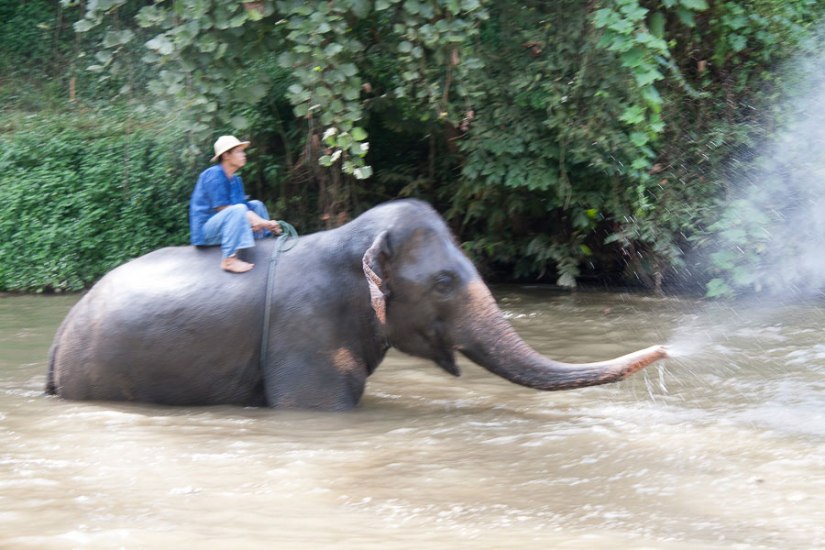
Elephants have been ingrained in Thai culture for centuries: as weapons of war, symbols of wealth, power and moral authority, a key form of transport, and laborers in the teak logging industry. White elephants are considered sacred and may not work, be sold, given away or killed and are thus very expensive to maintain. Occasionally a Thai king would gift a white elephant to an enemy knowing that their expensive care would eventually bring financial ruin. This may be the origin of the idiom “white elephant” to designate something whose expense is out of proportion to its usefulness or value.

In 1900 there were an estimated 100,000 elephants in Thailand and the country had ~90% forest cover. In 1989, when logging was finally banned (the elephants were used to destroy their own habitat!) the forest cover was 28% and today there are only 3000-4000 elephants in the country half of which are living in captivity.

When logging was banned 70% of the domesticated elephants and their mahouts were out of work. Today tourism is the only viable source of income for them. Elephants require 300-500 pounds of food a day which, along with care and medical treatment, can cost their owners $500- $1000 a month. To make money mahouts offer elephant rides and elephant training classes to tourists. But carrying a human on its back is not natural for an elephant and for this to happen the baby elephant must go through a brutal process known as Phajaan (“crushing the spirit”) in which they are tortured until broken into submission.

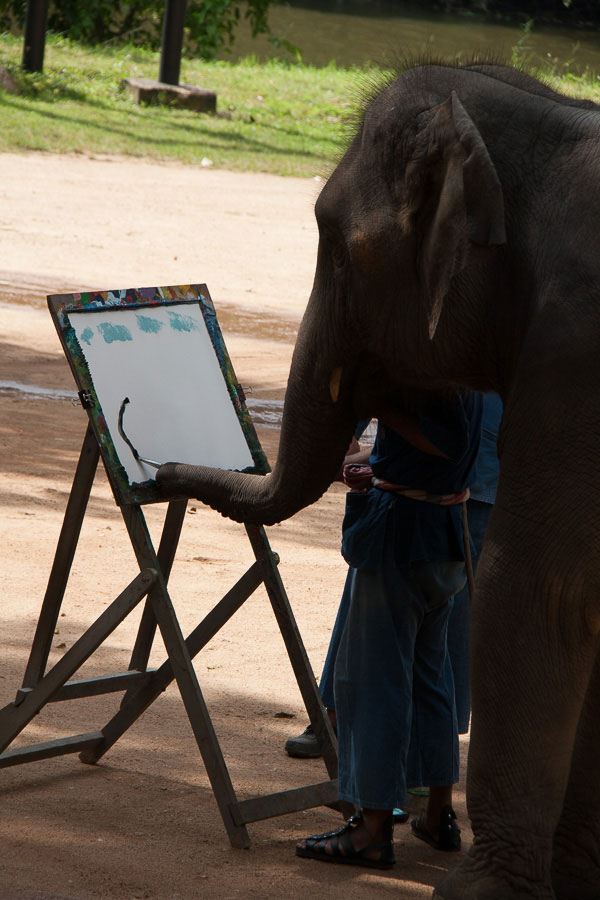
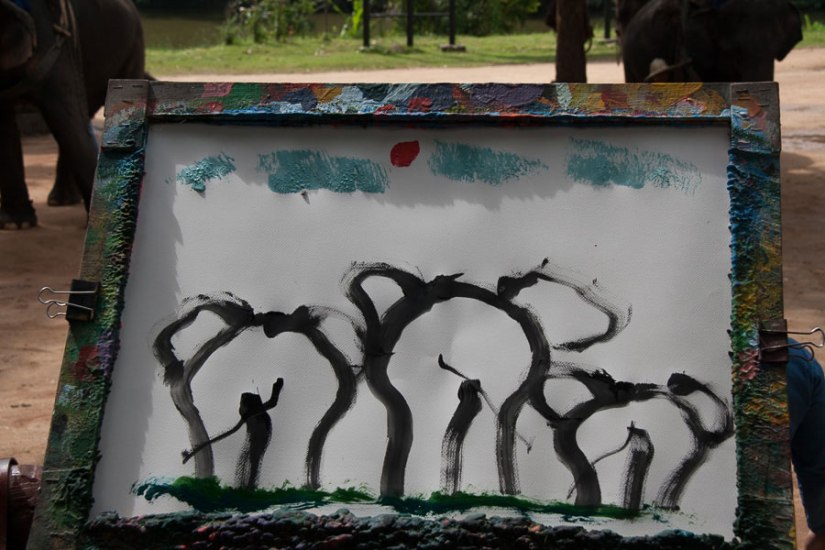
There are a growing number of ethical sanctuaries in Thailand and other parts of the world. Unfortunately the one we visited was not among them. Although it was fascinating to watch the elephants bathing with their mahouts and trainees (tourists) and see them perform traditional logging tasks not to mention paint amazing images of flowers and other elephants, I felt sad at the realization that these magnificent creatures were reduced to vaudevillian acts to survive.

Find out more about Chiang Mai here.

International

Thailand’s Capital City

In 2009 I traveled to China with a company called China Spree, a small outfit formed by Chinese folks who had settled in Seattle and still had contacts in China. I’d heard good things about them from a friend and the price was right. It was a marvelous trip and I have devoted a post and related pages to it elsewhere. Fast forward seven years and China Spree has grown into World Spree, now offering trips to several countries in southeast Asia, starting with Vietnam, as well as China.

I was not particularly interested in traveling to Vietnam. It seemed like a too long, expensive plane ride and the aftermath of the war had no special attraction for me. But when World Spree announced a new tour in 2016, at introductory prices, to Thailand I took notice. The clincher was three days at the end of the Thailand trip for Angkor Province in Cambodia. I have been fascinated with Angkor for a long time; it was one of my must see places in the world. Find out more about Angkor in the forthcoming pages and posts about Cambodia.

Bangkok

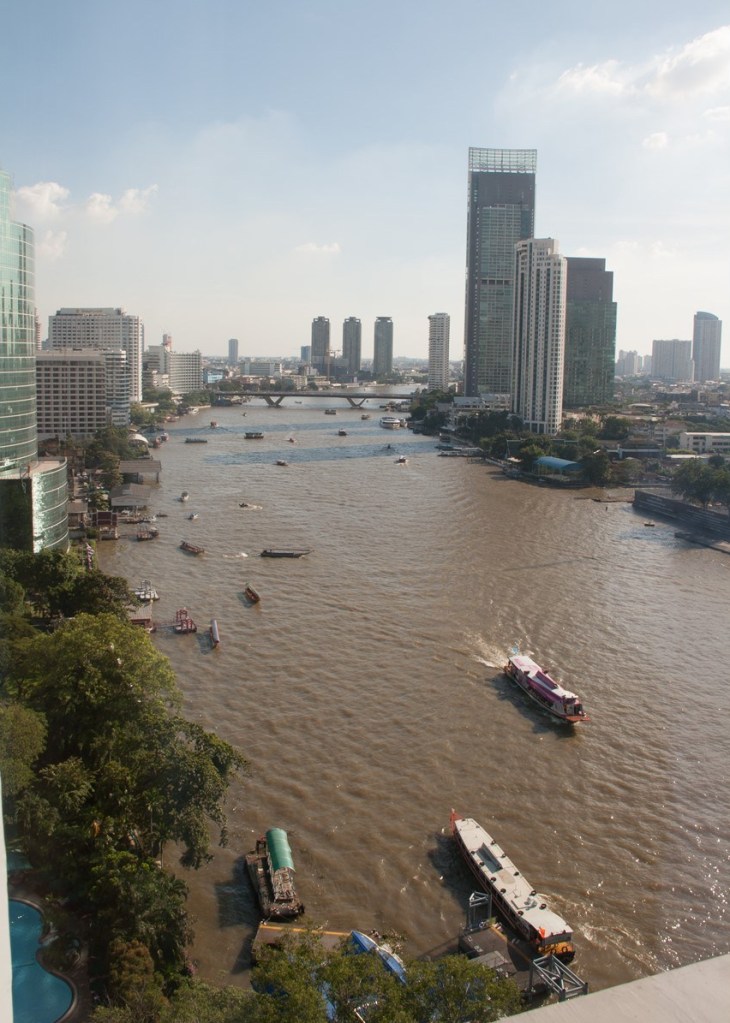
The Chao Phraya River runs through Bangkok and is a busy commercial thoroughfare.

Traveling to Bangkok via Beijing was indeed a grueling plane journey replete with lost luggage, missed tour guides and initial disorientation, but rest, good food and good company restored our spirit of adventure. Several days exploring this humming capital city were followed by a short plane ride to the northern city of Chiang Mai, then a bus journey to Chiang Rai and down the spine of Thailand to Sukhothai and Ayutthaya, the Thai analogs to Cambodia’s Khmer ruins.

Bangkok, whose given name means City of Angels, became the fourth capital city of Thailand at the beginning of the Chakri Dynasty in the 18th century. About 12% of the country’s nearly 70 million people lives there.

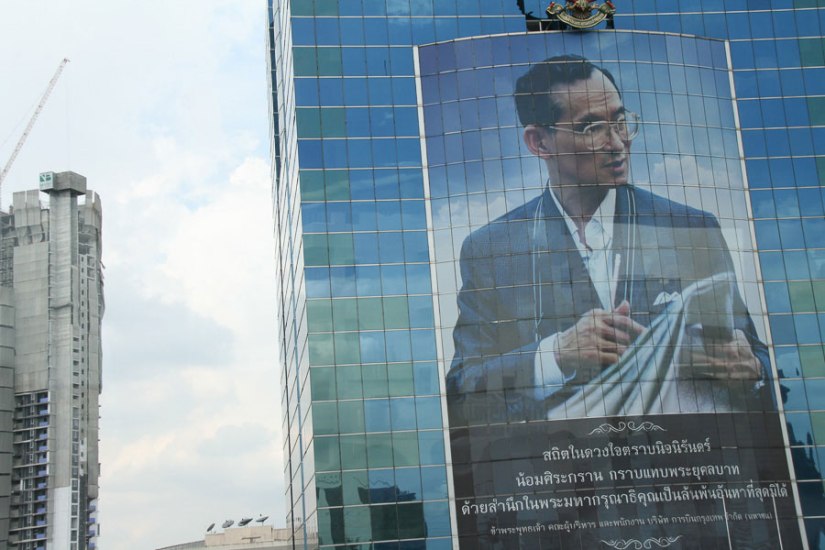
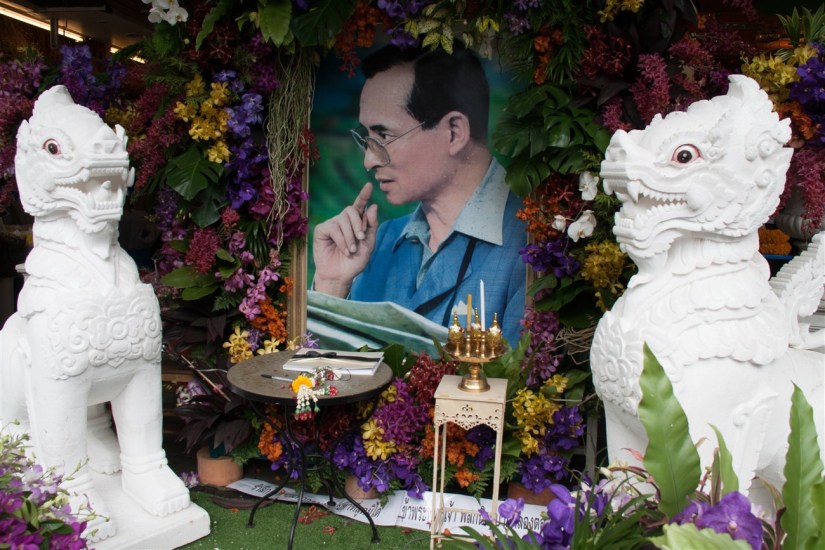
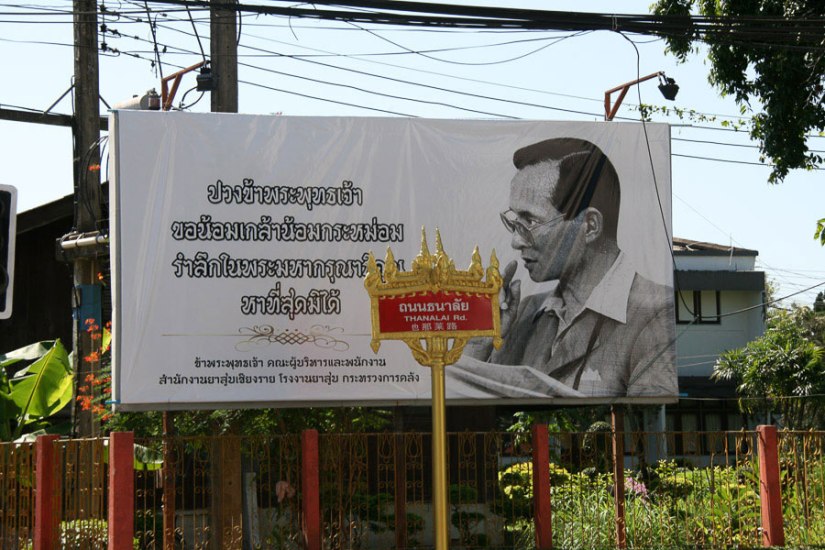
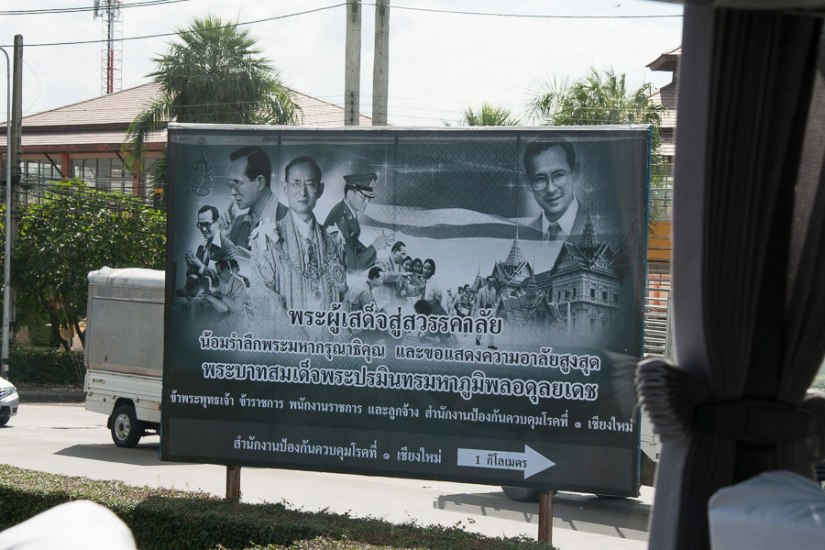
One could not help but notice ubiquitous images of the late king, Bhumibol Adulyadej (Rama IX), who had died in Oct. 2016, the month before we arrived, and was officially mourned for a year. His images were everywhere in the city but also in the countryside. He had reigned as king for 70 years, the world’s longest reigning monarch when he died. This monarch was respected, revered even, by many Thais. Criticism of the royal family, however, is against the lese-majeste laws in Thailand and critics may be (and have been) jailed for 3-15 years.
We were treated to an in depth history of the Chakri Dynasty (Rama I through IX) on the lengthy bus ride from Chiang Rai to Sukhothai. Afterward I asked our guide if she could give us more information about the ordinary people of Thailand. She seemed puzzled by the request and never did.


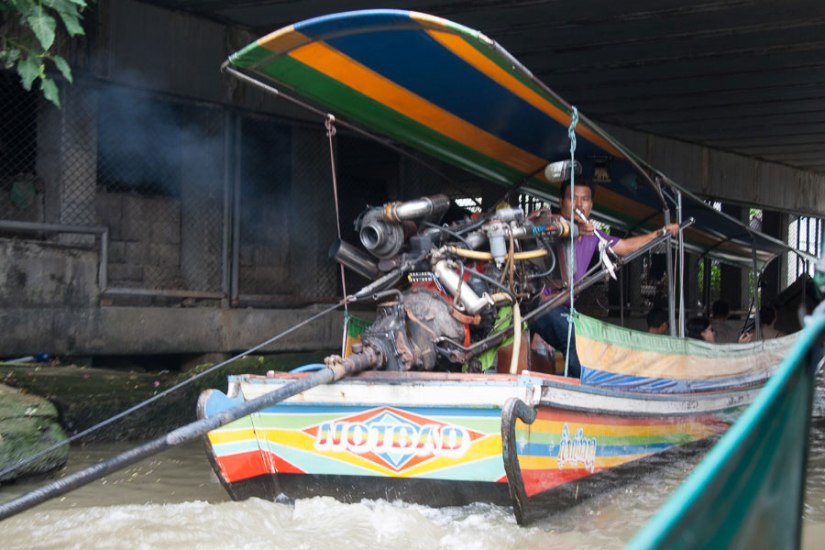
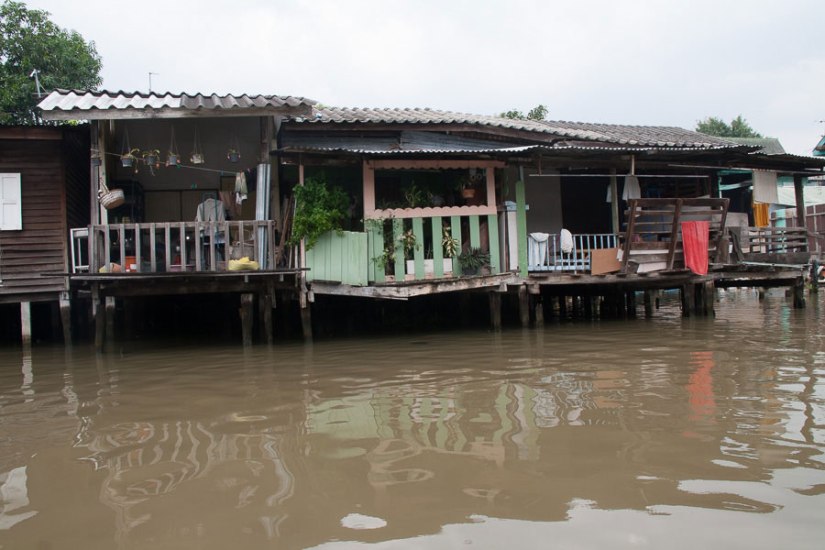
Bangkok is also called “the Venice of the East;” its once extensive network of canals, known as khlongs, reminding European visitors of the Italian city. Historically canals crisscrossed the city. Life revolved around these canals: goods moved along them, neighborhoods lined each side and they were the primary means of getting around. Today the relatively minor network of canals are no longer critical to the city’s trading activities. Like Venice, tourism is now the primary business activity along the canals.

Check here for more images of Bangkok.

General

Taking Off

This post marks the launch of my second web site which you can learn about here. Not all of the pages in the Travel Galleries are populated now but will be over time. Over the next few weeks several Trip Posts will be published and their attendant gallery pages accessible via links in the posts. After that periodic posts will alert you to new trips and photos. In this dismal time of restricted travel perhaps this site will help remind you of the marvelous worlds that await our exploration.

International

China

A Glimpse of China

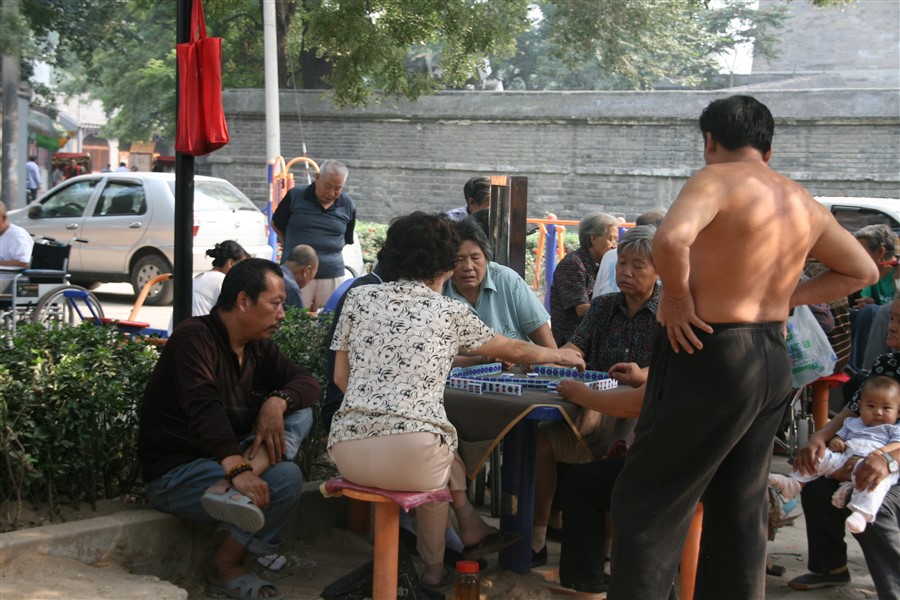
  I traveled to China in 2009, the 60th anniversary of the establishment of the People’s Republic of China. I found it to be an amazingly vital country, building and business going on everywhere. I realized that, despite intellectually understanding otherwise, I still had a sense of China and the Chinese people that was all about Mao: Great Leaps Forward, Cultural Revolution, Red Guards, everyone dressing the same in blue high collared tunic. They are so beyond that! The streets are full of people dressed like anywhere here, going about their business with energy and purpose. The traffic is intense and the city roadways are modern and impressive.

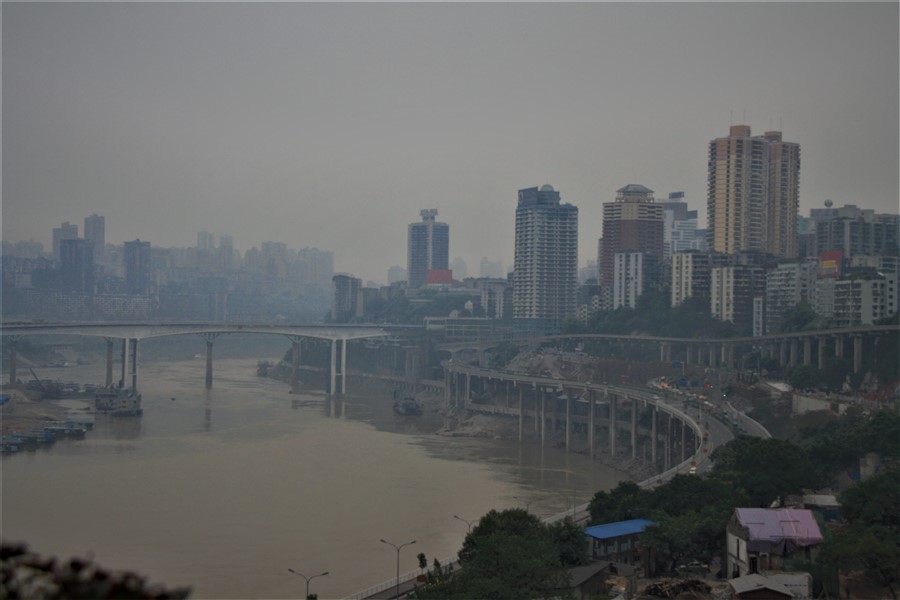
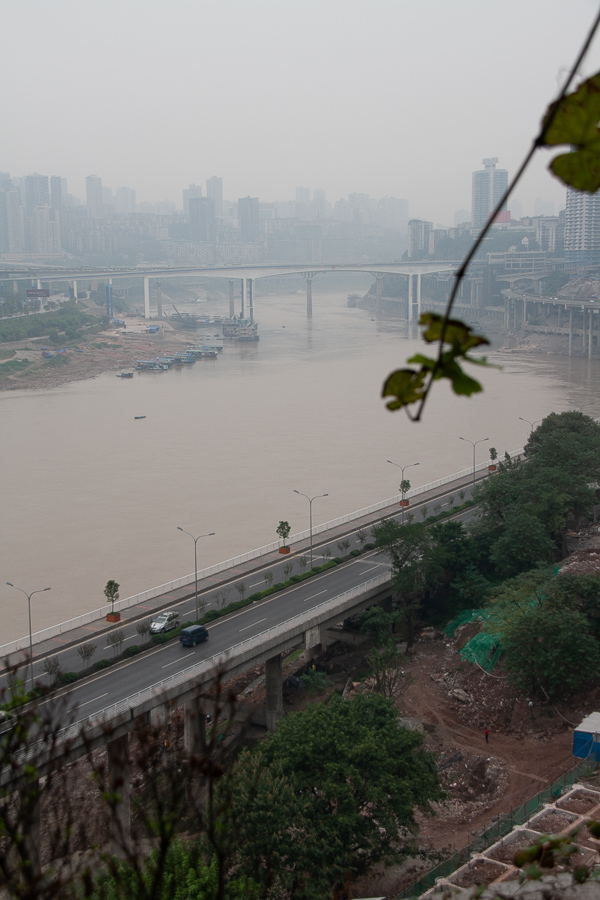
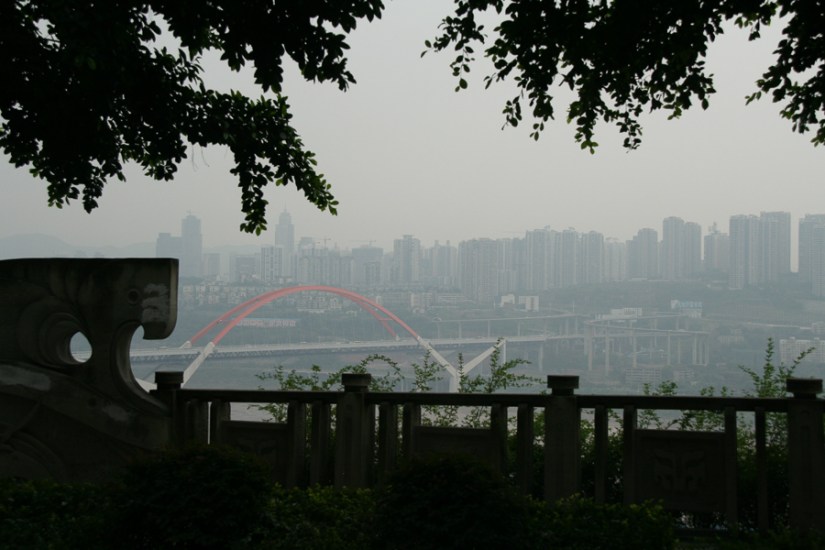
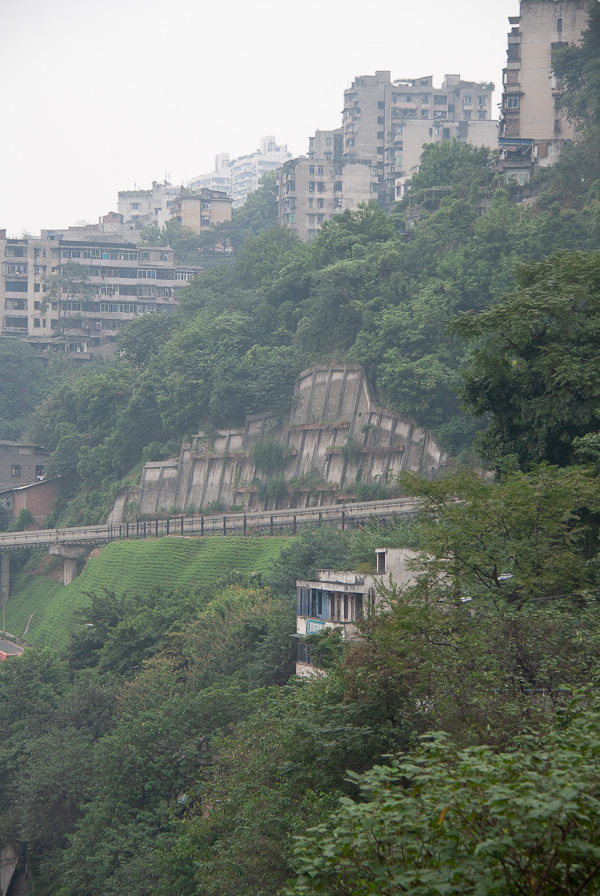
This was, as I anticipated, a very urban trip. The smallest city we were in, Guilin (“the Miami of China”) in south central China, was 600,00 people. The rest were 7, 13, 8, 17 million people. One city, Chongqing, was listed as having 32 million people and I could not imagine why we had never heard of it before. It turns out the municipal government “governs” 32 million people in an area 1/4 the size of California. The concentrated city itself was only(!) 7 million. This city reminded me a lot of Pittsburgh, very hilly and with two rivers coming together. Lots of bridges, few bicycles.


We went to many popular tourist sites and most of the tourists were Chinese. Places like the Forbidden City, the Great Wall, the Terracotta Warriors site in Xi’an, the Three Gorges Dam, are clearly very popular places with the Chinese.  And while there were lots of people at these places and in the city streets I never got that sense of being overwhelmed by a flood of people carrying me along, as I experienced in Tokyo many years ago.

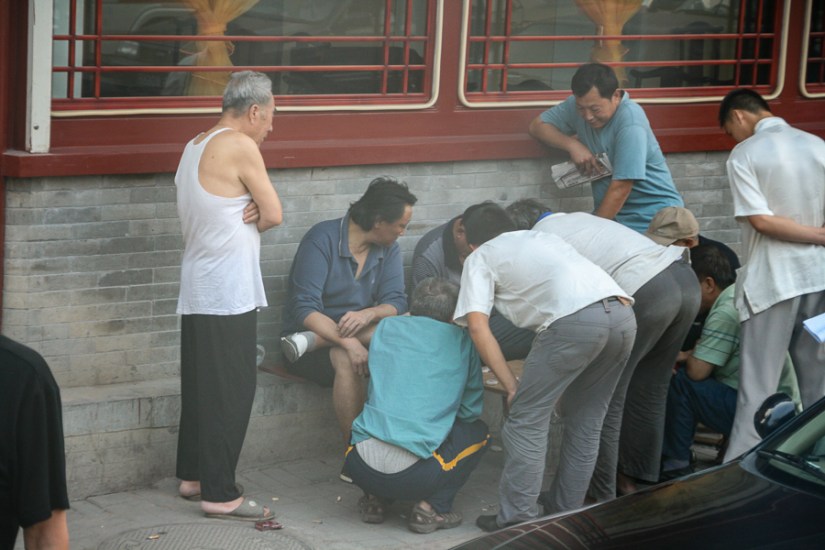
We also went to places were there were no Chinese tourists, like a Hutong in Beijing. You may have read about these communities when many of them were being torn down in preparation for the 2008 Olympic games. They are blocks of pretty shabby, ill built courtyard houses where extended families live,  7 or 8 of them usually sharing one kitchen and one bathroom. They were as close to a slum as we saw and they are gradually being replaced with high rise apartment buildings, much to the displeasure of the people who live there, missing their sense of community. We were taken on an extended bicycle rickshaw ride through several of them and felt rather embarrassed, intruding as we were on peoples daily lives.

We went with a tour company called China Spree and there were 16 people in the group. They were all OK, no real crazies, pleasant enough as traveling companions but, of course, with some annoying habits – like complaining about the food. The food – surprise!- was Chinese, except for breakfast, and was not like American Chinese food. It was much more flavorful and varied in flavor. Some was very hot -spicy hot- but could be avoided. Oddly, dishes that we looked forward to, expecting to like, Peking Duck, e.g., turned out not to our liking, perhaps because of the oil used. Other dishes, like simple bok choy, were divine. Dumplings, not great; rice, delicious. We ate at restaurants most of the time (the exception being the 4 days on a cruise ship on the Yangtze River) and so the food was variable in quality, but, on the whole good. Dessert was invariably watermelon but the sweetest watermelon I’ve ever eaten and I didn’t tire of it. Except for breakfasts and on the boat, meals were served family style, at a round table for 8 with a big lazy Susan in the middle.

I stared telling you about the tour company to talk about the guides. We had one who stayed with us the entire trip and then, at each different city, a local guide. The national guide, Ron, was superb. His English was flawless, not only in grammar and vocabulary but in idioms, inflection, intonation. He was easy to listen to and very knowledgeable of Chinese history, politics and culture. He talked also about his own personal history and family and so he became a more authentic person to us. The local guides varied a lot and I often just let their spiel flow over me. These guides all take an English name when they begin to study the language, which is good for us because we had a hard time pronouncing the Chinese. Even the simplest phrases, like Thank You and Hello, were tough because of the required intonation.

It was a terrific trip that I wouldn’t have missed and it was exhausting. We were on the go from 8AM to 8PM with no break. We were so jet lagged on return that we took the best part of ten days to get ourselves righted.

More of my impressions and photos are here:

A Note About the Three Gorges Dam

Chiana travel-5
New cities created for the 1.2 million people displaced by the dam were invariably up hundreds of steps from the river!

Planning for the Three Gorges Dam started in the early part of the 20th century, with a massive inventory that included not only land and buildings but every tree that would be flooded when the dam was built. The intention was to reimburse inhabitants for their losses. At that time the electricity generated was anticipated to supply nearly all of the country’s needs. When the dam was completed and fully functional, in 2012, China’s economy had grown so fast that it supplied then only 3% of the consumed electricity, probably less now.