Loyalty, Rivalry, Identity
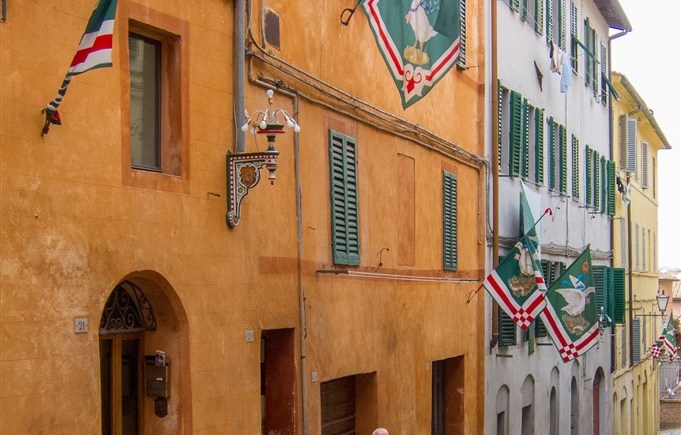
It is difficult (the Senese say impossible) for a foreigner – especially one from a country as young as the United States – to understand the seriousness, the importance, and the depth of feeling associated with membership in a contrada. Centuries old rivalries still complicate “mixed marriages,” i.e., marriages between members of different contrade. With the occasional exception, one becomes a member by being born in the contrada or inheriting membership from parents. In exchange for loyalty, one becomes part of an extended family for life. The sense of belonging is intense. Young people wear their silk scarves (fazzelloto) bearing the coat of arms of their contrada with pride, especially during the four days of the Palio events.
Crime is low in Siena as is drug use, both attributed to the influence of the contrade with their strict rules about how to behave within and outside its boundaries. It is an honor to be a flag bearer or a drummer, to take part in a passeggiatta storica (historical procession) wearing traditional Medieval costumes of the contrada. Training for these events starts at a young age and require little encouragement for young boys to participate.
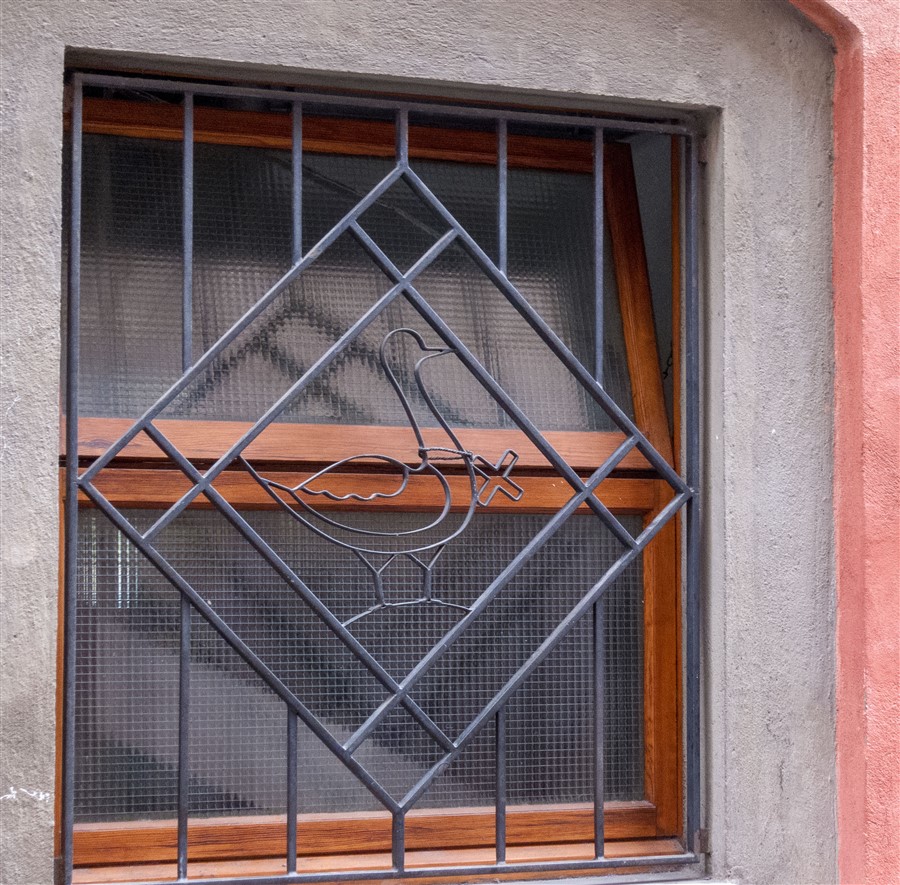
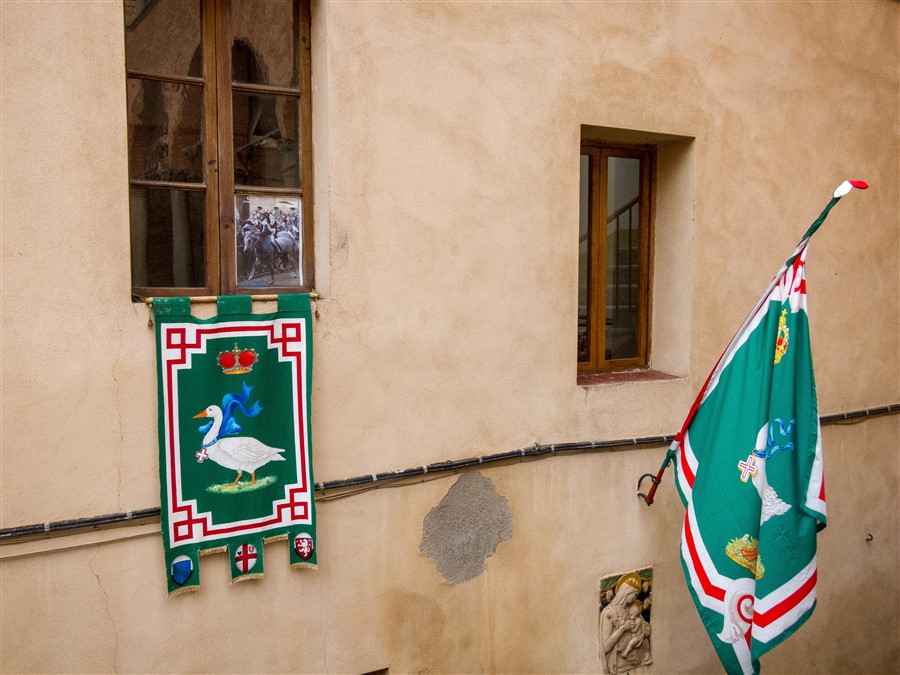
With a some exceptions, each contrada is either named after or has as its symbol an animal (real or mythical) and in addition to the flag, one often sees the symbol decorating residences in its territory.
Thus Oca (Goose):
Onda (wave) whose symbol is the dolphin and Chiocciola (snail):
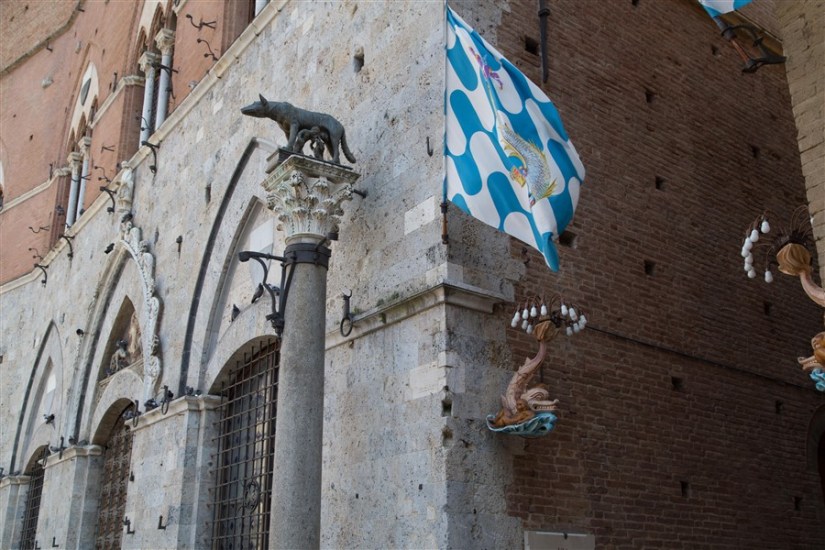
Notice the dolphin light standard 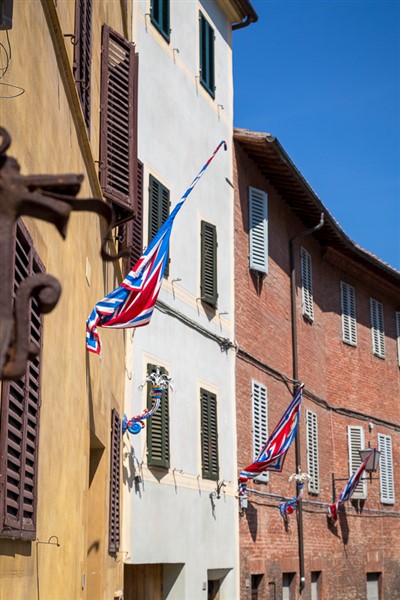
and the snail light standard
Although the Palio takes place over four days twice a year (July 2 and August 16), preparation for it dominates the activities of the contrade during the rest of year.
It is necessary an explanation: the Palio is not a tourist manifestation. The Palio is part of Siena’s natural life and lives in dwellers’ soul, all year long.
sienanews, 9 Augosto 2015
Our visit was in the month following the August race and community events associated with it were still occurring. Excellent descriptions and photographs of the Palio festivities, which I have not experienced, are available:
And this is a glimpse of Palio intrigue and an unusual American connection.
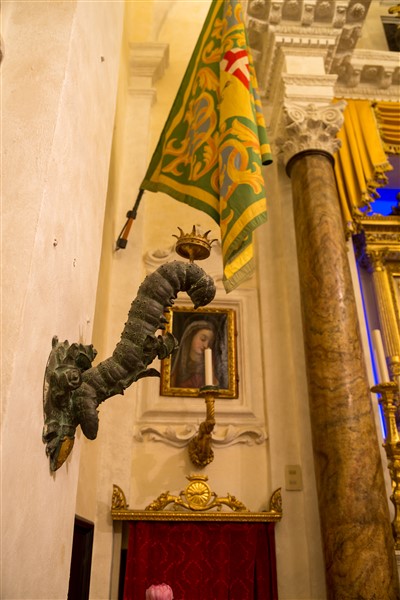
The Noble Contrada of the Caterpillar
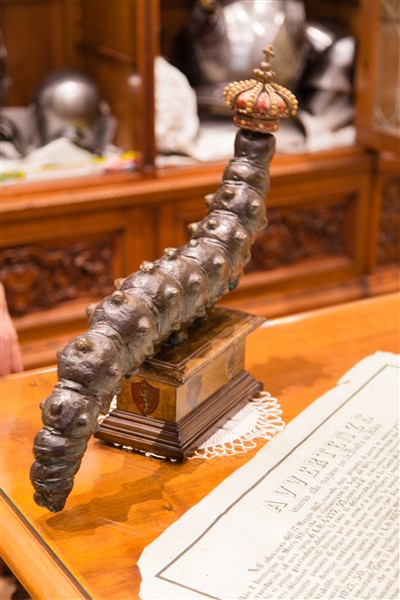
Although the contrade of Siena have not been considered guilds, the residents of each neighborhood tended to be in a particular trade or profession. Their symbols do not usually reflect that association, but in the case of the Nobile Contrada del Bruco it does, since the traditional residents were in the silk and wool trades. Only four contrade bear the title “noble” which was usually granted to acknowledge the bravery of its citizens in important battles fought by the Republic of Siena. This is true for Bruco as its members played a decisive role in preventing the Holy Roman Emperor Charles IV from capturing Siena in 1369 and ceding it to the papacy. However it is also an acknowledgement of the role of its hero Barbicone in leading a ferocious, bloody revolt of the populace against the ruling oligarchs two years later. Significant reforms to the city government resulted.
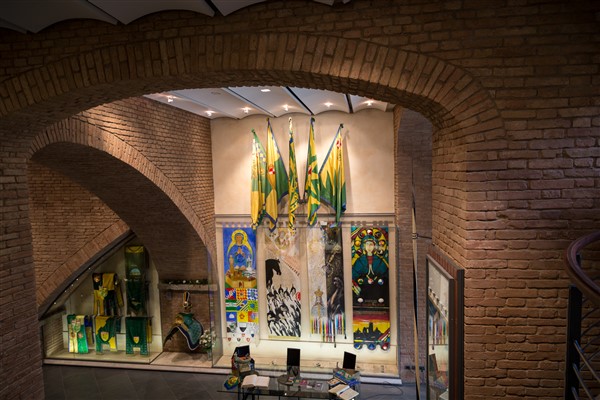
Inside Bruco
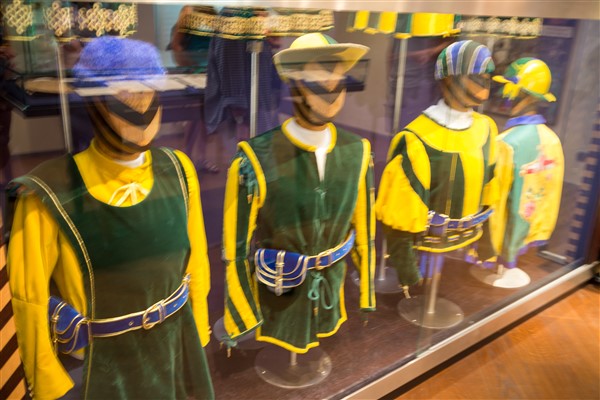
Medieval costume worn during Palio festivities 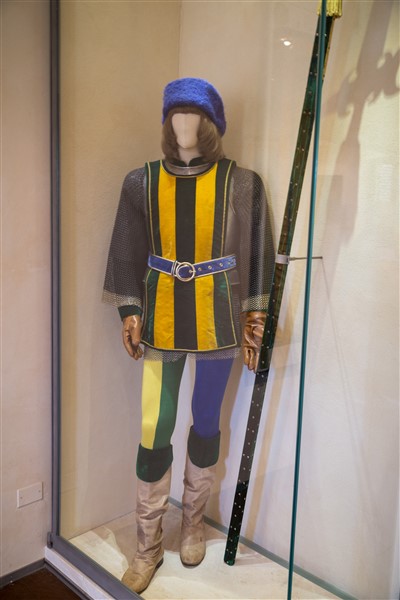
Bruco’s colors are yellow and green trimmed with blue 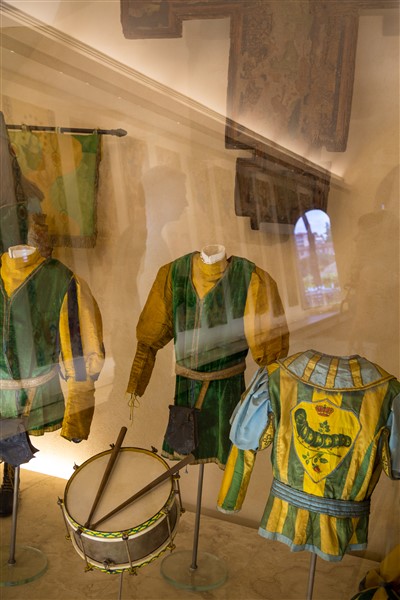
It is an honor to be a drummer 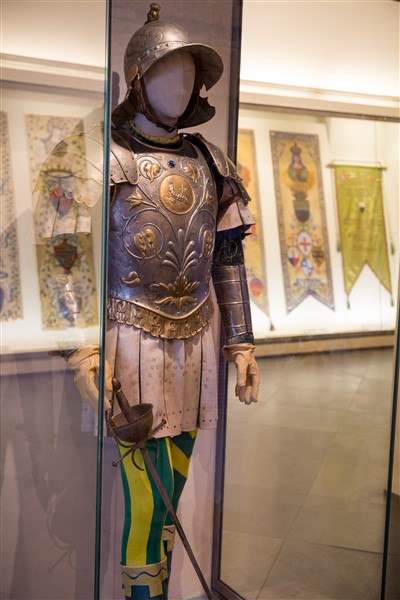
We were privileged to be given a tour of the Bruco (caterpillar) gardens and museum by local author Dario Castagno, an active and passionate member of that contrada. He spoke of the history of the contrada and the Palio, showed us the medieval costumes used in the parades preceding the horse race, the won Palio banners (called drappelloni) dating back to 1743 and videos of the race as well as pre- and post-race activities. Dario also acknowledged the importance of contrade culture in creating one of the safest places to live in all of Europe.
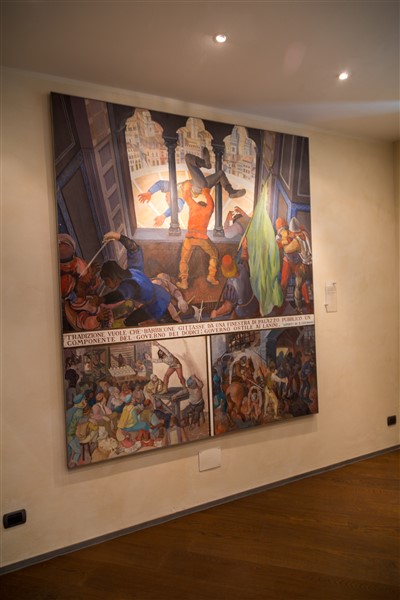
Bruco hero Barbicone throws a counselor from the window of the Pallazo Pubblico during the 1371 revolt. 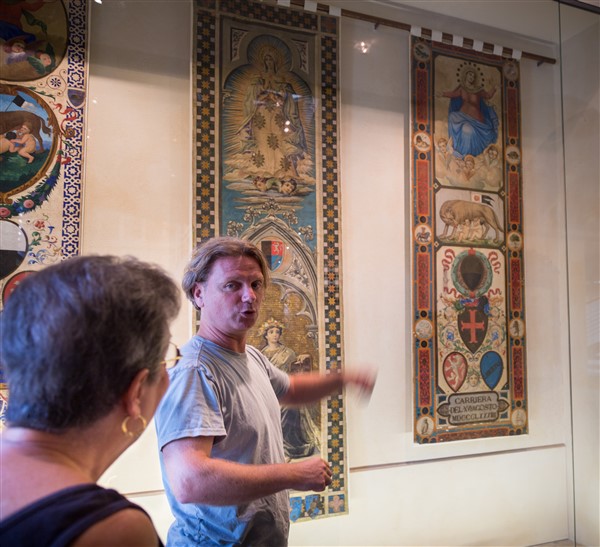
Dario describes the drappelloni won by Bruco 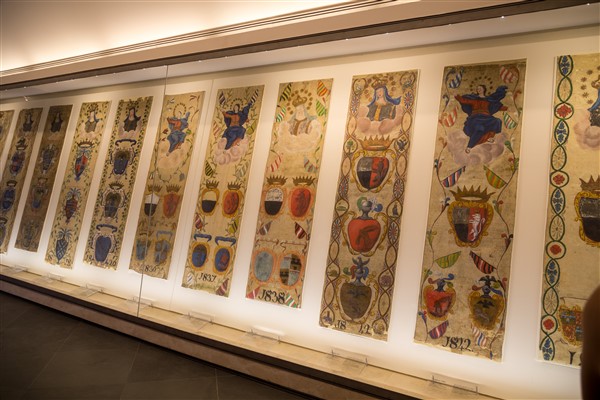
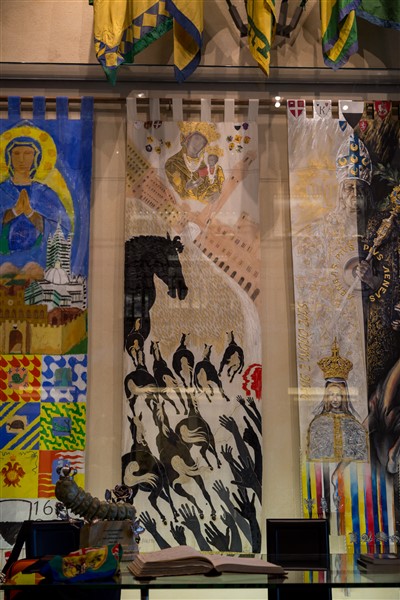
The drappollone from the most recent Bruco win, August, 2008
Palio di Siena and the COVID2019 Pandemic
In May, 2020, the city cancelled the Palio because of the impossibility of maintaining a safe distance among the thousands of spectators that attend the event. It is the first time since the 1940’s and World War II that it has been cancelled. At the time of this writing (April, 2021) Tuscany was in the Orange (medium-high risk) zone with strict regulations in place to contain infections. I could find no information regarding the Palio this year.
 Jconcetta's Journeys