
Famous for Their Wine
I am learning more about wine than I ever wanted to know in order to introduce the three “wine towns” we sought: Montalcino, Montepulciano and Radda in Chianti. All are associated,in one way or another, with well known or popular wines.
Montalcino
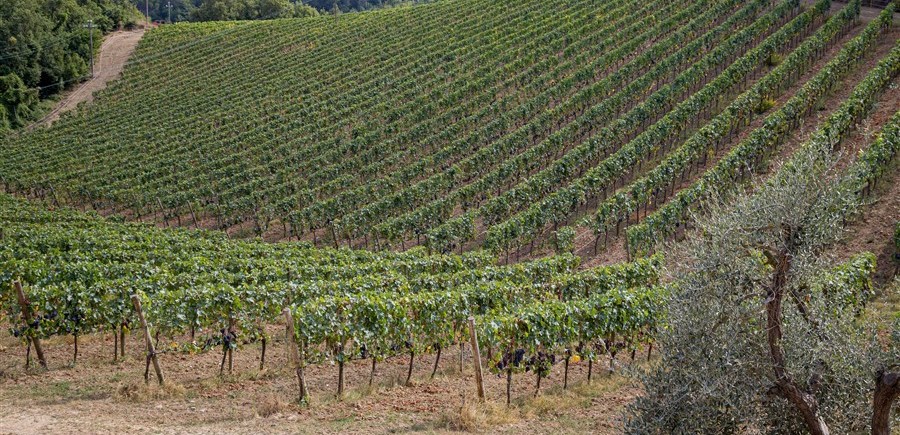
The most famous is Montalcino, a fortified citadel whose Medieval defensive walls are still intact. It sits atop a hill in beautiful country side, reason enough to visit. Today it is a very popular tourist destination owing largely to its Brunello di Montalcino wine, considered to be one of Italy’s greatest wines. Although wine has been made in the Montalcino area for centuries, it was a mid-19th century local farmer who identified a type of thick skinned Sangiovese Grosso grape from which he produced a 100% varietal wine that could be aged for long periods of time, often more than 10 years. For 100 years the descendants of this farmer, the Biondi Santi family, were the only producers of Brunello and it “remained somewhat of an Italian secret until the 1960’s, when word began to spread about the tastings of the extraordinary Biondi Santi vintages of 1888 and 1891. Soon, the wine world turned its attention to this special place and its remarkable wine.” You can read more about the characteristics of the grape and the wine from a connoisseur’s point of view here.
We dutifully bought a bottle of this very expensive wine, decanted for the recommended hour and enjoyed it with antipasti. Wine lovers in the group were quite satisfied if not ecstatic, as Brunello’s exalted reputation might have predicted.
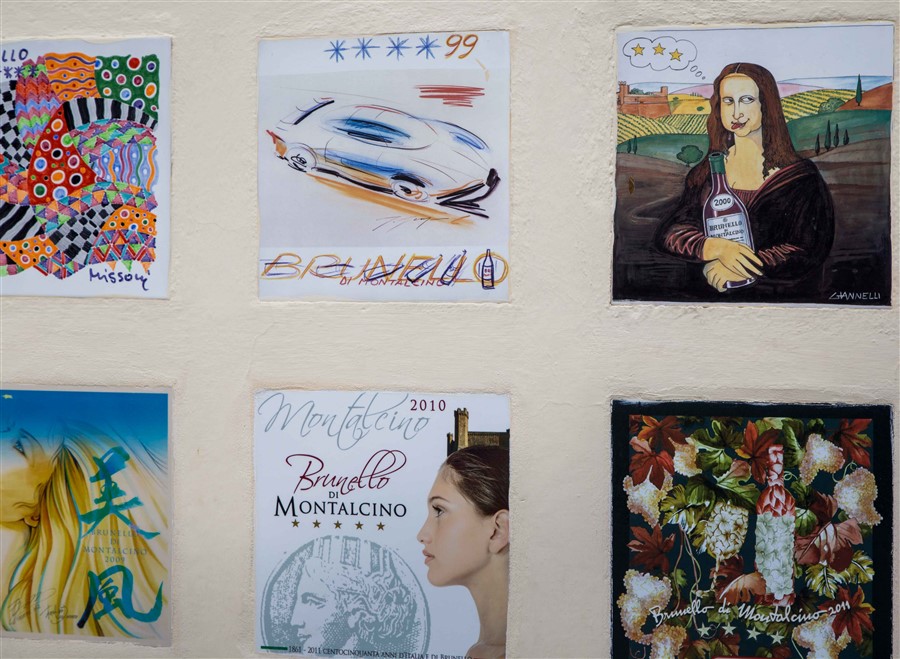
Montalcino celebrates Brunello 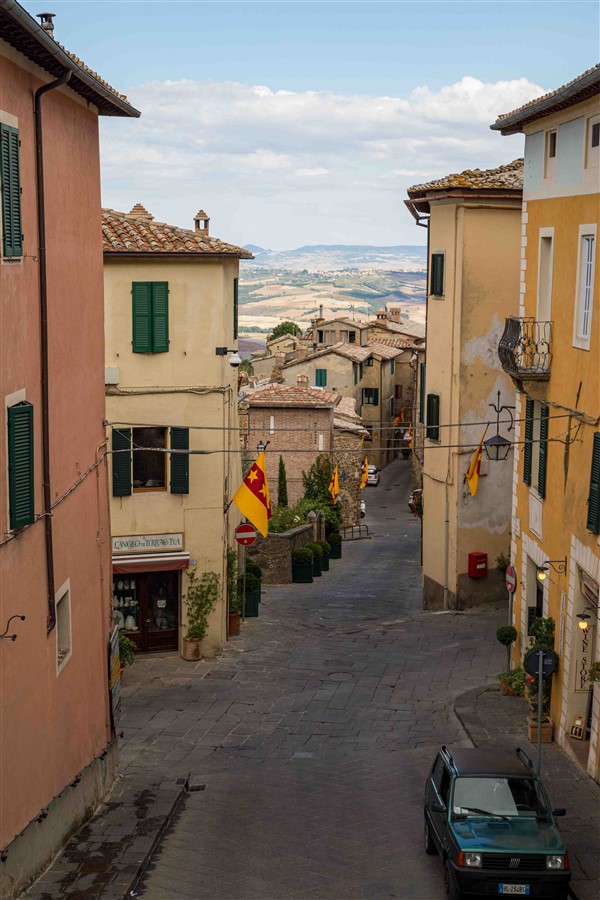
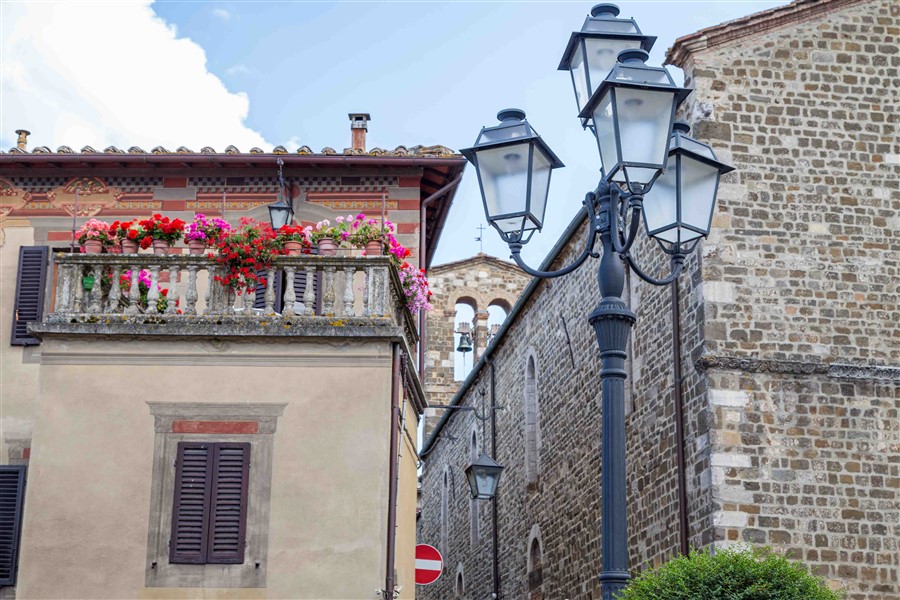
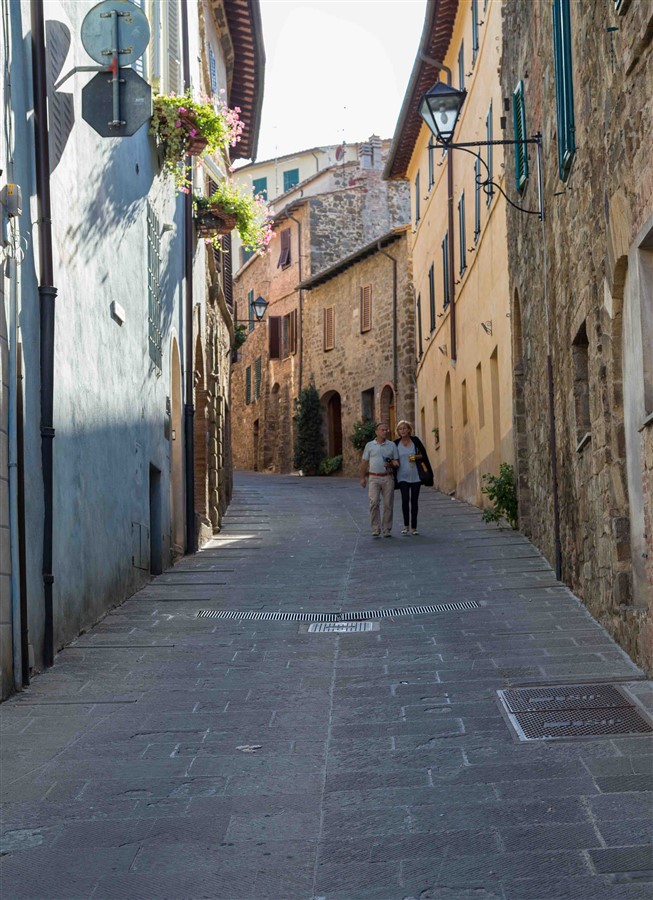

Medieval passageway 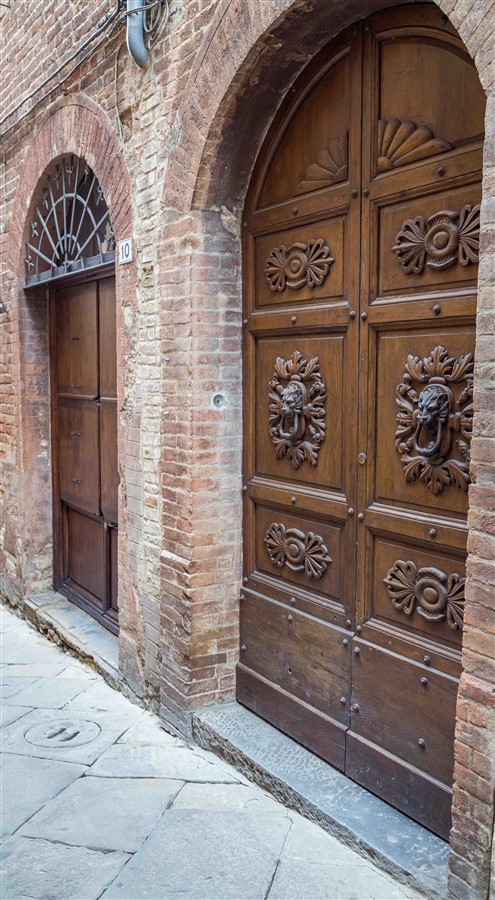

Surrounded by beautiful countryside
Montepulciano
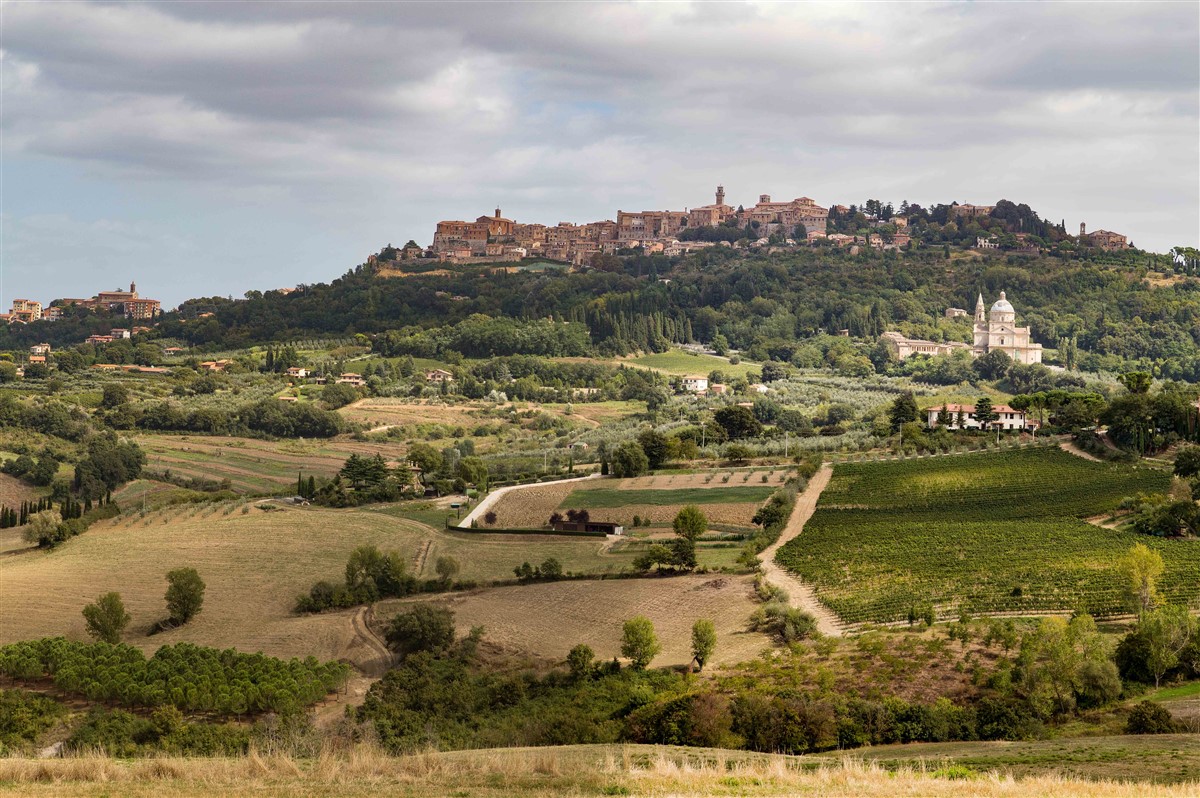
This was as close as we got to Montepulciano. It was a long day and I remember thinking I simply did not have the energy to drive up one more steep hill, but some interesting wine confusion is related to the name of this town.
There is indeed a fine wine produced here from the local Sangiovese grape blended with other local red wine grapes. It is called called Vino Nobile di Montepulciano and has the highest classification possible for Italian wines.. However, unless you are a wine aficionado, the wine of this name with which you are probably familiar is Montepulciano d’Abruzzo, a red wine made from the Montepulciano wine grape in the province of Abruzzo, a mountainous region along the Adriatic Sea in east-central Italy (where, incidentally, my paternal ancestors lived). It is one of the most exported Italian wines to the US. Some say the Montepulciano grape was named after the Tuscan town, since the grape originated in Tuscany and is likely related to the Sangiovese grape, but others point out that it is not grown at all in the vineyards around the town of Montepulciano and see no tangible connection between the two.
Radda in Chianti

“There’s at least a thousand years of wine making heritage in the hills around Radda.”
Commercial production can be dated back to 1398 but it wasn’t until the 17th C. that wines produced in the Chianti Classico Wine Region became well known abroad. Indeed, those straw covered flasks became standard Italian restaurant decoration the world over. Modern Classico Chianti is considered more stylish, of higher quality than the “pizza wine” of yesteryear. More about 21st C. Chianti here.
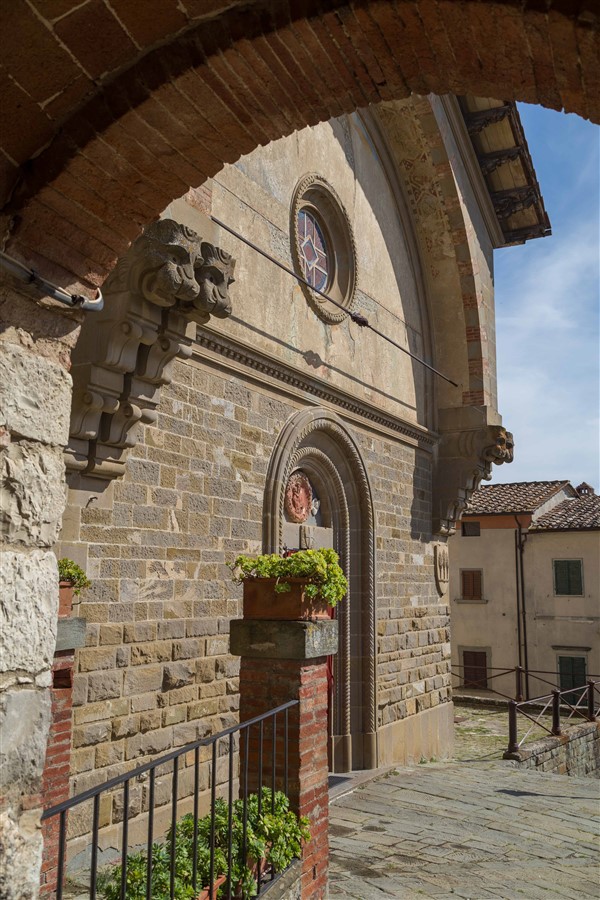
Church of San Niccolo 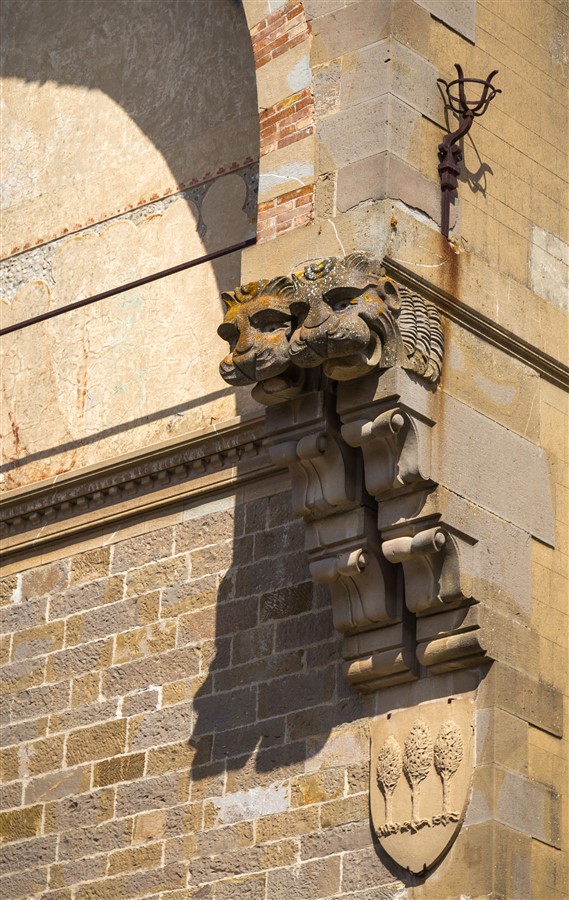
Three golden elms are the crest of Radda 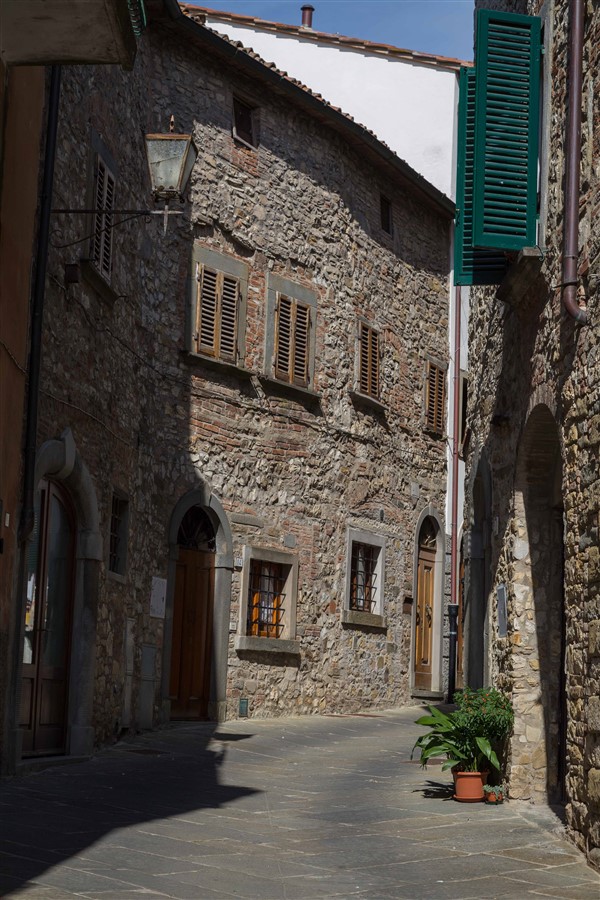

Piazza Ferrucci
 Jconcetta's Journeys