International

Destination Cambodia

When the tour company with whom we went to China expanded and began offering trips to Southeast Asia, I took notice. I had always wanted to see Angkor Wat, the temple-mountain built in the capital of the Khmer empire in the 12th century. Unfortunately, it was not part of the itineraries until a few years ago when a trip to Thailand was introduced. Three days at the end of that trip were devoted to Angkor province in Cambodia. The introductory price was amazingly low and even though I had sworn off 12 hour plane rides (LA to Beijing) I could not resist.

The trip did not start off well. Dealing with lost luggage on arrival meant missing our tour ride to the hotel and we found ourselves having to figure out how to do taxis in Bangkok at 2 am. After precious few hours of sleep the morning tour of Bangkok’s
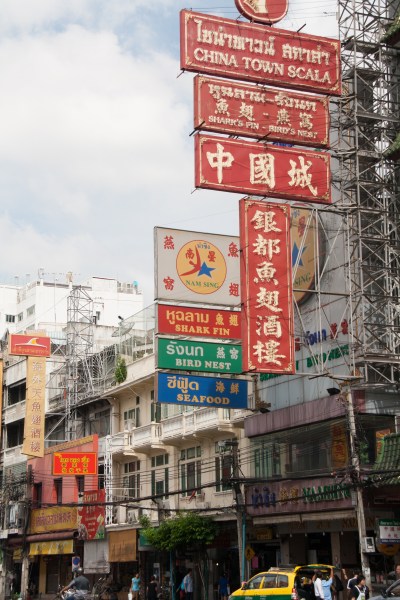
Bangkok-4
Bangkok’s Chinatown

Chinese Market felt like a forced march and my ankles looked like baseballs. However, a free afternoon and a good night’s sleep and we were ready for anything. And a good thing that was because the pace, as well as the heat and humidity, were intense.

I say more about Thailand in other posts and show photos on other gallery pages. We did spend most of our time there but my destination was Angkor.

Siem Reap is the small Cambodian town from which one visits the main temple complex, which is huge, covering an area stretching  more than 15 miles east to west and 6 miles north to south.  “Angkor” means “Capitol City” in Khmer, the official language of Cambodia. At its peak it was the largest pre-industrialized city in the world with a complex water management system that supported rice cultivation and close to 1 million people. There are about 1000 ruins of temples (few remains of secular works have survived) in the jungles of the Siem Reap area, many of which have been restored. We spent two days exploring several of the major temples and could have spent two months. Were I young and fit and had the means, I would plan to live in Siem Reap for a few months and explore the area via bicycle as an acquaintance has done.

More images of the Angkor ruins here and some impressions here.
International

Thailand’s Capital City

In 2009 I traveled to China with a company called China Spree, a small outfit formed by Chinese folks who had settled in Seattle and still had contacts in China. I’d heard good things about them from a friend and the price was right. It was a marvelous trip and I have devoted a post and related pages to it elsewhere. Fast forward seven years and China Spree has grown into World Spree, now offering trips to several countries in southeast Asia, starting with Vietnam, as well as China.

I was not particularly interested in traveling to Vietnam. It seemed like a too long, expensive plane ride and the aftermath of the war had no special attraction for me. But when World Spree announced a new tour in 2016, at introductory prices, to Thailand I took notice. The clincher was three days at the end of the Thailand trip for Angkor Province in Cambodia. I have been fascinated with Angkor for a long time; it was one of my must see places in the world. Find out more about Angkor in the forthcoming pages and posts about Cambodia.

Bangkok

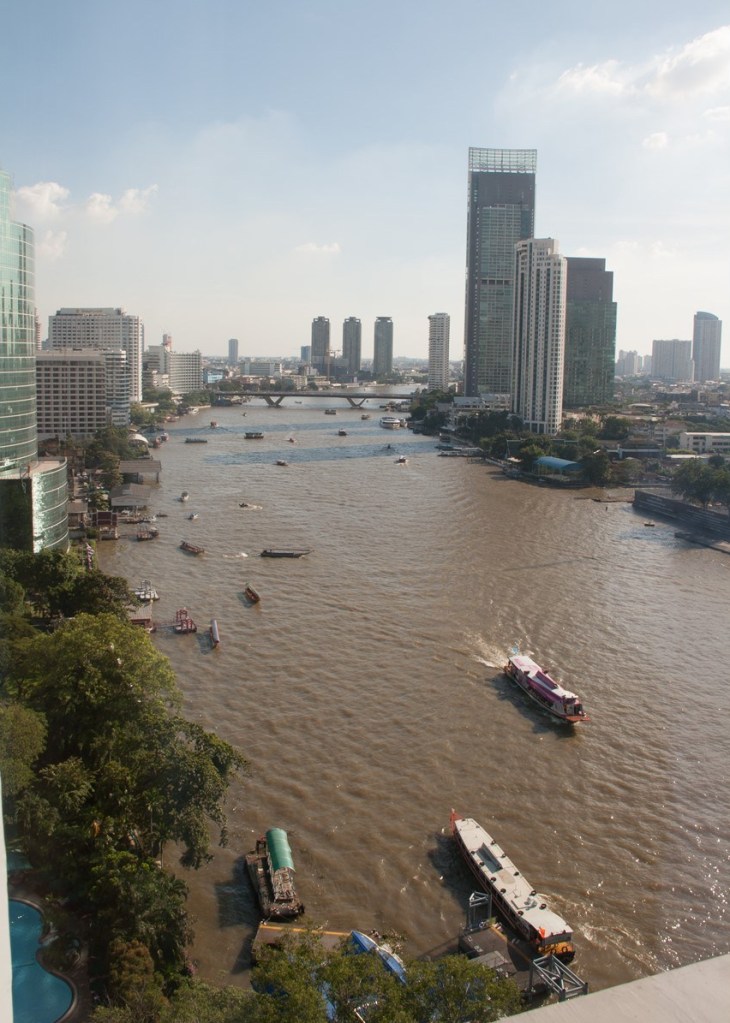
The Chao Phraya River runs through Bangkok and is a busy commercial thoroughfare.

Traveling to Bangkok via Beijing was indeed a grueling plane journey replete with lost luggage, missed tour guides and initial disorientation, but rest, good food and good company restored our spirit of adventure. Several days exploring this humming capital city were followed by a short plane ride to the northern city of Chiang Mai, then a bus journey to Chiang Rai and down the spine of Thailand to Sukhothai and Ayutthaya, the Thai analogs to Cambodia’s Khmer ruins.


Bangkok, whose given name means City of Angels, became the fourth capital city of Thailand at the beginning of the Chakri Dynasty in the 18th century. About 12% of the country’s nearly 70 million people lives there.

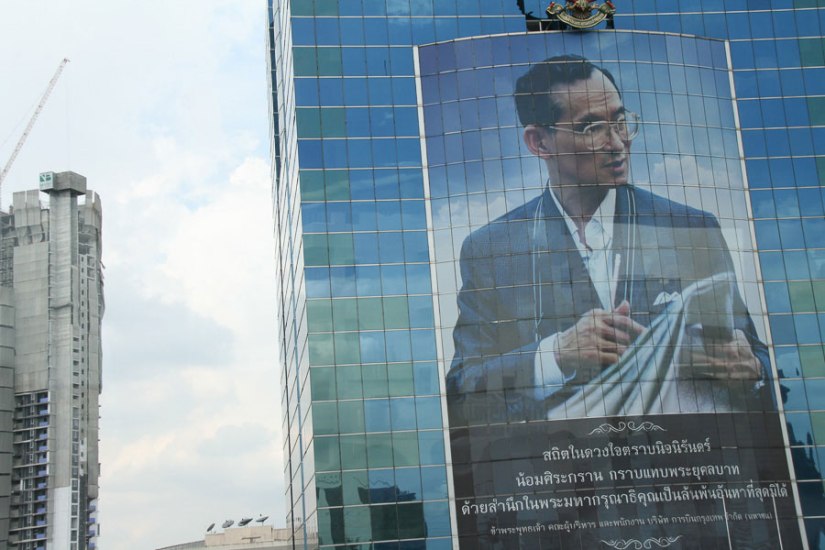
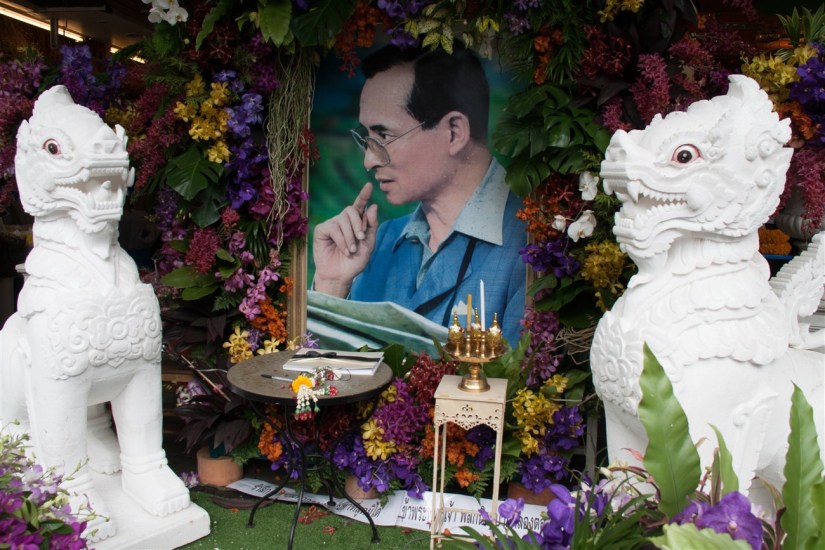
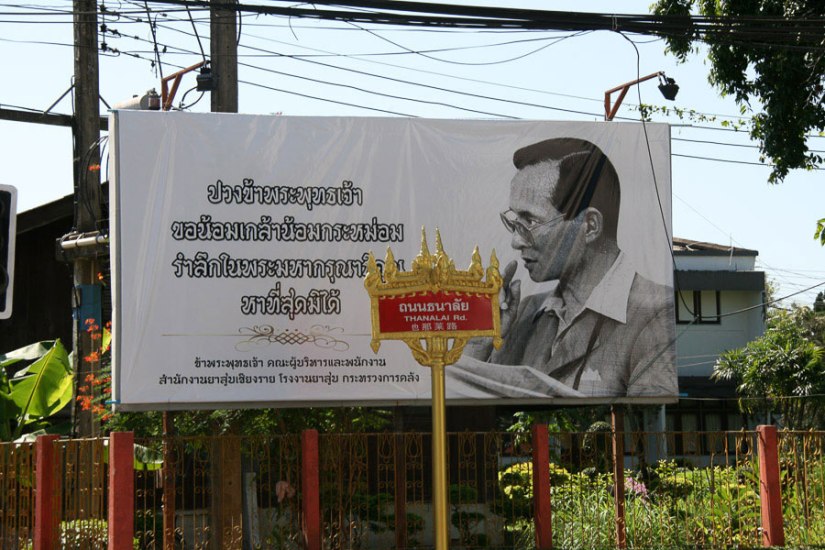
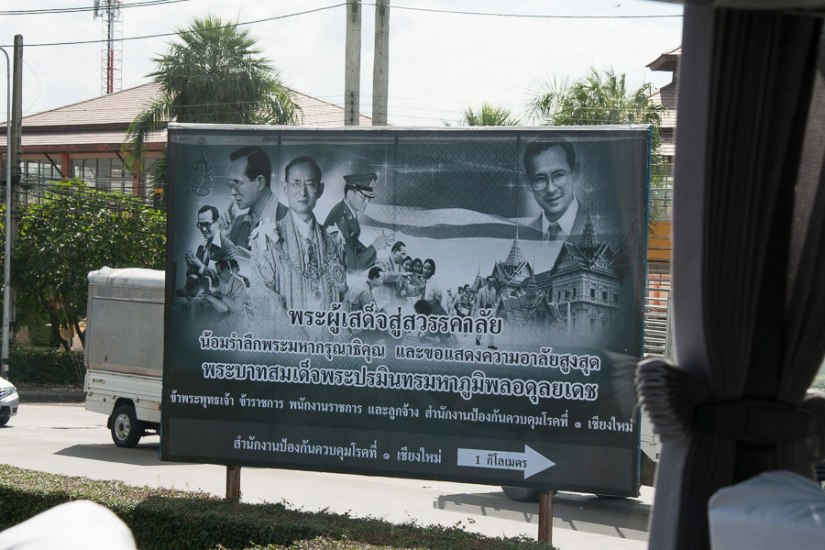
One could not help but notice ubiquitous images of the late king, Bhumibol Adulyadej (Rama IX), who had died in Oct. 2016, the month before we arrived, and was officially mourned for a year. His images were everywhere in the city but also in the countryside. He had reigned as king for 70 years, the world’s longest reigning monarch when he died. This monarch was respected, revered even, by many Thais. Criticism of the royal family, however, is against the lese-majeste laws in Thailand and critics may be (and have been) jailed for 3-15 years.

We were treated to an in depth history of the Chakri Dynasty (Rama I through IX) on the lengthy bus ride from Chiang Rai to Sukhothai. Afterward I asked our guide if she could give us more information about the ordinary people of Thailand. She seemed puzzled by the request and never did.


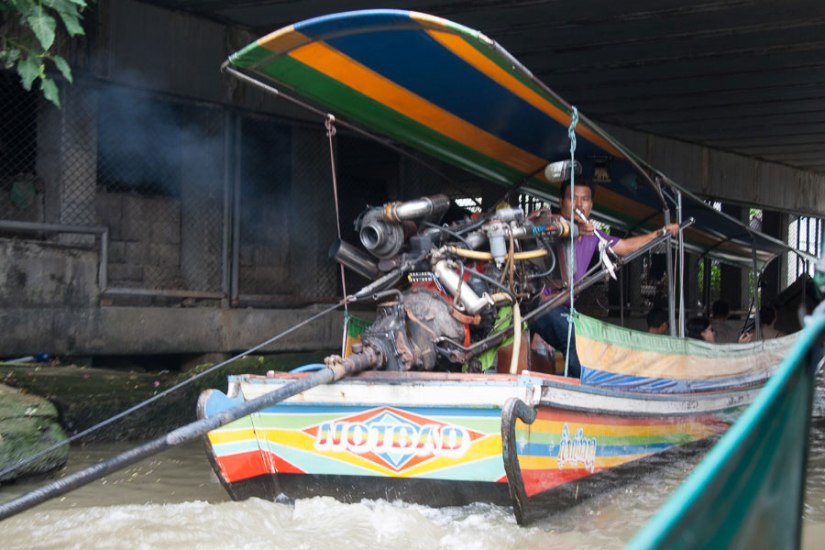
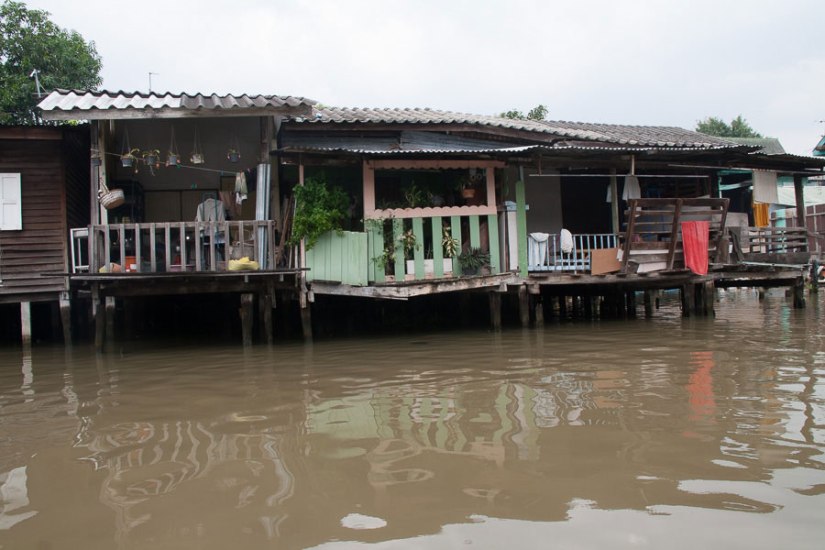
Bangkok is also called “the Venice of the East;” its once extensive network of canals, known as khlongs, reminding European visitors of the Italian city. Historically canals crisscrossed the city. Life revolved around these canals: goods moved along them, neighborhoods lined each side and they were the primary means of getting around. Today the relatively minor network of canals are no longer critical to the city’s trading activities. Like Venice, tourism is now the primary business activity along the canals.

Check here for more images of Bangkok.