Europe, International

Siena: the Secular and the Sacred

On an Equal Footing in Siena

Piazza del Campo
This image has an empty alt attribute; its file name is torre-del-mangia.jpg
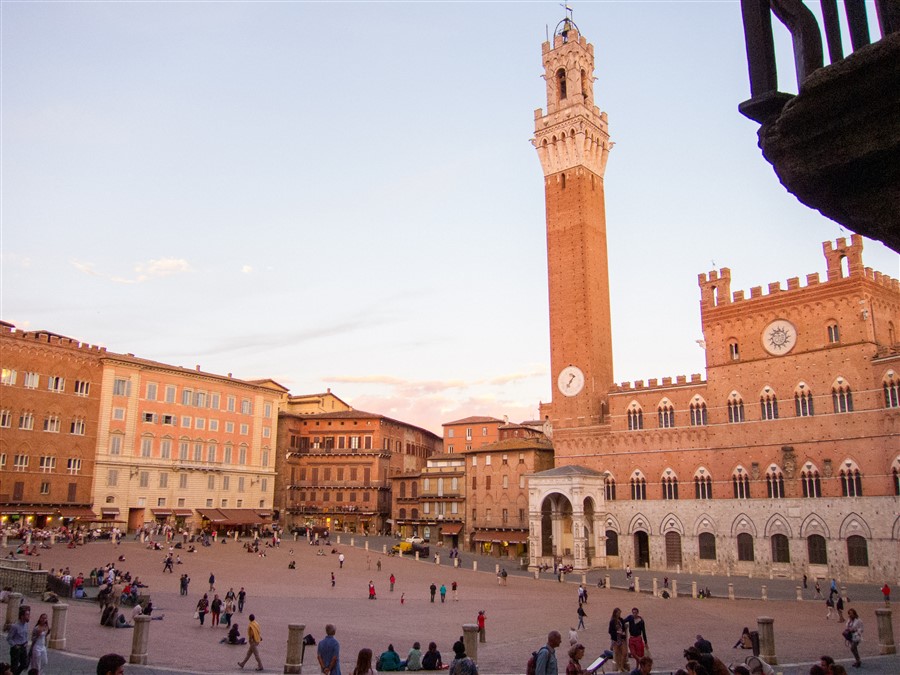
il Campo with the Torre del Mangia and the Pallazo Pubblico

The Historic Center of Siena is a UNESCO World Heritage Site described as “the embodiment of a medieval city.” At its center is the public square, Piazza del Campo, widely regarded as one of the finest in Europe owing to its beauty and architectural integrity. It’s shaped like a scallop shell with the flat portion bordered with the Pallazo Pubblico, the historic seat of local government, and, rising from it, the magnificent Torre del Mangia,. The latter was built to match the height of the Duomo di Siena to signify that the church and the state were equal, having the same level of authority.

Siena was created when three communities that existed on three adjacent hills coalesced. At the intersection of the Y that delineated the roads to those communities and beyond, there was a valley that served as a convenient marketplace. This is the site of il Campo, as it is commonly called, meant to be a neutral territory for activities, games and political and civic holiday celebrations. Its present form was created in the mid-14th century with deliberate intention to establish harmony between the buildings and the square. The palatial homes of Siena’s ruling elite lining the square were required to have uniform roof lines in contrast to the earlier tower houses, symbols of community strife.

The Piazza was intended as an area where the entire population of the city could attend activities. The population of Siena in its golden era has been reported as between 50,000 and 80,000. Today, for the Palio, 28,000 people cram into the center and another 33,000 line the perimeter.

The red brick herringbone paving of the Piazza slopes slightly downward, inviting one to simply sit down as if at a beach or amphitheater, and that is exactly what people do. It is possible to climb the 400 steps up the Torre del Mangia but I did not attempt that even knowing spectacular views of the city and the countryside were in the offing. Below is an image, not mine, taken from the top of the tower, to give you a feel for the magnitude of this splendid town center.


Duomo di Siena

If you have been to Florence you will have been impressed by the immense cathedral, Santa Maria del Fiore, with its polychrome marble exterior and extraordinary dome. Siena’s cathedral, dedicated to Santa Maria Assunta, is not as large but boasts a most fascinating facade and an eye popping interior.

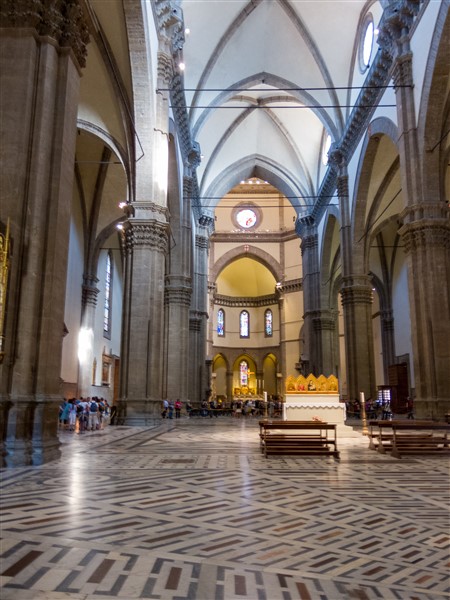
Compare the interiors of the two cathedrals, Siena’s on the left, Florence’s on the right.
The magnificent Duomo di Siena rises from a piazza atop one of the three hills above il Campo. Legend has it that it was built on the site of a 9th century Christian church which in turn had been built over a Roman temple dedicated to the goddess Minerva. Construction started in 1200; records show masses being held as early as 1215 and the main sections completed by 1264. Much of the exterior and the entire interior are sheathed with alternating layers of white and greenish-black marble. Black and white are the colors of the Siena coat of arms, arising from a foundation story that links the city to a noble and ancient ancestry.

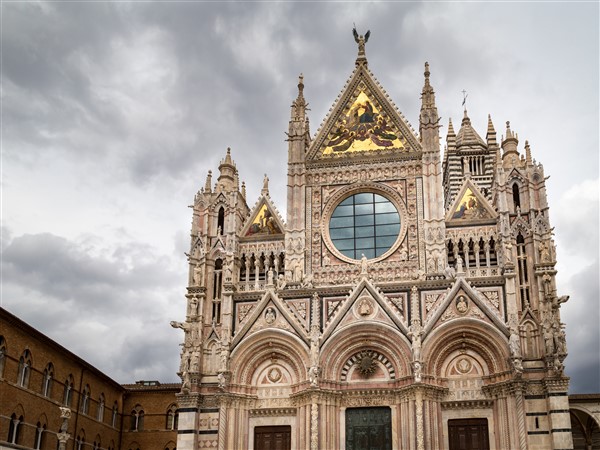
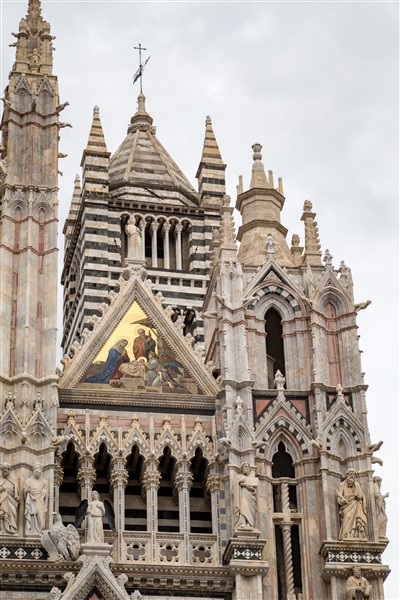
Built in two stages, the lavish facade is a combination of French Gothic, Tuscan Romanesque and Classical architecture. The lower facade, (1284-1296) with its three portals is covered with sculptures of prophets, sibyls, mythical animals and gargoyles, the work of Giovanni Pisano. The upper facade, which was finally completed some 60 years after Pisano left Siena for Pisa, features heavy Gothic decoration.

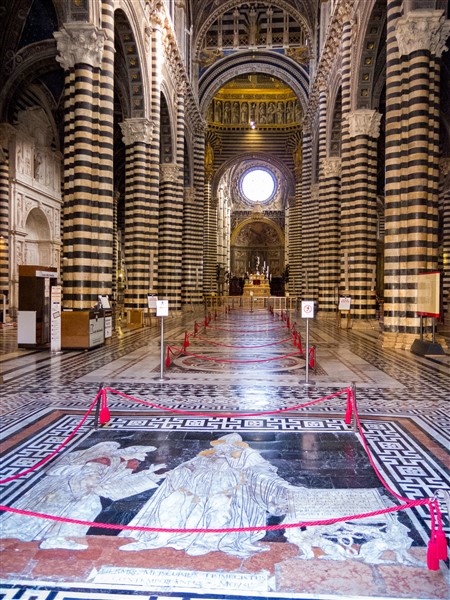
The interior is a dazzling collection of sculpture, painting, stained glass, inlaid wood and mosaics. One hardly knows where to look first. I visited the Duomo on two occasions but could have spent the entire month exploring its treasures. For me the most impressive and beautiful of these treasures are the mosaics that completely cover the floor, 56 interlocking slabs covering 14,000 square feet, depicting scenes from Classical antiquity, the Old Testament, allegories, all of which meant to send a message of salvation and wisdom to the viewer. It is now possible to climb above the vaults for extraordinary views of the interior and exterior. Once again I rely on an other’s stamina to provide you with a glimpse of the extent of the unique marble mosaic floor.

Beautiful mosaics cover the entire floor of the Duomo’s interior (image from the “Gate of Heaven” itinerary)

Find more images of Siena and it storied art and architecture by looking here.

International

Siena: The Heart of Tuscany

Most people, when they think Tuscany, think Florence and maybe San Gimignano with its 14 intact ancient towers. Siena, if considered at all, is an afterthought, maybe worth a day. What they are missing! As Rick Steves has so eloquently pointed out, Siena’s eventual political and economic irrelevance has preserved its Medieval identity, to our gain. It wasn’t always so, the irrelevance, i.e.

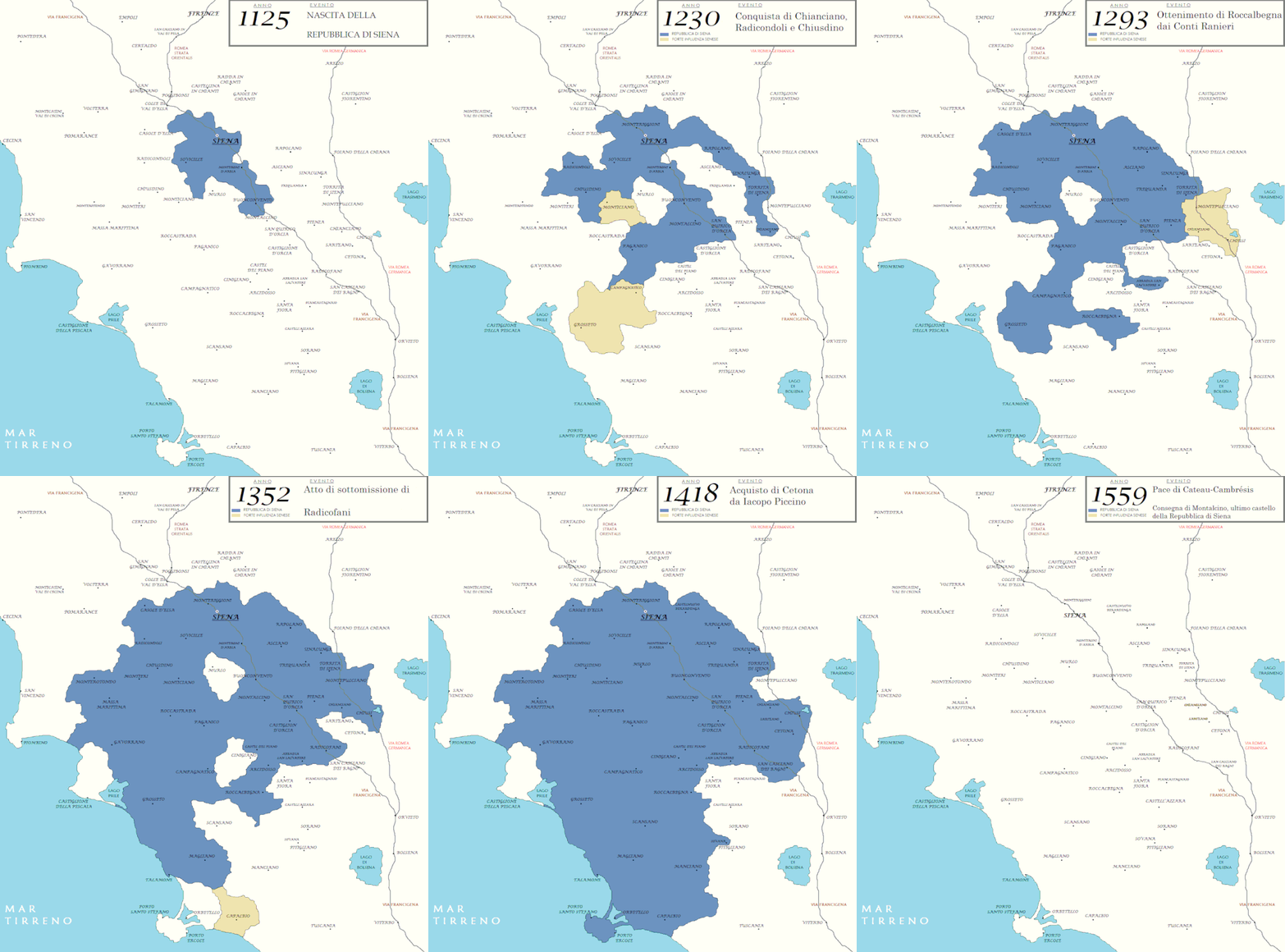
Borders of the republic of Siena from1125 to 1559. Graphic by brucointestino – Transferred from it.wikipedia to Commons., Public Domain, https://commons.wikimedia.org/w/index.php?curid=63007664

From the early 12th C. to the mid 16th C. the Republic of Siena, consisting of the city and its surrounding territory, was one of the powerful warring city states of the Northern Italian peninsula, in a class with Milan, Venice, Florence, Genoa. It rivaled Florence in the arts and financial prowess during the 13th and 14th centuries. Devastated, like much of Europe, by famine and the Black Death, it was finally defeated by the Republic of Florence and remained under its rule, a backwater, until Italian unification in the mid19th C.

Even today the Senese* will tell you they feel treated like 2nd class citizens when it comes to political pork, but they are a proud and resilient people, valuing real pork more, living the good life. One aspect of that good life is the relative lack of vehicles within the walls of the city. Neither cars nor bicycles, with a few authorized exceptions, are allowed within the city walls, the restriction being policed by 24 hour cameras with heavy fines for transgressors.

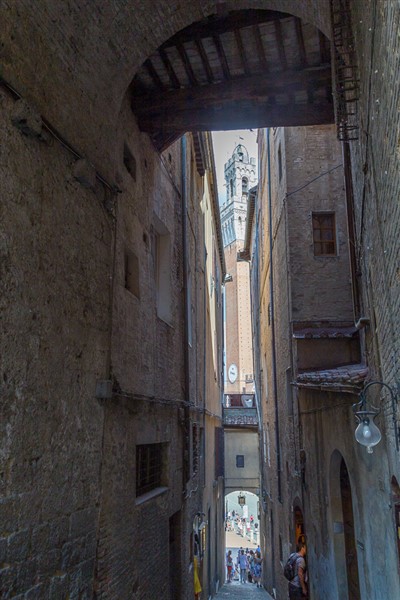
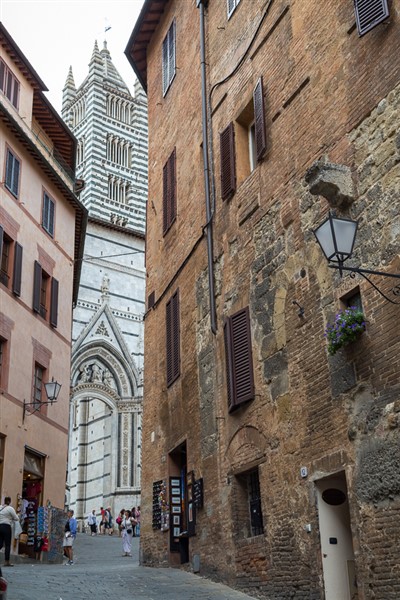
Having locals for friends and guides meant we knew which porto to enter for a given destination, where to find parking (sometime free parking!) and how to use the parking meters, any one of which might have defeated us otherwise. Once the car was sequestered we roamed within the walls, up and down steep, narrow streets flanked by tall Medieval buildings bedecked with flags of the contrade. Small or large open spaces appeared associated with important edifices like Gothic palaces or ancient churches and, of course, the Duomo and the Piazza del Campo. A bit about each of these unique Senese phenomena follows in subsequent posts and their accompanying pages.


*I have retained the Italian spelling for some key words and render them in italics.


The Contrade of Siena

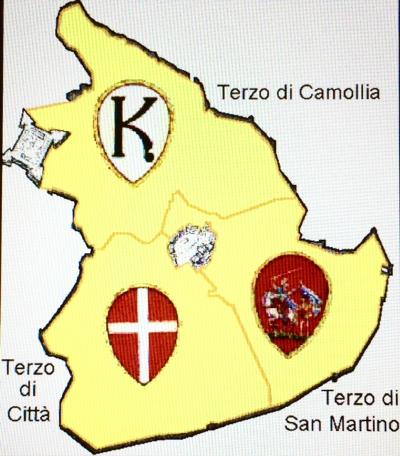
Siena is divided into thirds (terzi)

Siena is divided into three main parts each of which are further divided into contrade. Contrada in Italian means district or ward but these are much more than simply neighborhoods. They are a way of life: different populations in different states, held together by their histories and civic pride. In the Middle Ages Siena was said to have been divided into 59 contrade whose main purposes were to supply soldiers for mercenary armies and provide a mechanism to collect taxes.

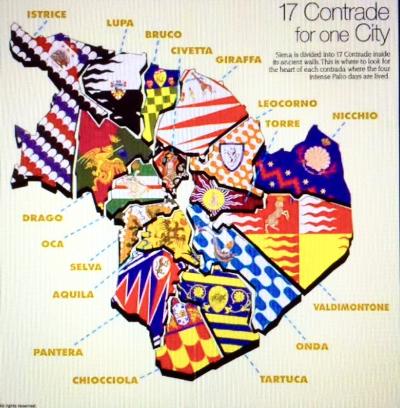
Within each terzo are the contrade here identified by their flags

Over time the number and functions of the contrade have changed. There are now, and have been for about 300 years, 17 contrade di Siena, each having their own coat of arms, delimited territories, statutes, population, patron saint, museums, festivals, official representatives, church, baptismal fountain, motto, songs, allied contrada and adversary contrada. Every important event – baptisms, marriages, deaths, church holidays, wine festivals – are celebrated only within one’s own contrada. Loyalties are fierce and competition even fiercer, especially for the twice yearly run bareback horse race called the Palio.

More about the contrade and, in particular Bruco, which we visited, here.

International

Destination Tuscany

My grandparents on both sides came to the US from Italy in the early 20th century. They came from the length of Italy: the Piedmont in the north, Calabria in the south and Abruzzo in the middle. I visited the country on several occasions many years ago, meeting a few distant relatives with whom I could only smile and nod, not speaking Italian and they not speaking English. Most of the time there was spent in typical tourist pursuits: visiting museums and Roman ruins, driving to well known towns, eating delicious food, shopping for specialty items.

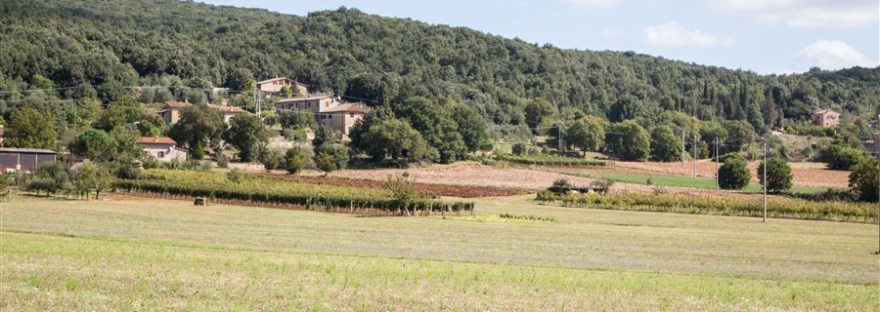
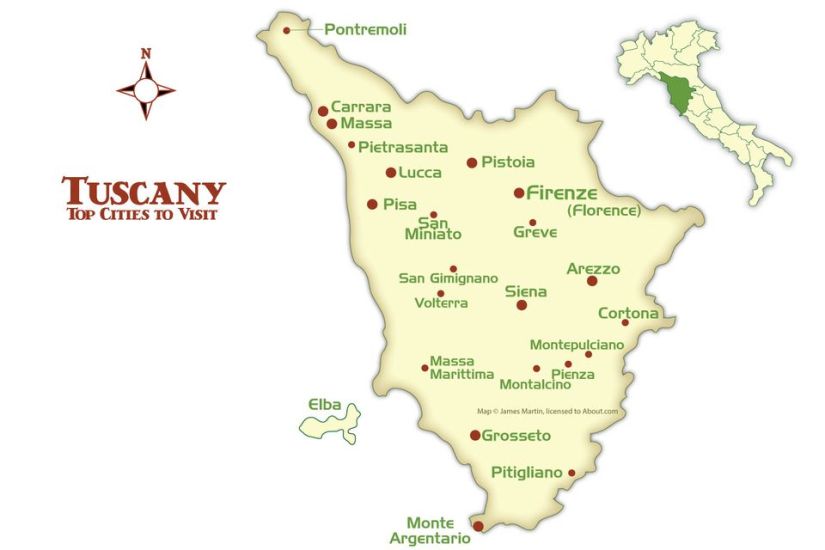
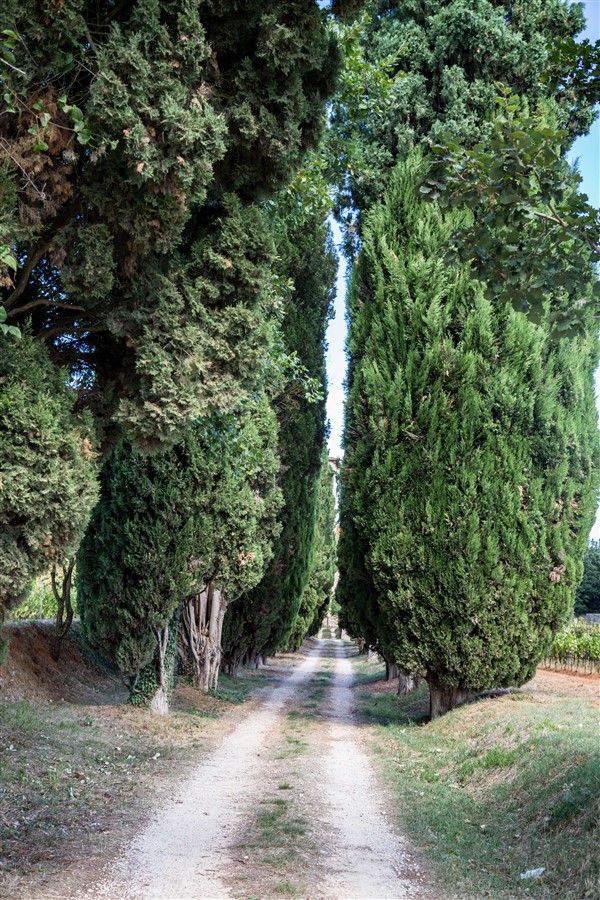
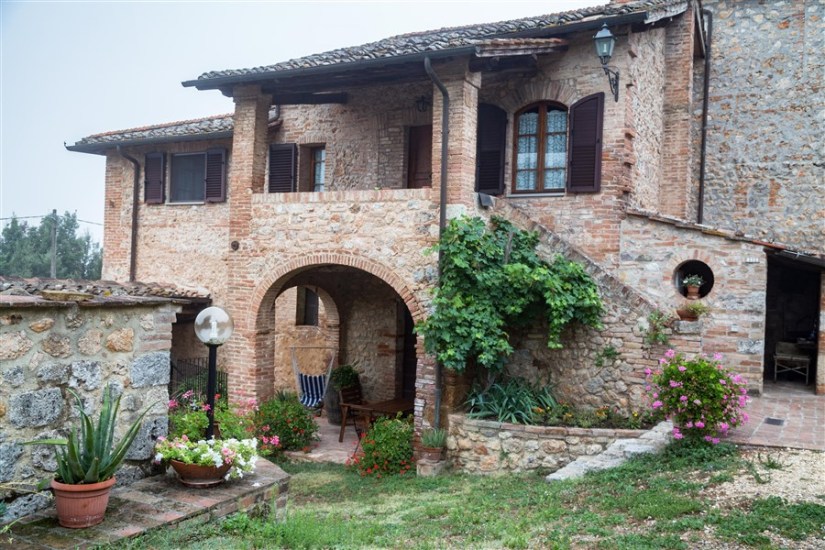
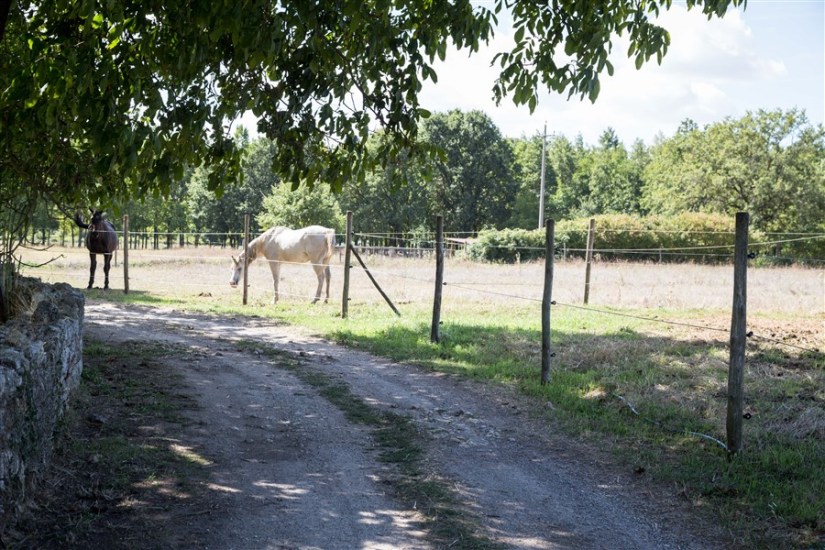
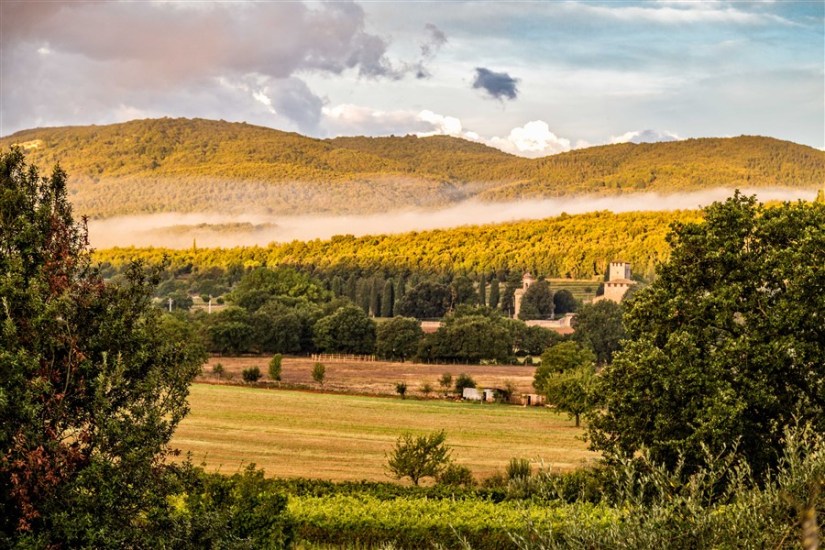
The best ever trip to Italy occurred in 2013 when we spent a month in the Tuscan countryside a little south of Siena. Here’s how it came about. My niece, Allegra, – so this is third generation – is a scholar of Italian literature, speaks the language fluently, has lived and studied in Siena. She has many good friends there one of whom rents their renovated big old family farmstead to visitors. She gave us a special rate for the month of September and five of us set out for the countryside near Sovicelle, about 12 miles southeast of Siena.

Landing in Pisa after 20 hours air travel, we still had a grueling 2 hour drive to our destination, missed the turn to the hamlet of Caldana but continued on down the road to Rosia to shop for dinner. On arriving at the old homestead, now aptly named Casabella, we found mounds of fresh ripe tomatoes on the counter, a refrigerator full of goodies like panna cotta and plum tart.

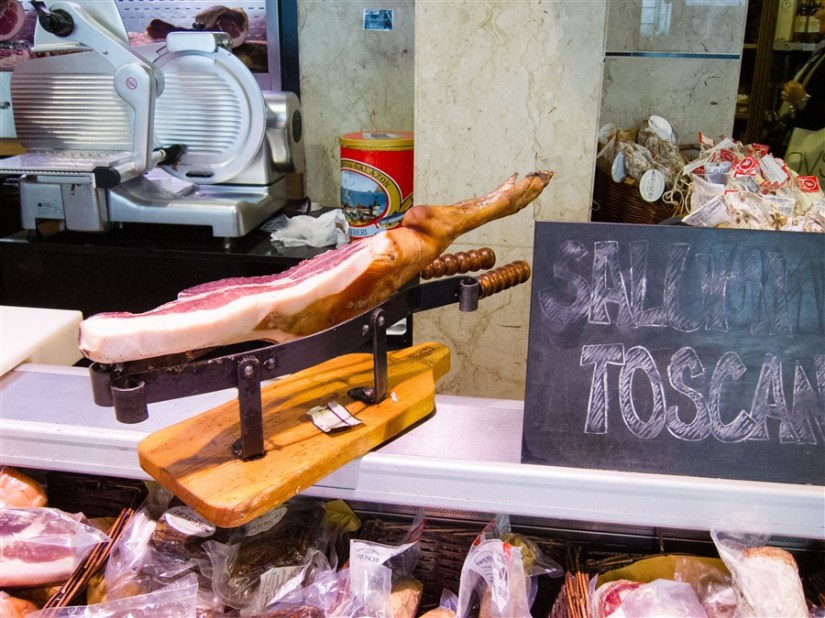
Marzia and Renzo, our landlords, were more like our hosts and we their valued guests. Two days after we arrived they came by with an Australian friend in tow to prepare for the 8 of us a “light meal.” We had salami and prosciutto with cantaloupe, homemade tomato soup, Tuscan grilled meats (sausages, chicken, ribs), insalata, homemade pastries and good red wines, eaten at the traditional time of ~9:30 pm. You might think their friendship with Allegra explains this but reading the often long and detailed entries into the Casabella guest log reveals they treat all their guests with the same generous attention and gifts of their time, culinary delights and information: hospitality unparalleled in my experience.

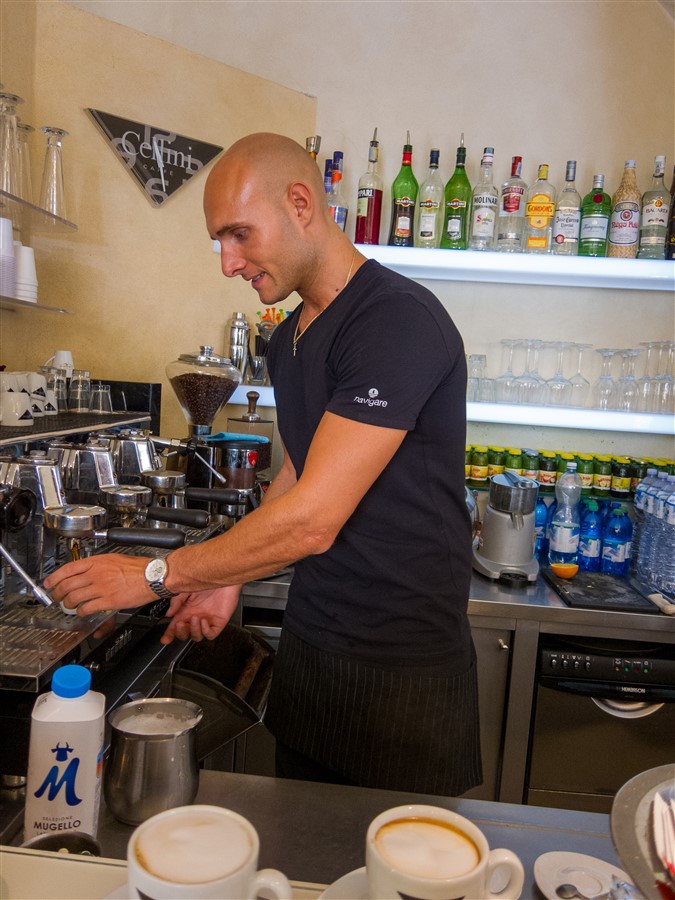
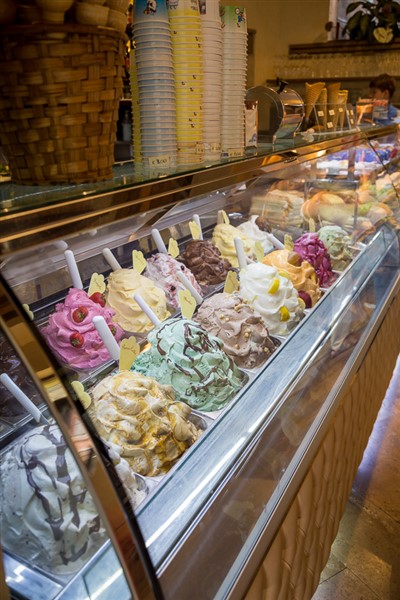
From this splendid base we explored the surrounding Tuscan countryside for a month: Siena, coffee bars,”unspoiled” hill towns, wine country, harvest festivals, Etruscan museums, farmers’ markets, the seashore, ruined abbeys, singing monks, art installations, all the while partaking exquisitely satisfying food, addictive espresso and unsurpassed gellato.


In the Countryside: A Casabella Scrapbook