
Chiang Mai
Chiang Mai, in northern Thailand, is the country’s second largest city. In the 14th century it was the capital city of a powerful Lanna Kingdom, an Indianized state, which ruled the area from the 13th to the 18th century and left a strong cultural heritage in language, food, art, architecture and music. Most memorable were our visits to a sacred temple situated on a hill overlooking the city and the Elephant Conservation Center in Lampang.
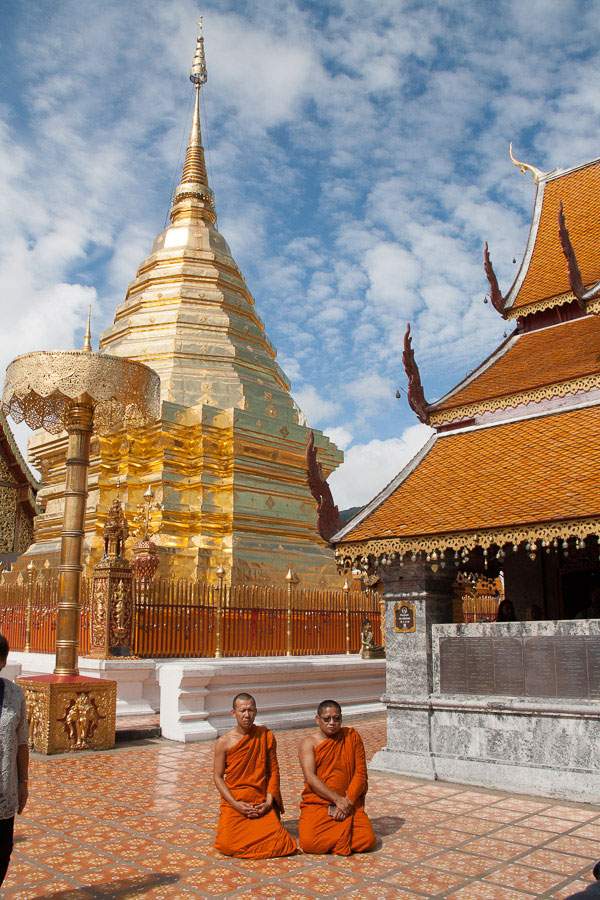
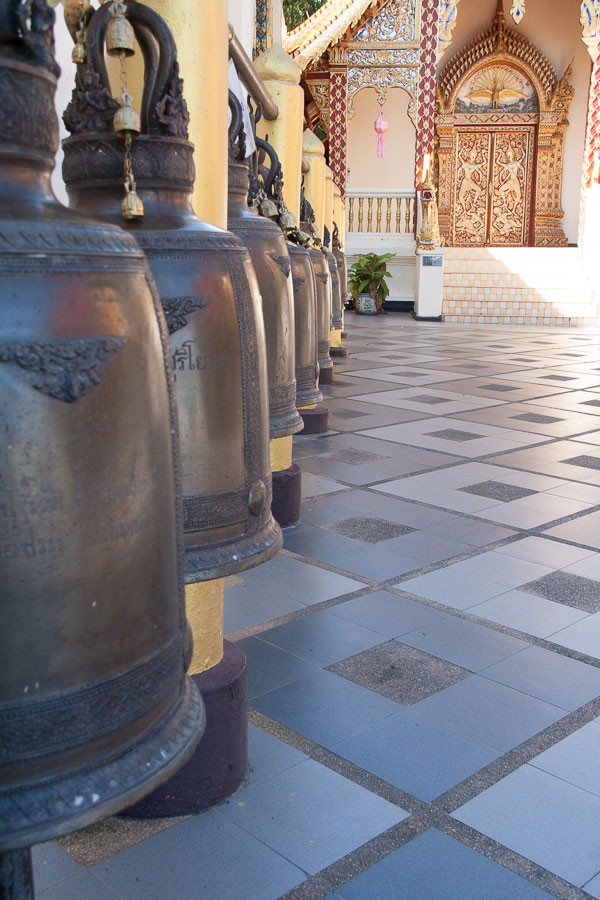
Wat Phra That Doi Suthep
This temple is considered one of the most sacred sites in Thailand where “pilgrim-tourists” come from Thailand, Singapore, China and India at a rate of about 120,000 per month. According to popular legend the temple was built ~1383 to hold a relic of the historic Buddha. A piece of the Buddha’s shoulder bone was placed on the back of a white elephant who was then released into the jungle. The elephant climbed Suthep mountain, trumpeted three times at the top and then dropped dead. This was interpreted as an omen and the first stupa was built. Over time many more holy shrines, pagodas, statues and bells were added and it is now a complex and extravagant site. Phra implies Buddha and That means a relic. Doi is the Northern Thai word for mountain, so the name of the temple tells what is there and where it is located.



Elephant Conservation Center
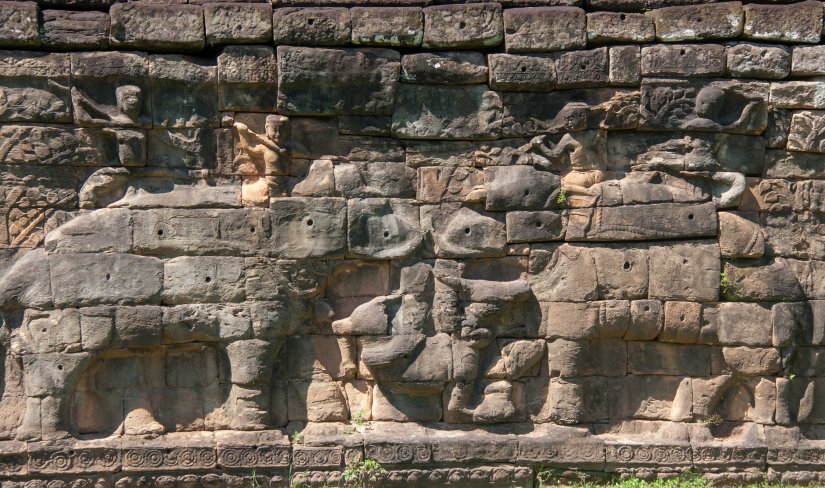
Elephants have been ingrained in Thai culture for centuries: as weapons of war, symbols of wealth, power and moral authority, a key form of transport, and laborers in the teak logging industry. White elephants are considered sacred and may not work, be sold, given away or killed and are thus very expensive to maintain. Occasionally a Thai king would gift a white elephant to an enemy knowing that their expensive care would eventually bring financial ruin. This may be the origin of the idiom “white elephant” to designate something whose expense is out of proportion to its usefulness or value.

In 1900 there were an estimated 100,000 elephants in Thailand and the country had ~90% forest cover. In 1989, when logging was finally banned (the elephants were used to destroy their own habitat!) the forest cover was 28% and today there are only 3000-4000 elephants in the country half of which are living in captivity.
When logging was banned 70% of the domesticated elephants and their mahouts were out of work. Today tourism is the only viable source of income for them. Elephants require 300-500 pounds of food a day which, along with care and medical treatment, can cost their owners $500- $1000 a month. To make money mahouts offer elephant rides and elephant training classes to tourists. But carrying a human on its back is not natural for an elephant and for this to happen the baby elephant must go through a brutal process known as Phajaan (“crushing the spirit”) in which they are tortured until broken into submission.
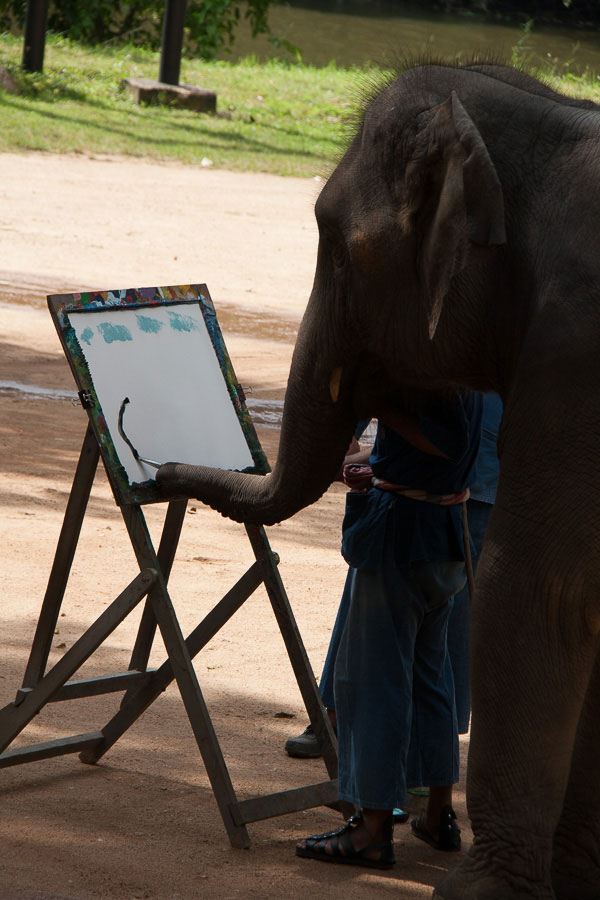
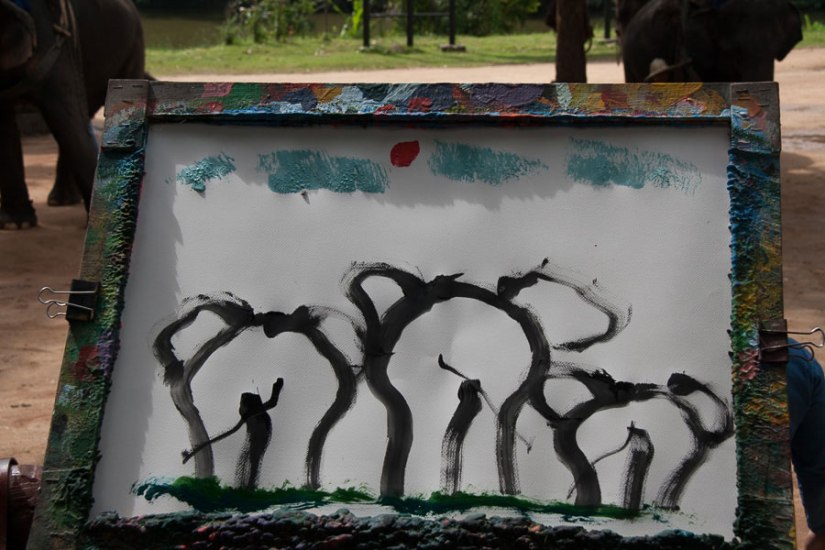
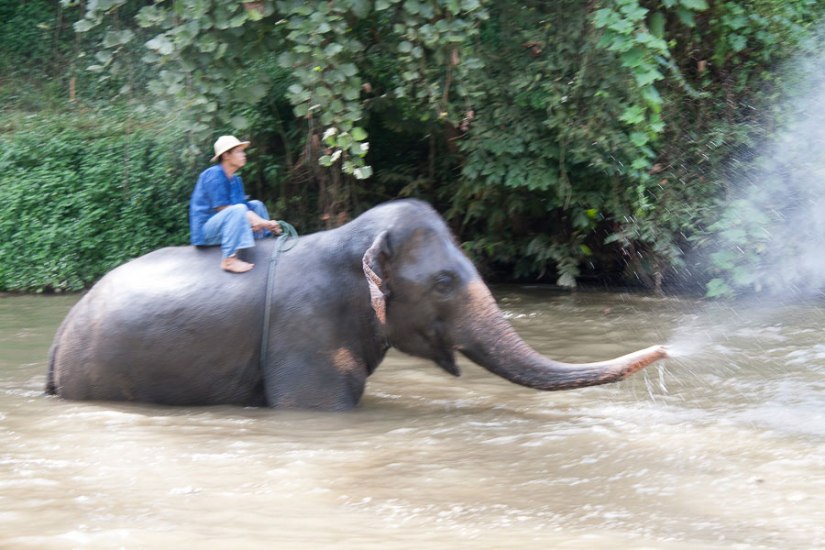
There are a growing number of ethical sanctuaries in Thailand and other parts of the world. Unfortunately the one we visited was not among them. Although it was fascinating to watch the elephants bathing with their mahouts and trainees (tourists) and see them perform traditional logging tasks not to mention paint amazing images of flowers and other elephants, I felt sad at the realization that these magnificent creatures were reduced to vaudevillian acts to survive.
Find out more about Chiang Mai here.
 Jconcetta's Journeys