
At the sites of the once powerful and wealthy capital cities of the Kingdom of Sukhothai and the Auytthaya Kingdom are the ruins of massive monuments and temples. What remains are many carved or cast Buddha statues and the skeletal brickwork construction of prangs and chedi, all of which were originally covered with intricately carved stucco.
SUKHOTHAI
Buddhas
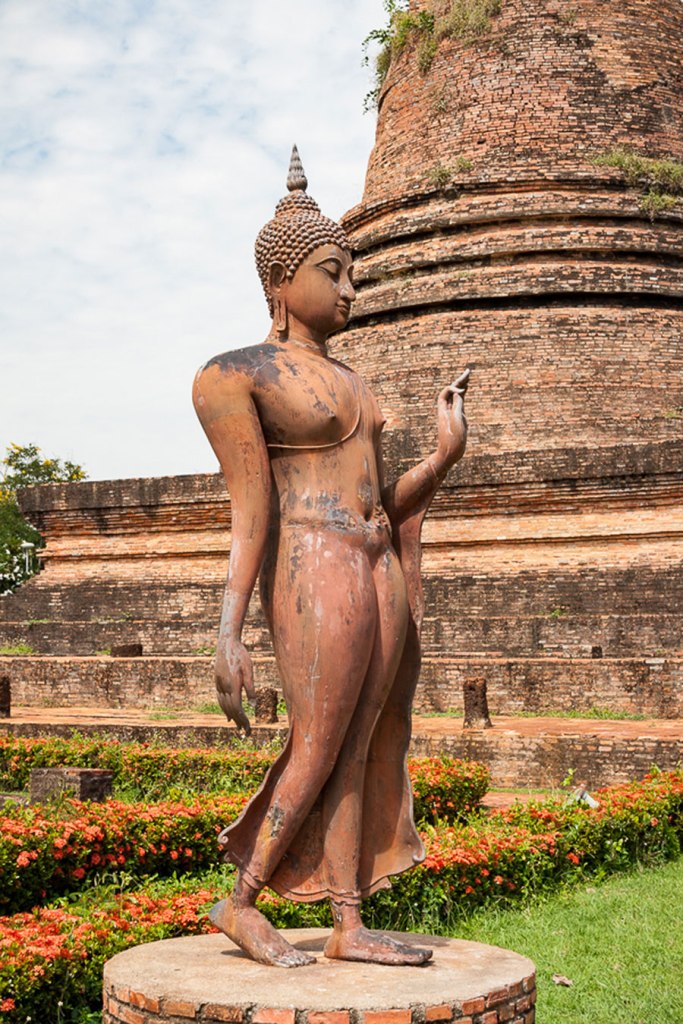
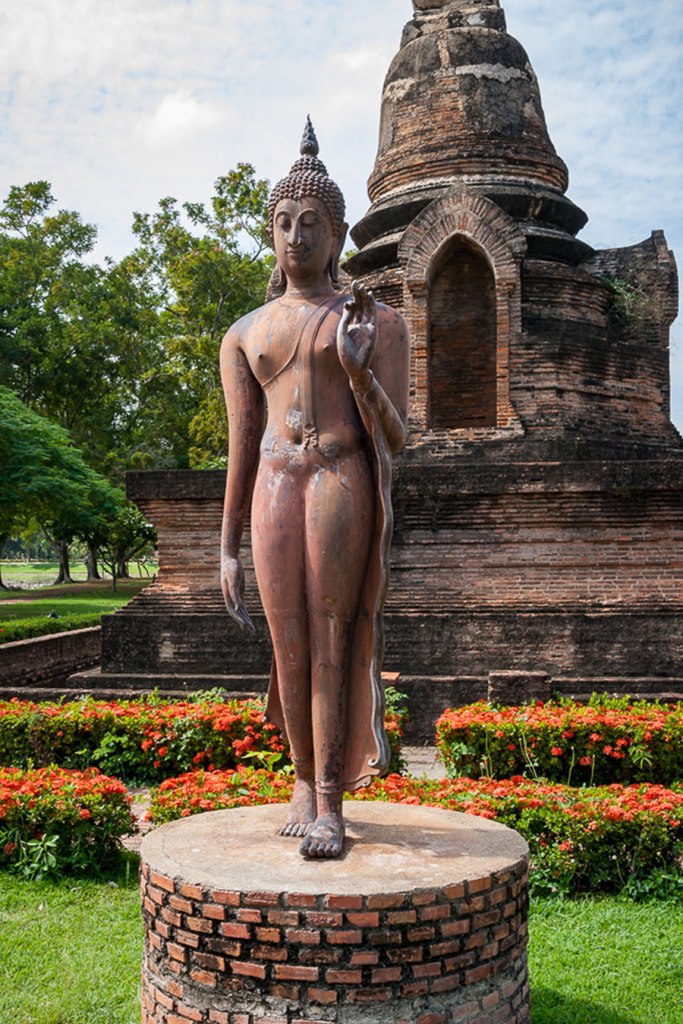
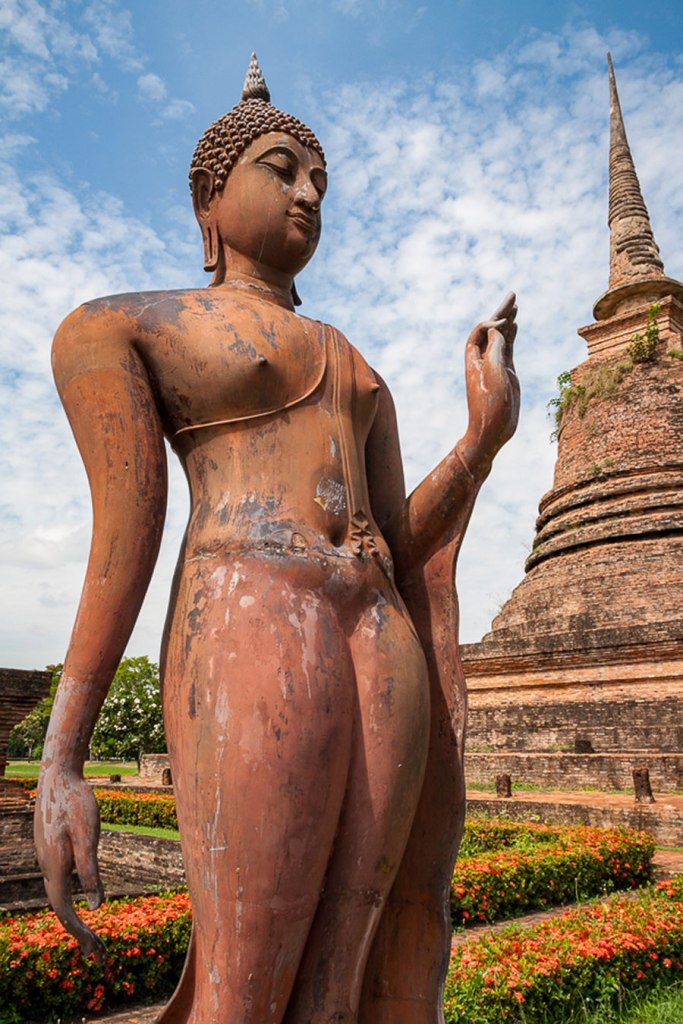
The walking Buddha pose was introduced during the Sukhothai period. Notice the femininity of this walking Buddha.
Sukhothai artists tried to follow the canonical defining marks of a Buddha, as they are set out in ancient Pali texts:
- Shin so smooth that dust cannot stick to it
- Legs like a deer
- Thighs like a banyan tree
- Shoulders as massive as an elephant’s head
- Arms round like an elephant’s trunk, and long enough to touch the knees
- Hands like lotuses about to bloom
- Fingertips turned back like petals
- Head like an egg
- Hair like scorpion stingers
- Chin like a mango stone
- Nose like a parrot’s beak
- Earlobes lengthened by the earrings of royalty
- Eyelashes like a cow’s
- Eyebrows like drawn bows
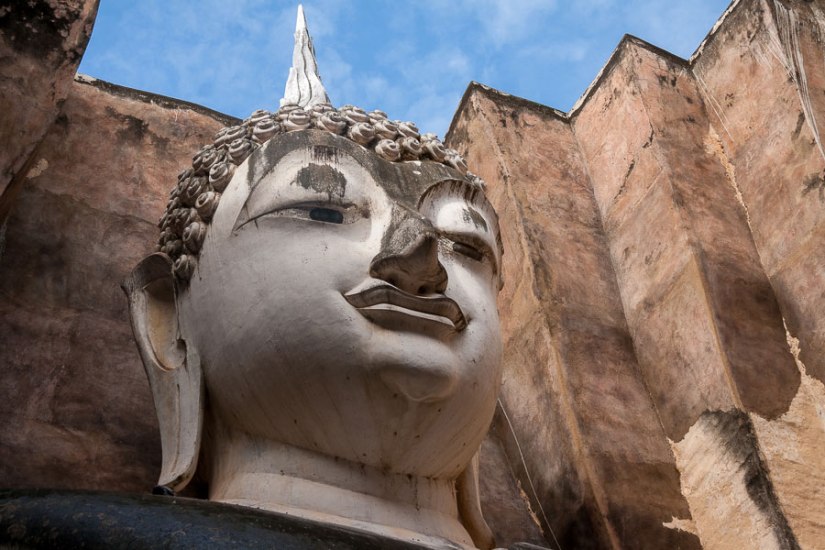
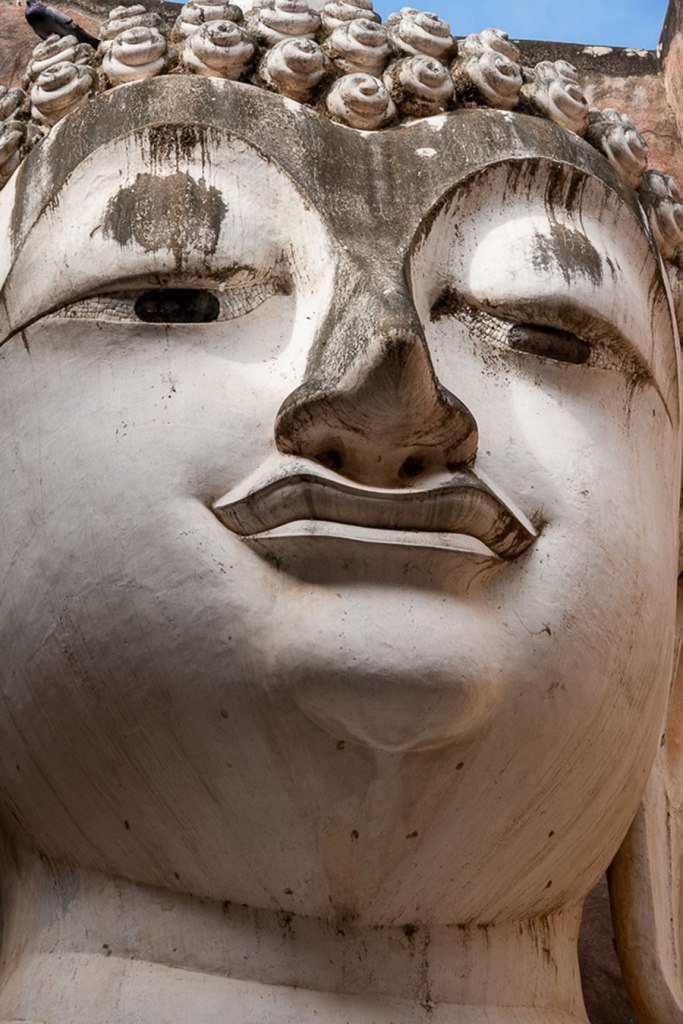
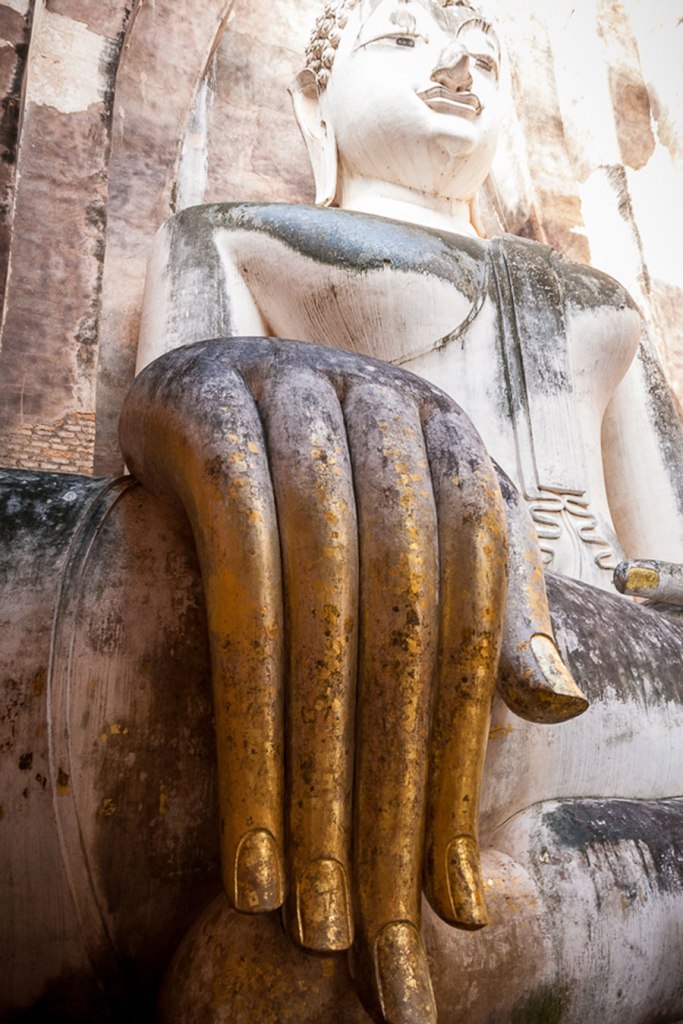
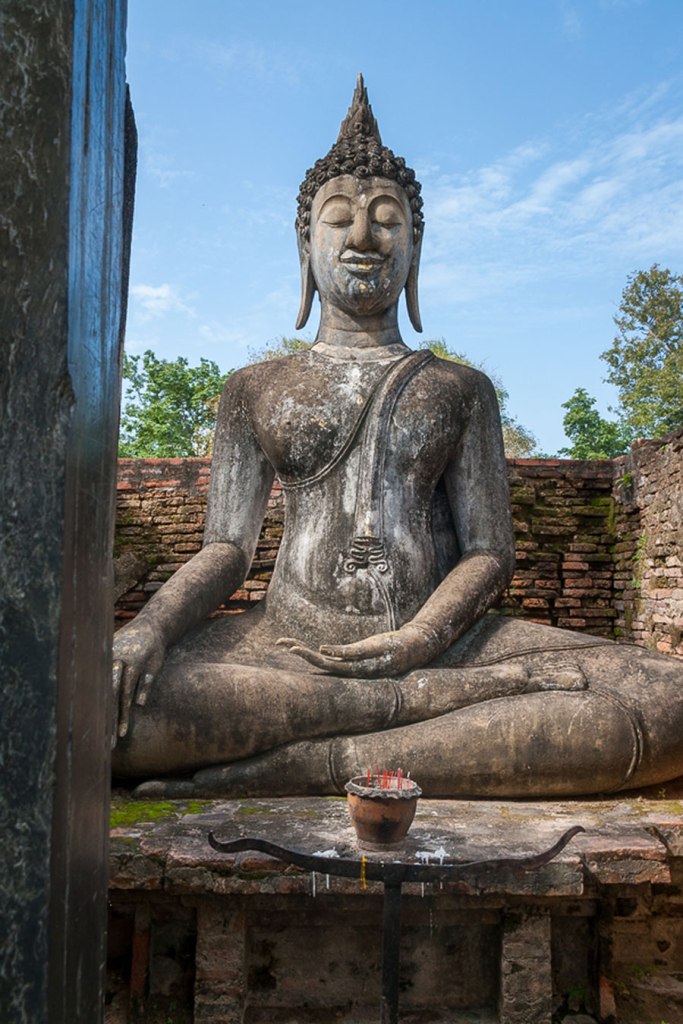
The massiveness of these monuments is hard to appreciate without some reference for scale. Look for people or trees in the images below to get a sense of scale. Click on an image for an expanded view.
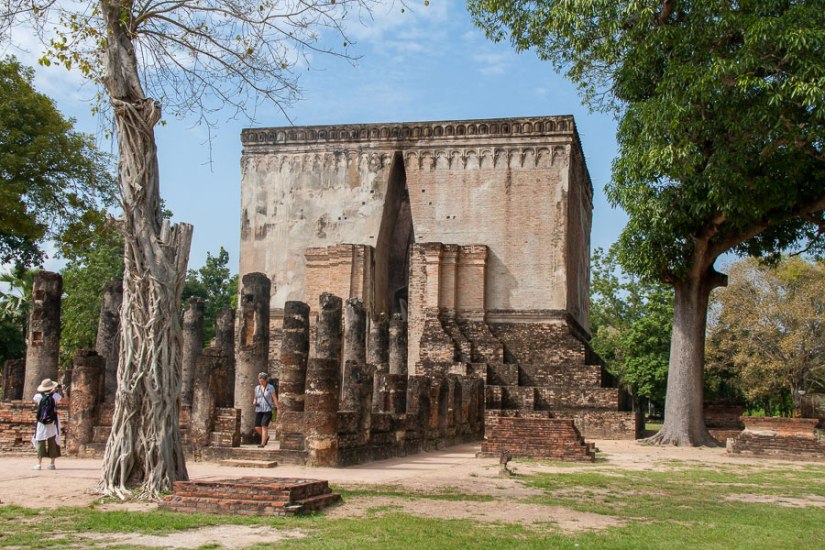
Wat Si Chum 
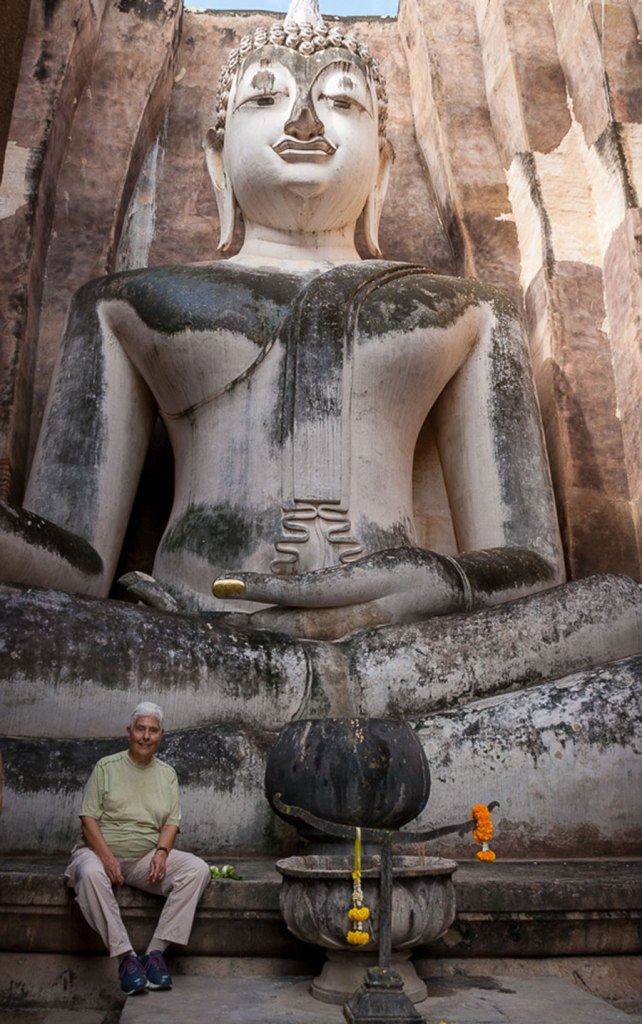
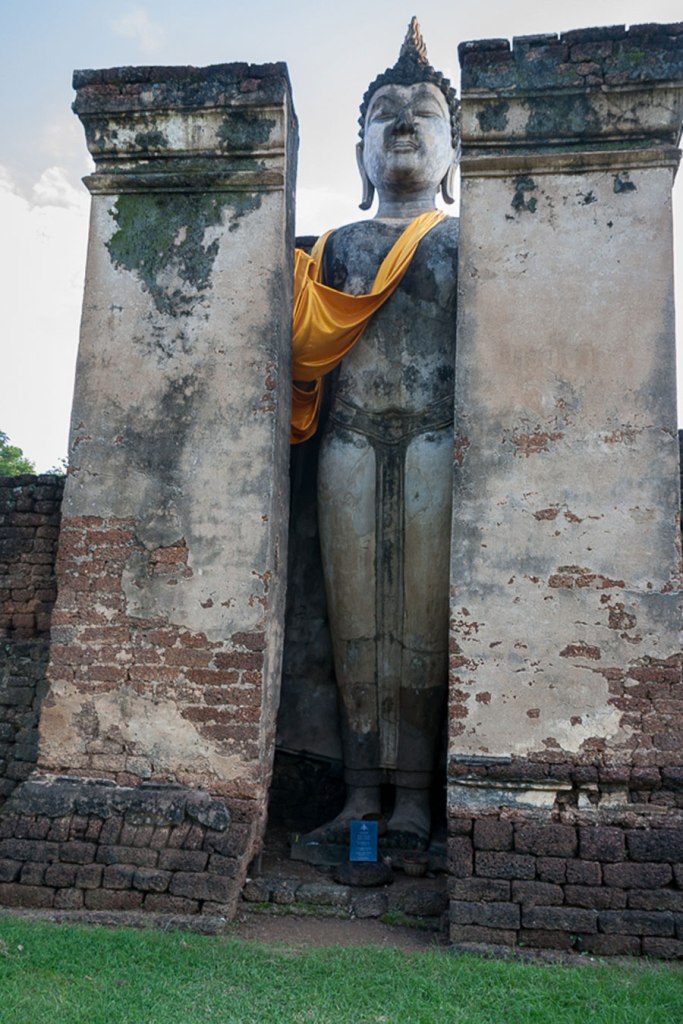
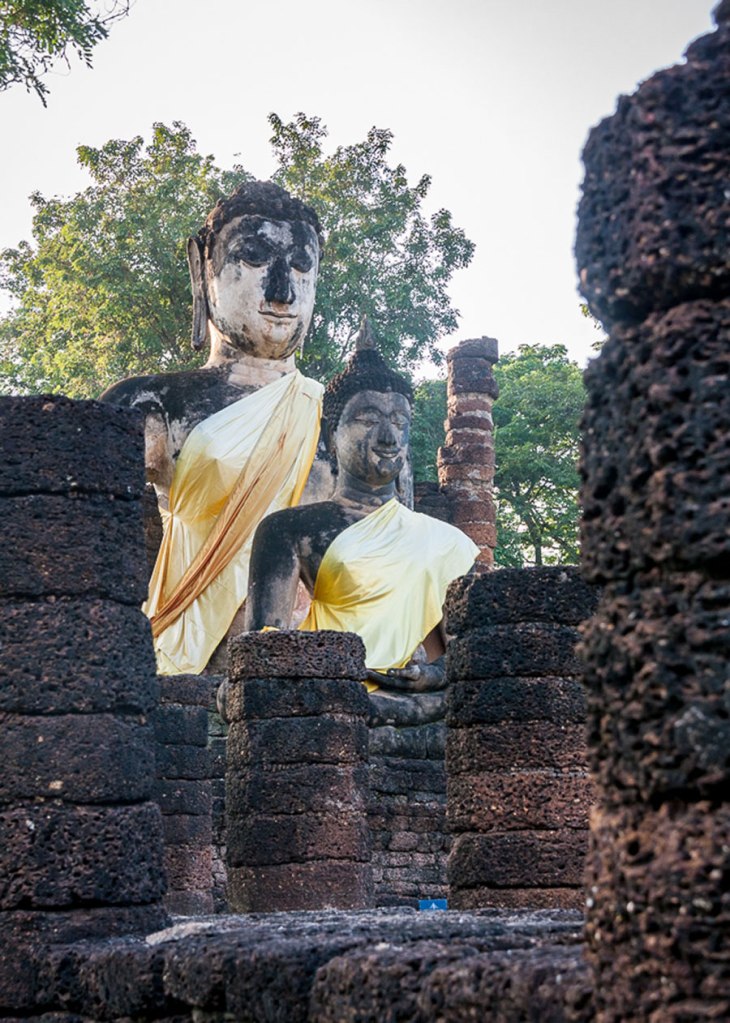
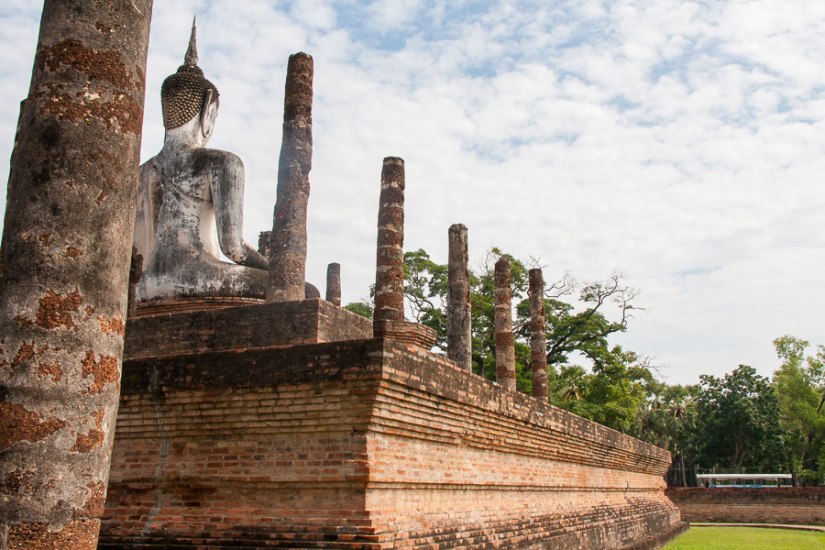

War Mahathat
Sukhothai Temple Ruins
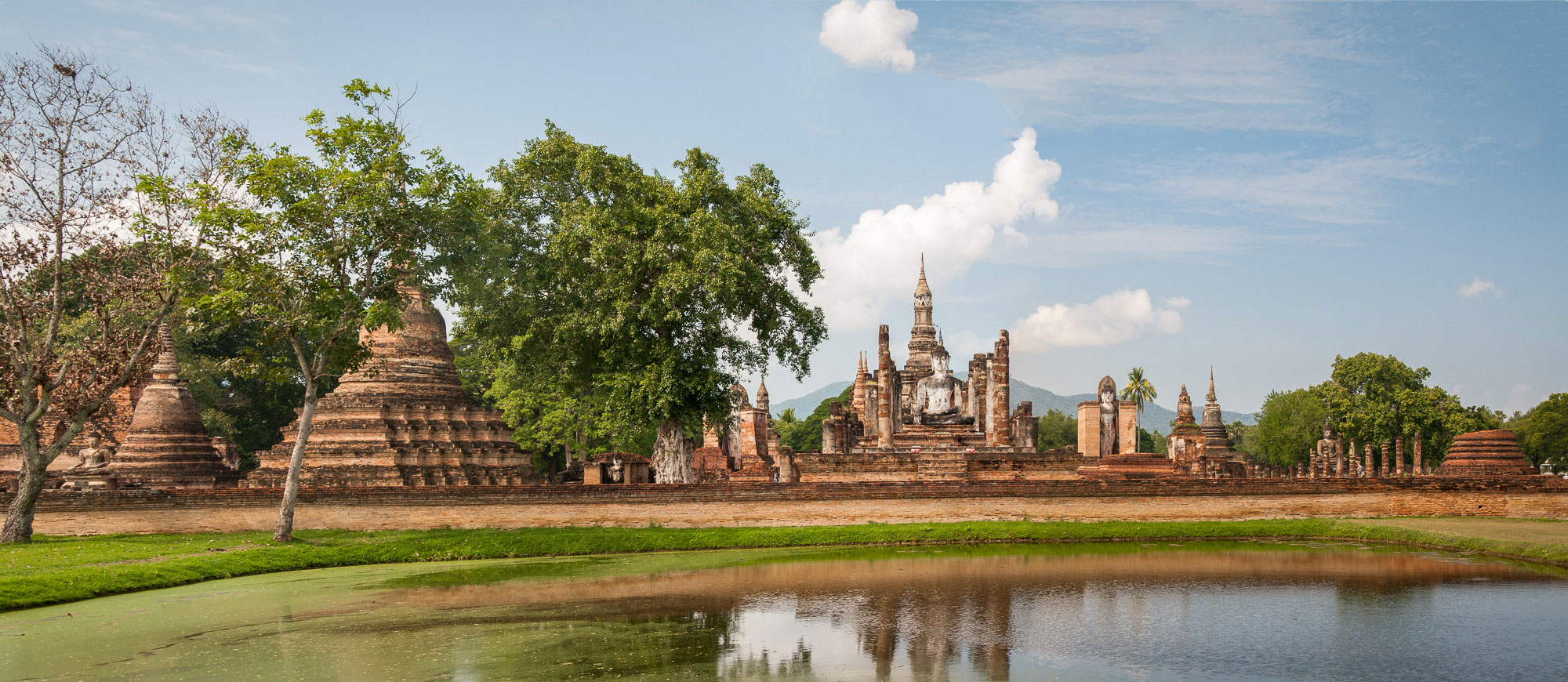
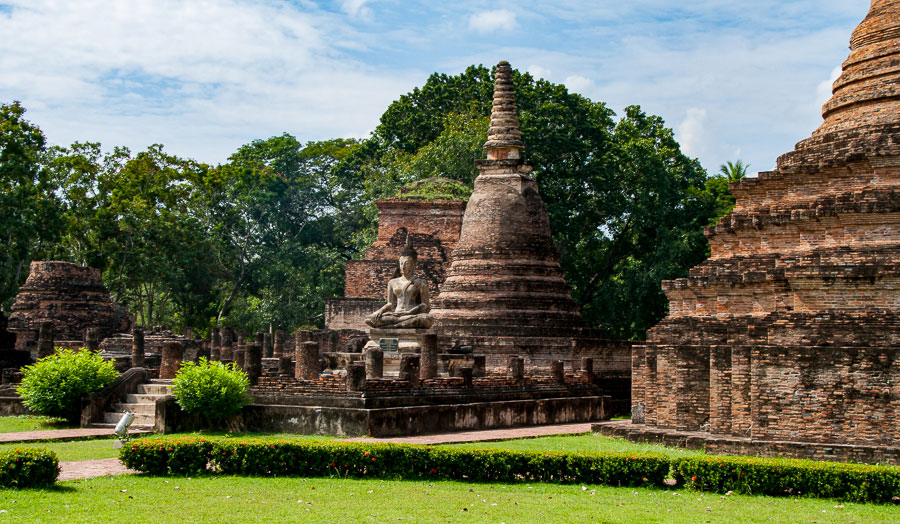
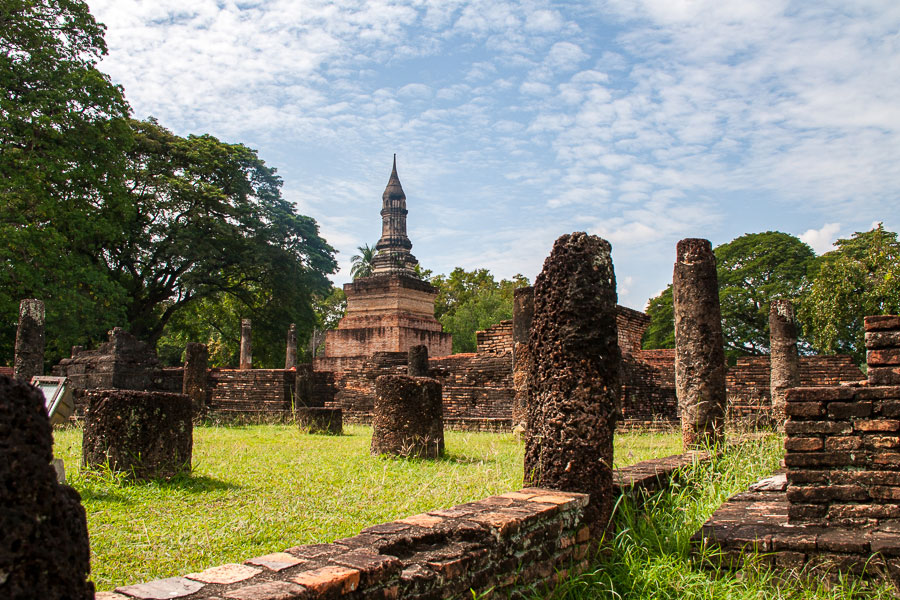

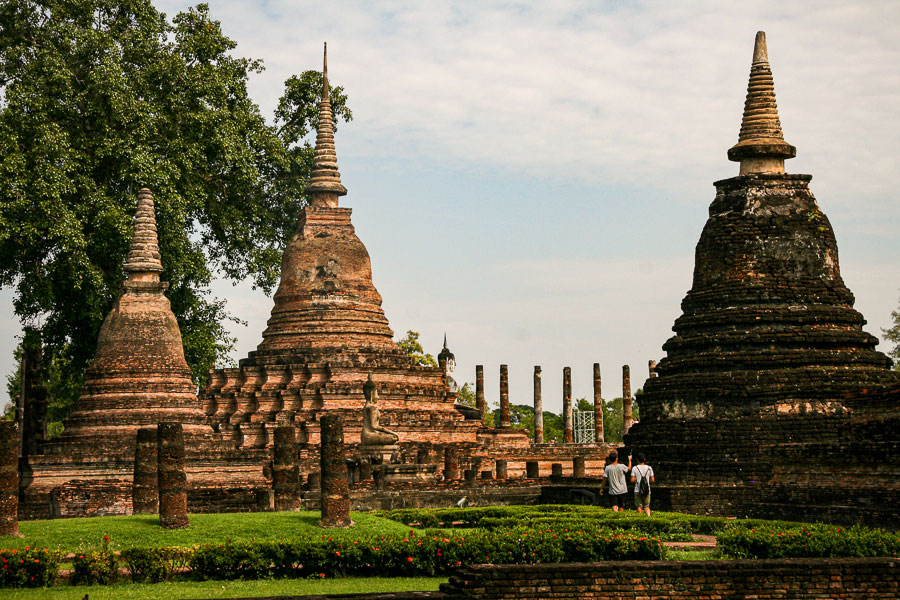
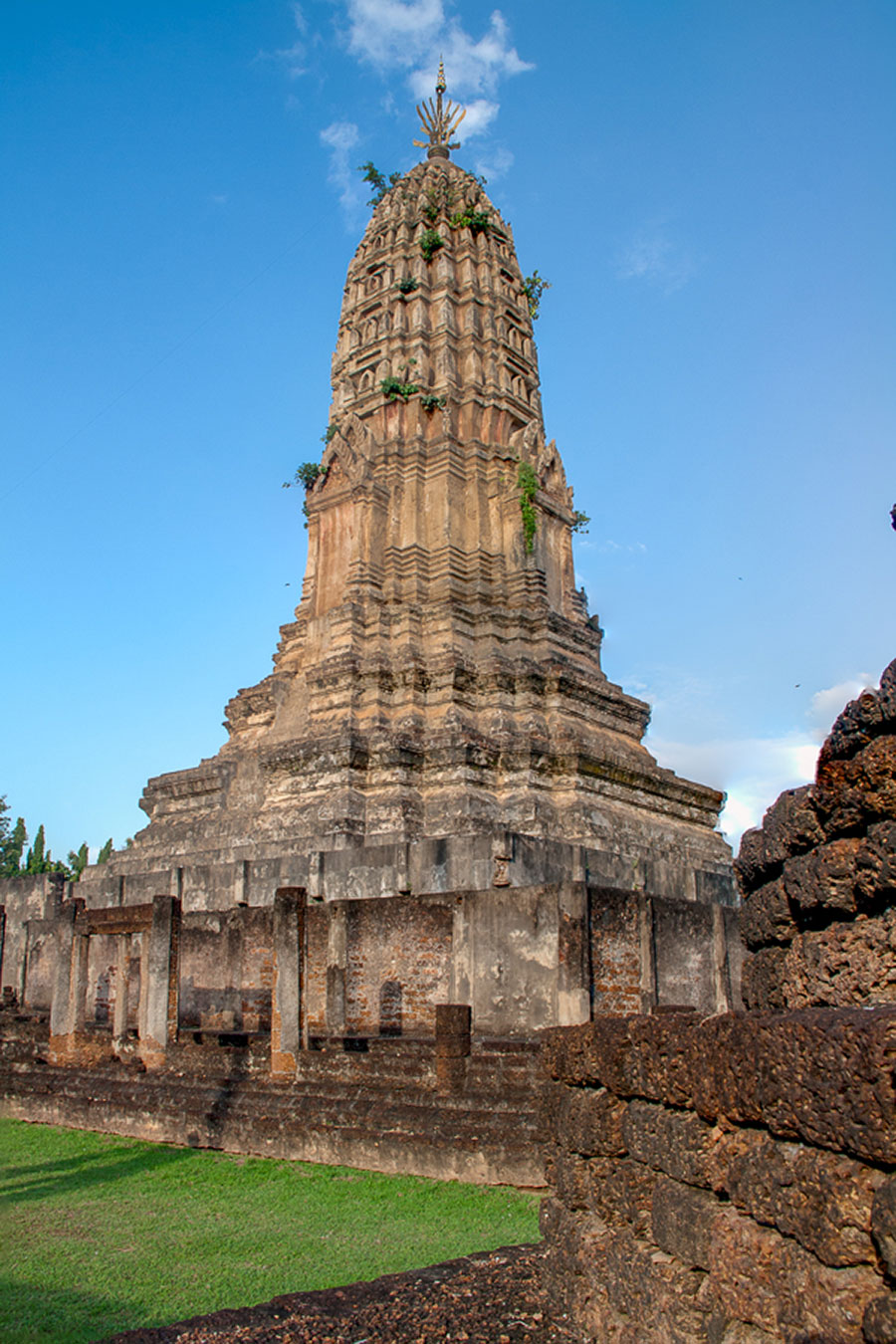
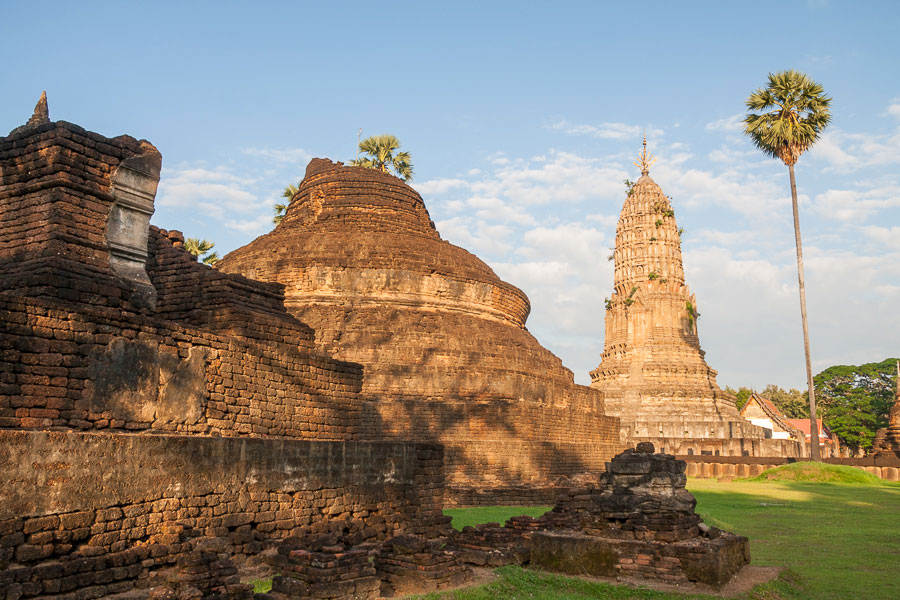
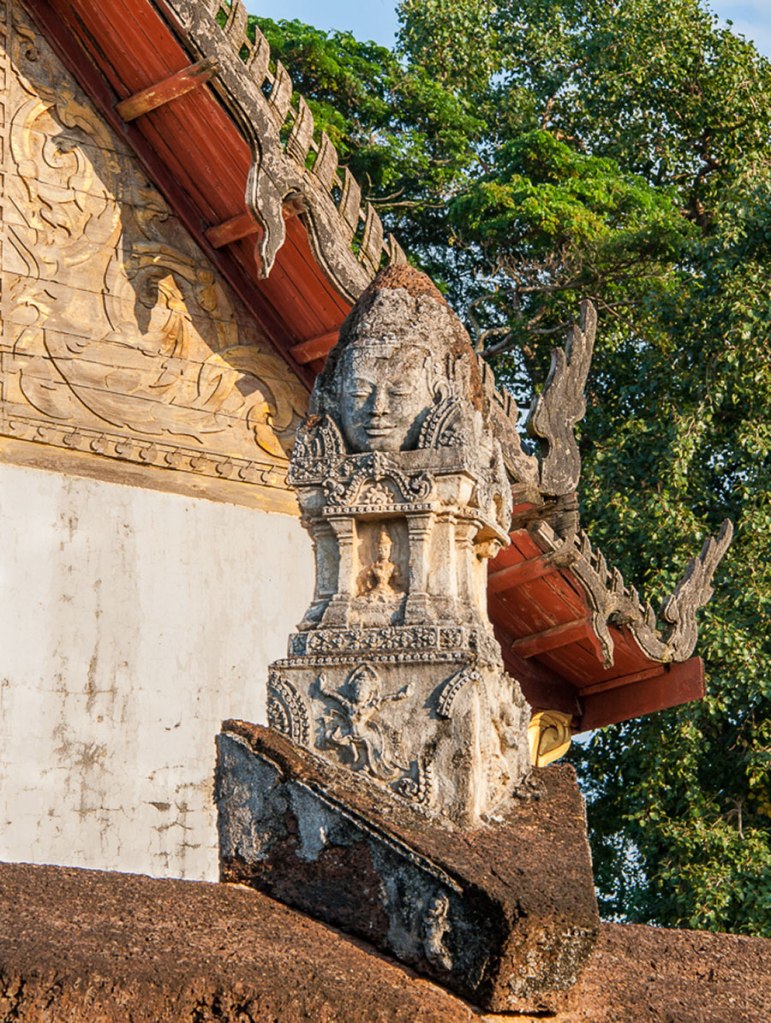
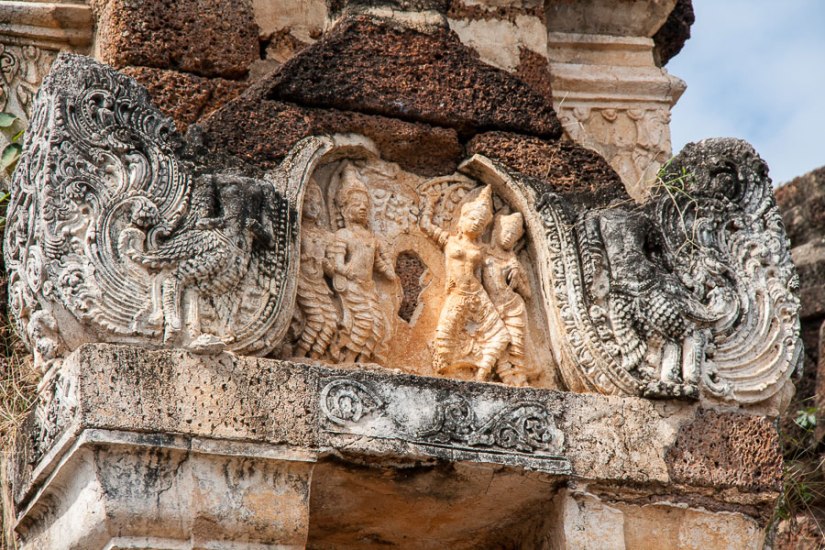
Not much remains of the ornate exterior carvings but enough-to give us an idea of their splendor.

Ayutthaya
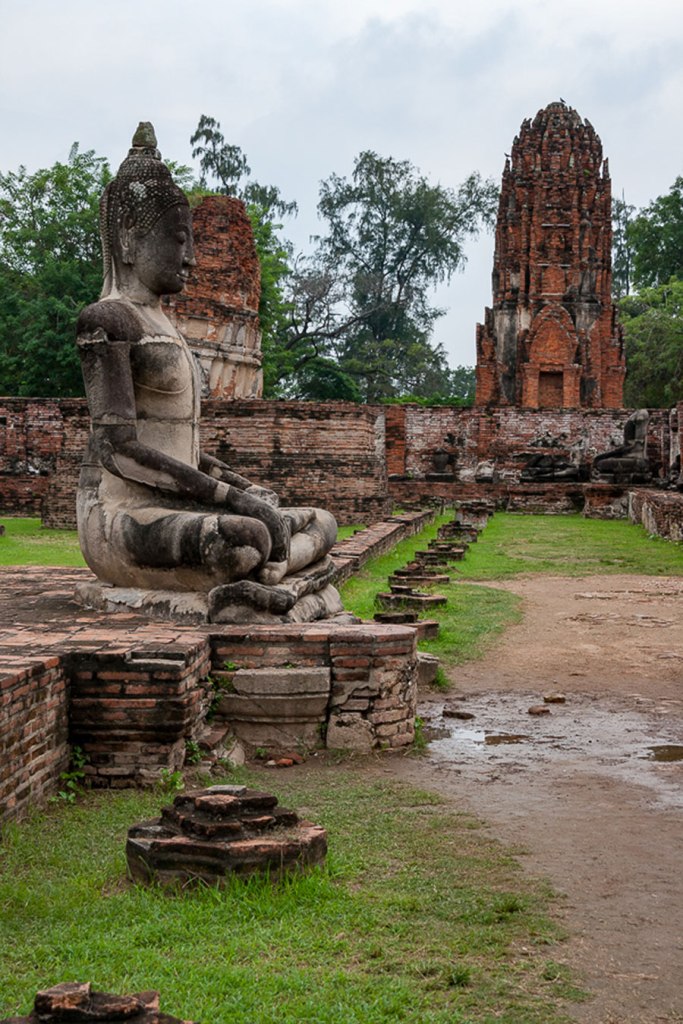
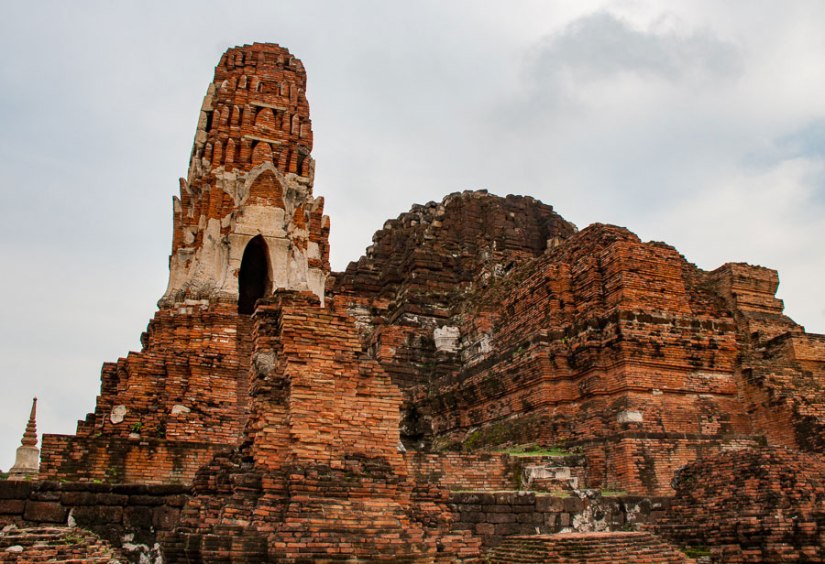
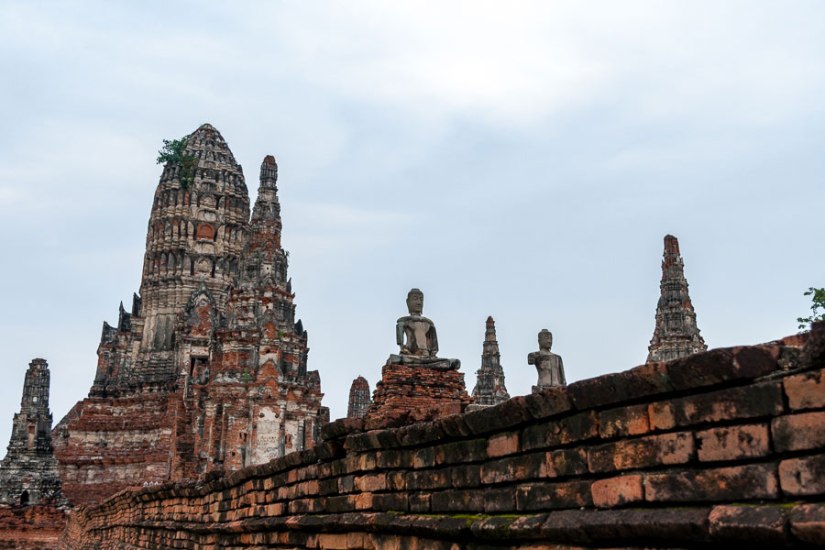
Although the city of Ayutthaya was not destroyed until 1767 it was burned to the ground by the invading Burmese, utterly annihilated. The ruins are indeed ruins – mostly brick foundations and walls – and it is difficult to see the elegance of the once magnificent temples. Relatively few Buddha statues are intact.

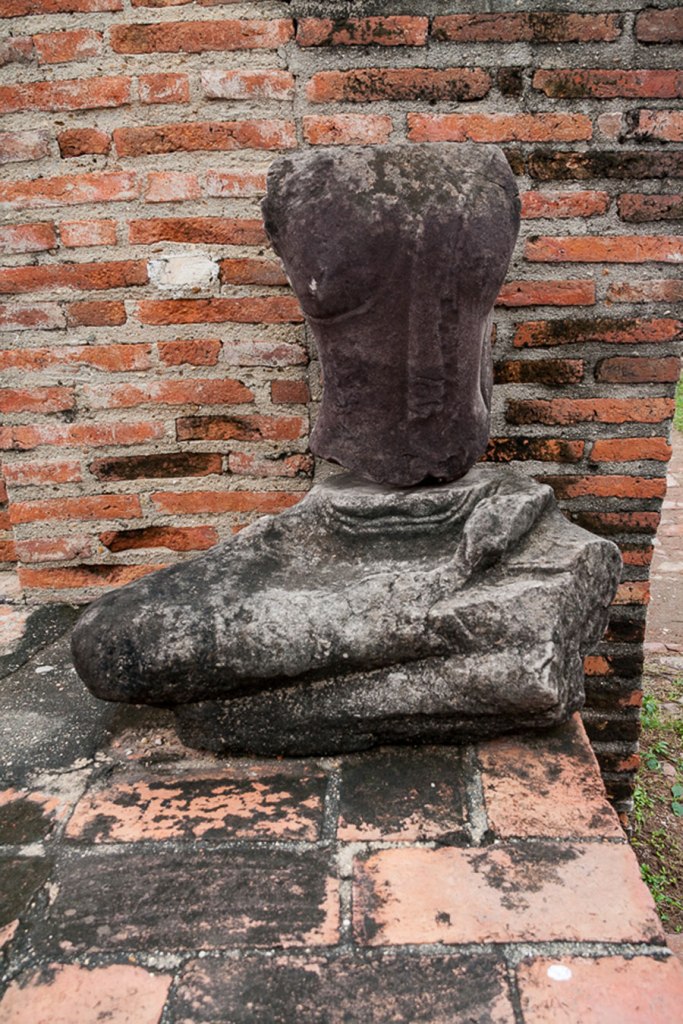

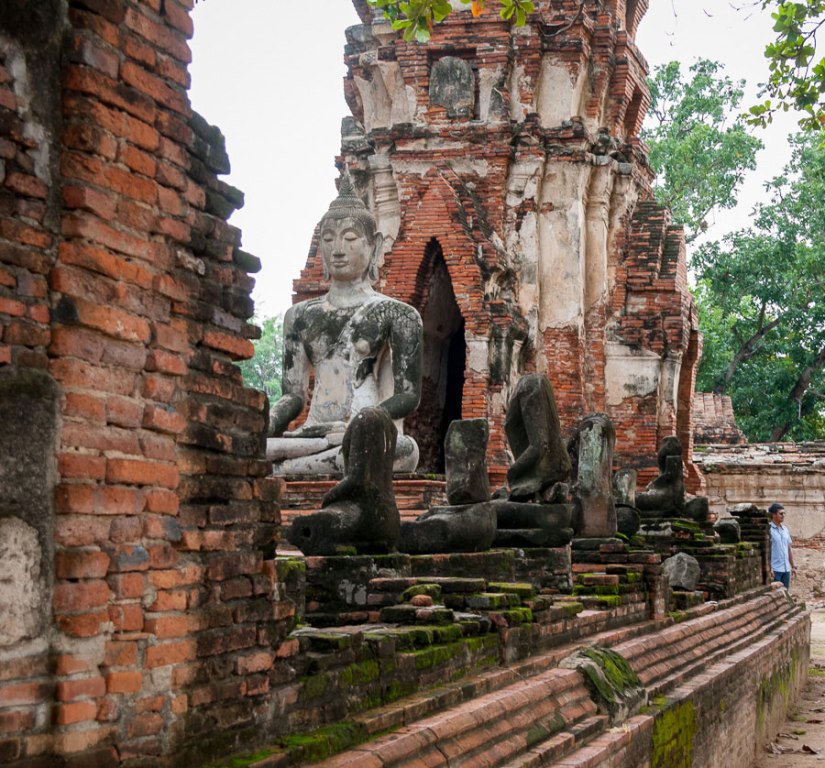
Wat Mahathat
Notice the person in the lower right to get a sense of scale.
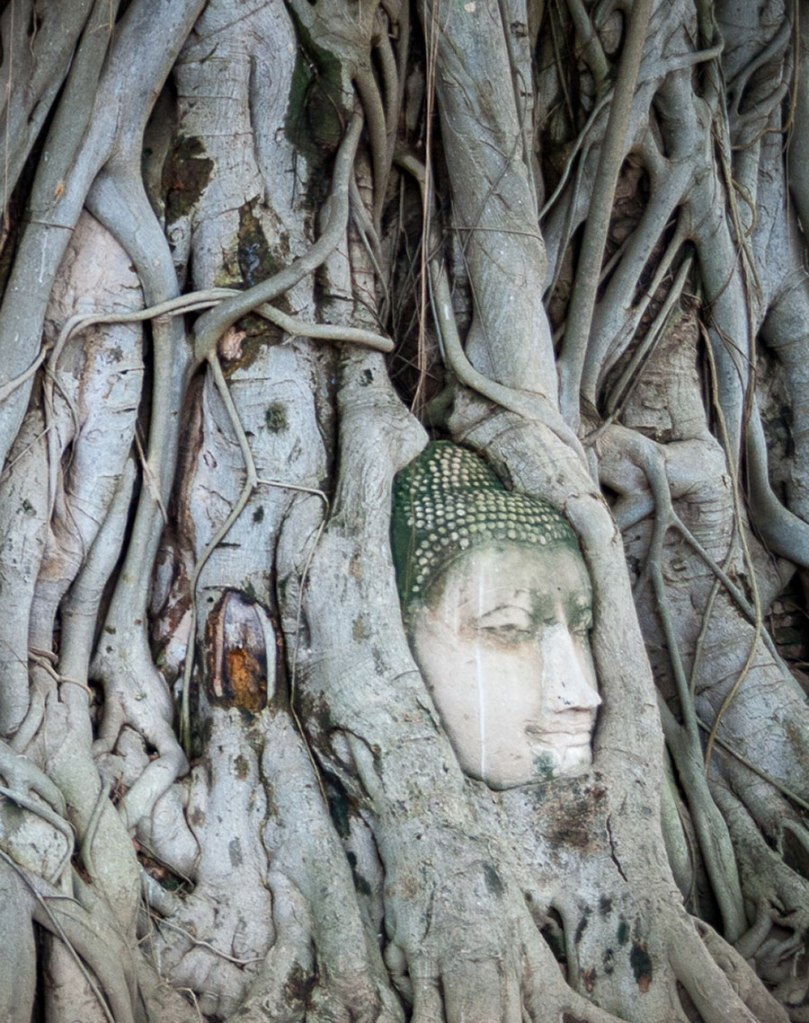
The site’s most famous and widely photographed attraction is a Buddha head embedded in the roots of a strangler fig tree. There are many theories about how it got there. Some think the jungle had simply overtaken the ruins, as in Angkor’s Ta Prohm in Cambodia; others speculate that treasure hunters dropped the head because it was too heavy to carry. In any case it seems ironic that the head of Buddha, lopped off from most statues, has become to center of attention in the Historic City of Ayutthaya.
 Jconcetta's Journeys