Abbazia di Monte Oliveto Maggiore
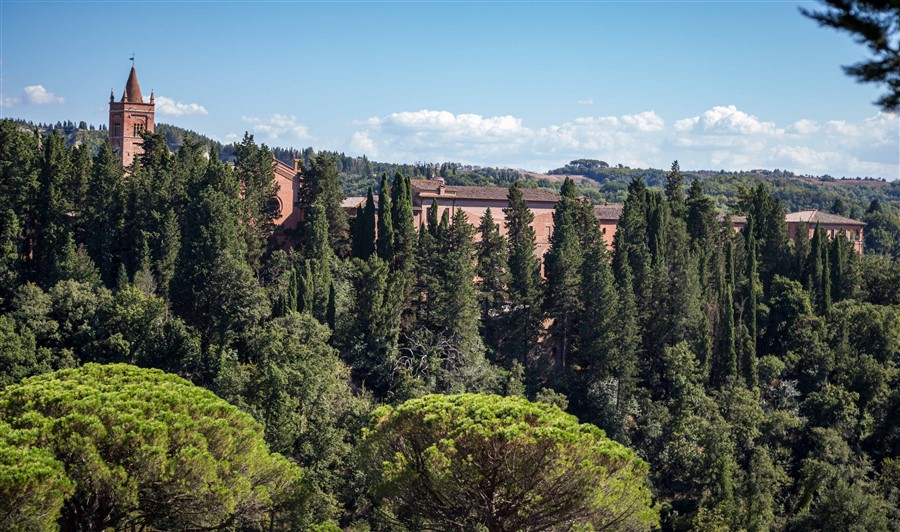
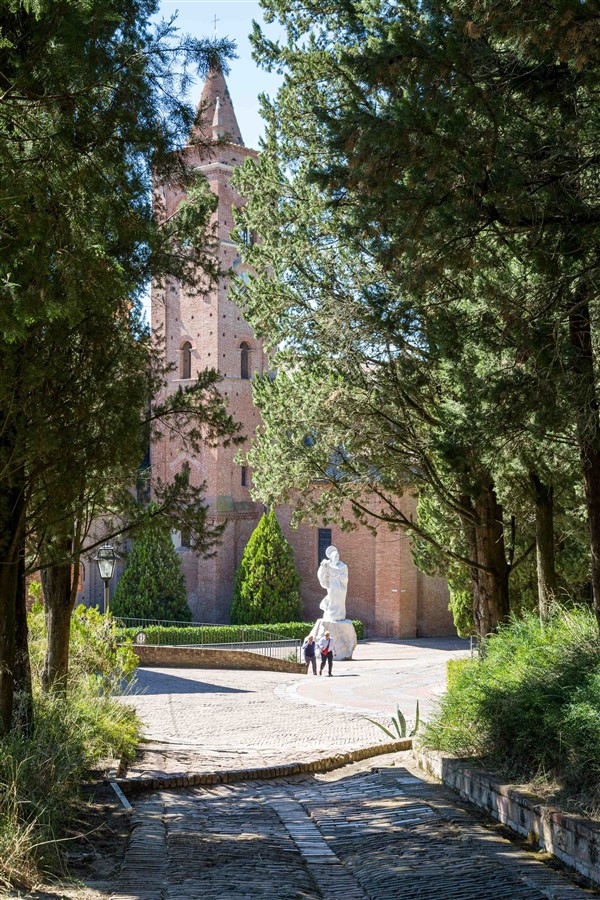
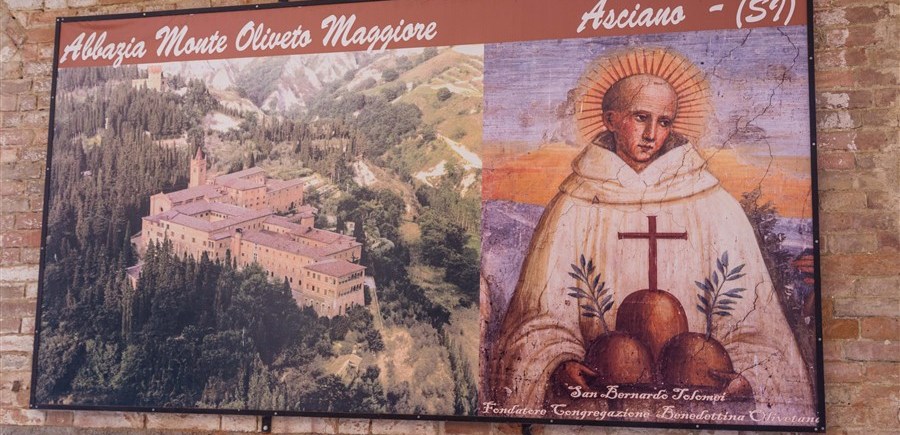
One of the oldest monastic complexes in Italy, this monumental abbey is situated on a cypress covered hill in the middle of the Crete Senese, halfway between Aciano and Buonconvento. Construction began in the late 14th C. and modifications to the church and other structures continued through the 18th C. An important center of art and culture during those 400 years, it contains frescoes that are considered masterpieces of the Italian Renaissance and is the repository of more than 40,000 volumes, including rare manuscripts and parchments, the restoration of which is part of the monks’ work. That work also includes farming, maintaining olive groves and olive oil production, cultivating truffles, making wine, beer, honey and a liqueur made from an ancient abbey herbal recipe – all of which may be purchased at an on site shop or online.
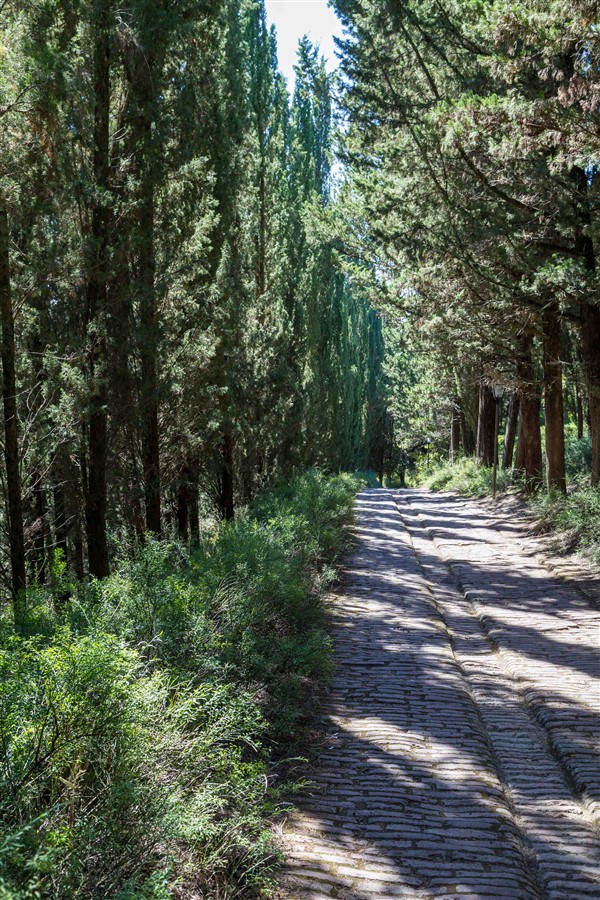
The complex is accessed via a drawbridge which was part of its original defenses; then a cypress lined road leads to the church, the cloisters with the frescoes and the library. Sadly, on the day we visited these were closed and we had to content ourselves with walking the beautiful grounds and enjoying an outdoor lunch on the premises.
Abbazia di Sant’Antimo
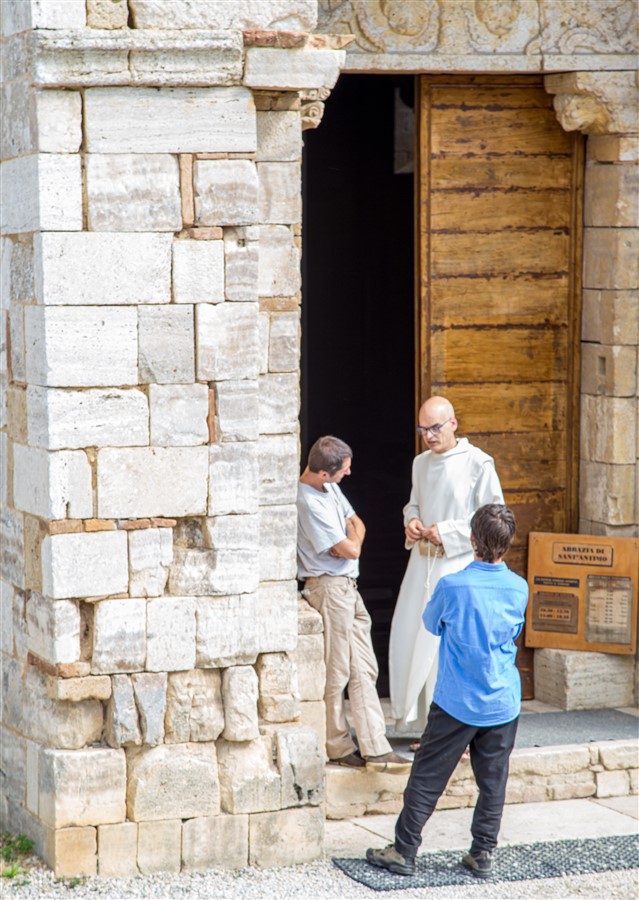
Even older but with less modern day staying power is the Abbey of S. Antimo, an exceptionally beautiful Romanesque church and monastery in a bucolic secluded setting not far from Montalcino. We visited the abbey especially to listen to the White Friars, who are French monks following the rule of St. Augustine, sing Gregorian chant as part of their daily office (prayers). They inhabited Sant’Antimo starting in late 20th C. but were recalled to France in 2015 and the monks who took their place do not offer this. We were lucky to experience this haunting music in a setting mystical in its antiquity and vast simplicity.
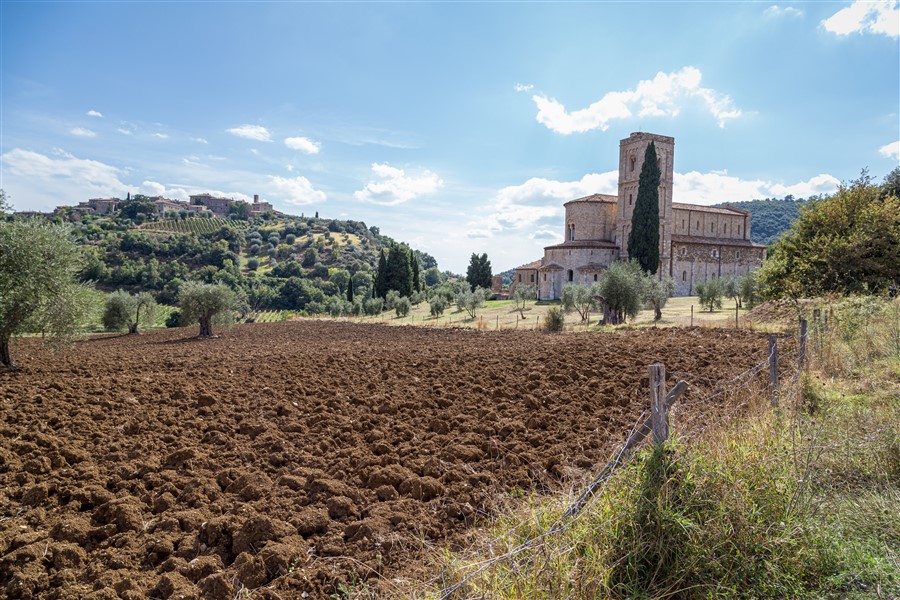
On the site of the Abbey artifacts have been found suggesting a Roman settlement, including, perhaps, a sacred spring. Archeological investigations date the foundation of the original Benedictine monastery to the time of Charlemagne but there is no evidence for the legend that he founded the monastery.
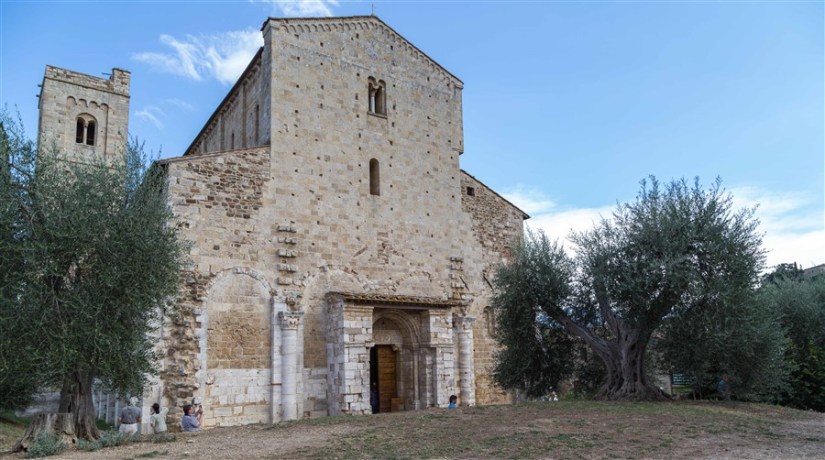
Documents show that the monastery was in existence in 814 and came under various jurisdictions until 992 when it was placed under the See of the bishop of Rome. After a huge donation was made to the Abbey in 1118 there followed a era of construction and expansion that resulted in Sant’Antimo being one of the richest and most powerful monastic landowners in Tuscany. It had authority over 38 churches from Pisa to Grosetto, owned a thousand farms, as well as the great castle at Montalcino where the abbot lived. The “golden years” lasted until the early 13th C. after which its fortune waned and waxed and waned again with the political climate until, at its nadir in the mid-19th C., it was used as a stable. A long period of restoration followed the Risorgimento and religious activity began at the Abbey again in the 20th C.
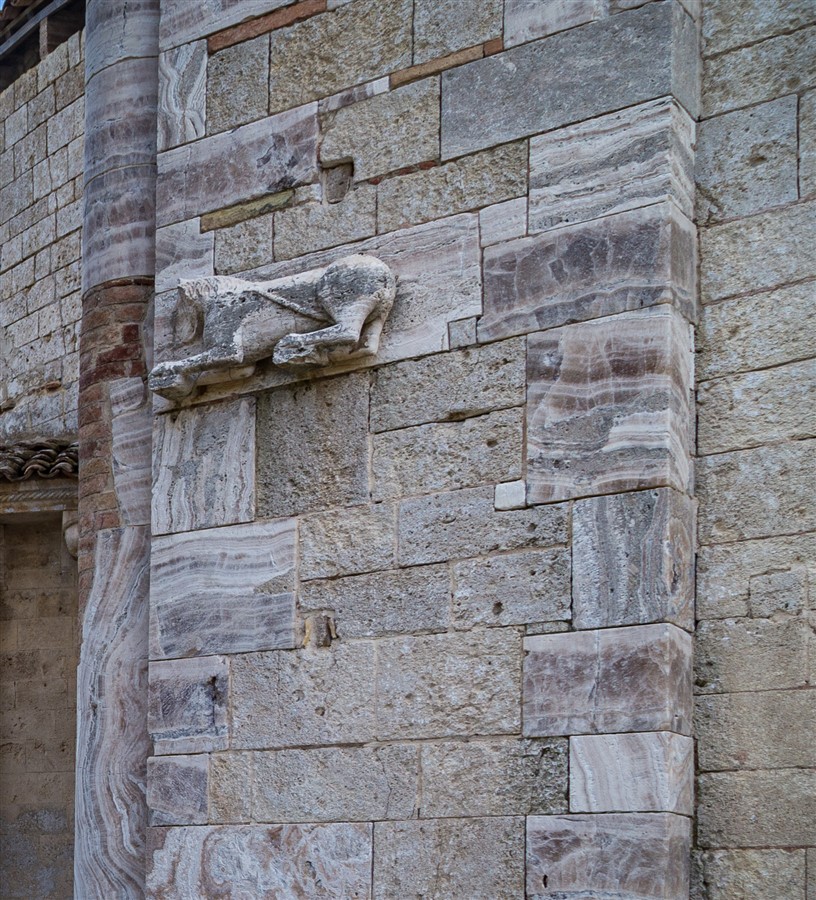
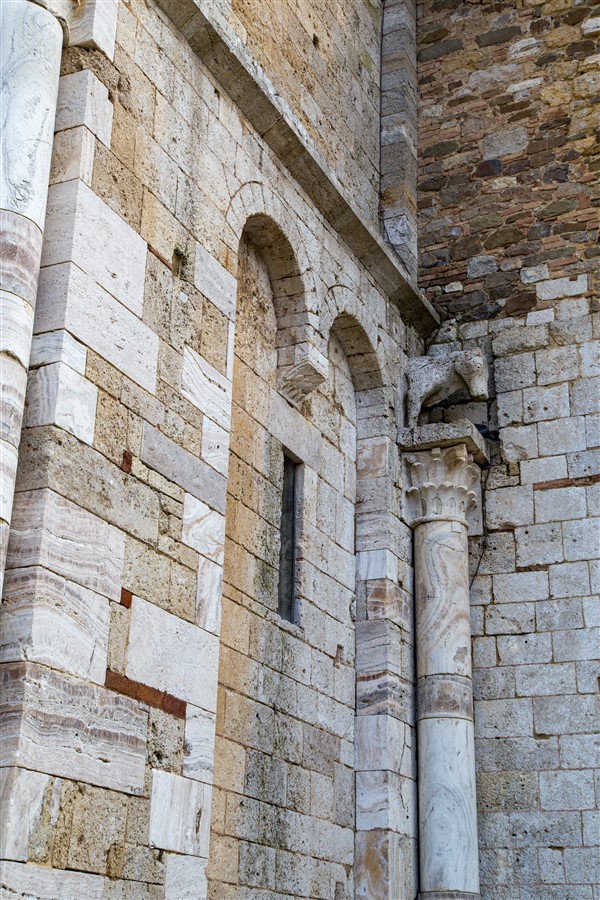
Animal motifs decorate the outside walls as well 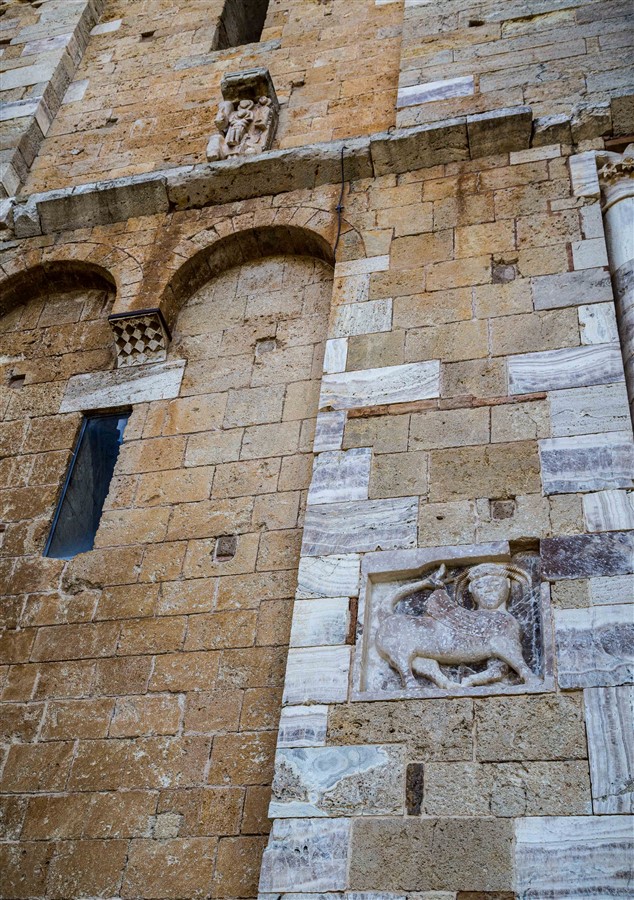
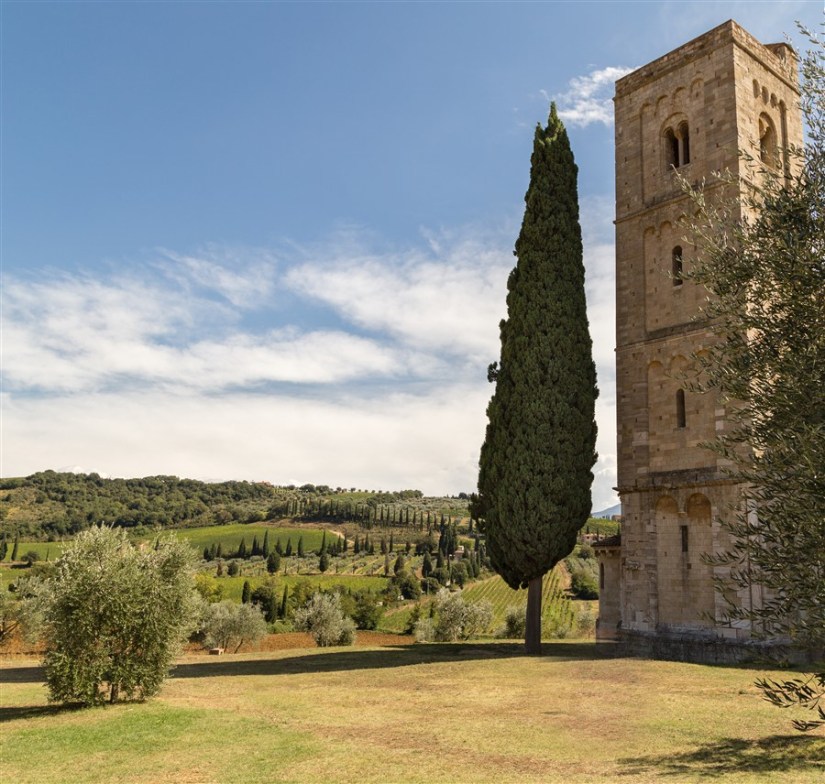
The bell tower in Lombard style 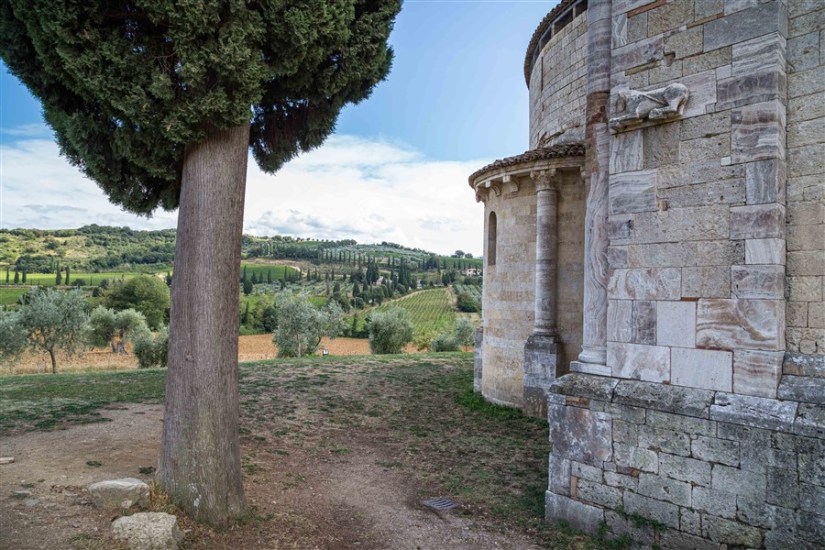
For those who appreciate and enjoy architecture Sant’Antimo is considered a unique gem, a prestigious example of the combination of French and Lombard Romanesque architecture. Travertine and alabaster, quarried in the vicinity, were the materials of construction of the columns, the capitals and the outer walls, giving them a soft glow in reflected light. The basic floor plan of the church and the richly decorated, precise, cleanly carved capitals reflect French inspiration. Outside there is a bell tower said to be decorated in the Lombard style and housing two bells, one of which is inscribed with the abbot’s name and the date 1219. The oldest part of the church, the Carolingian chapel of the 9th C., is used a a sacristy and is not open to the public.
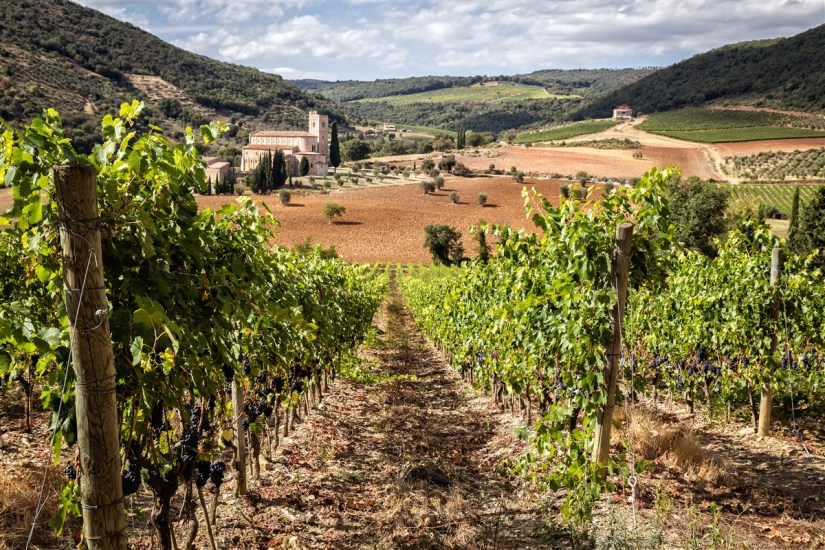
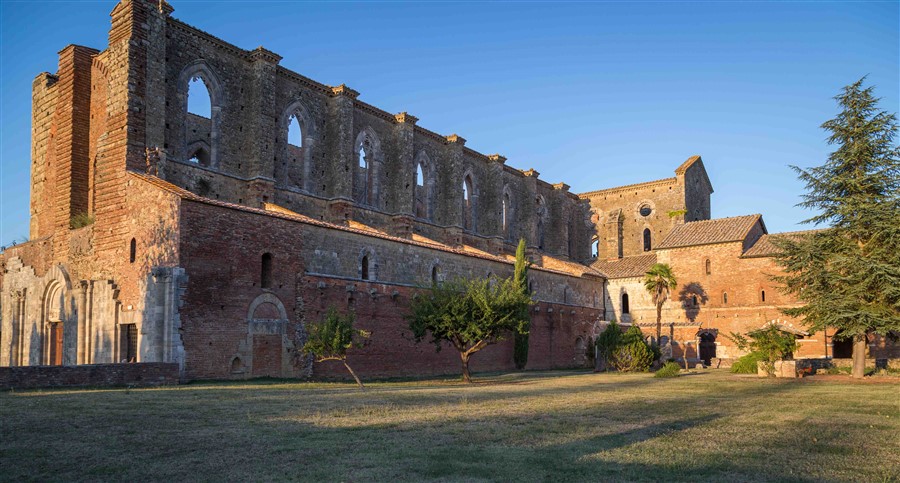
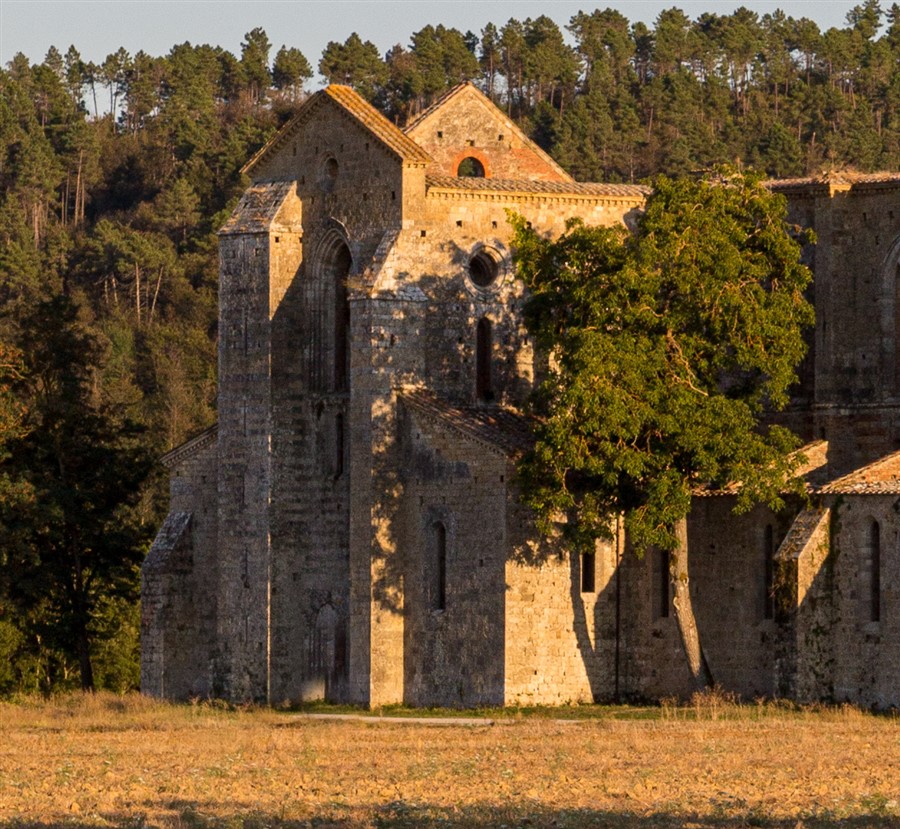
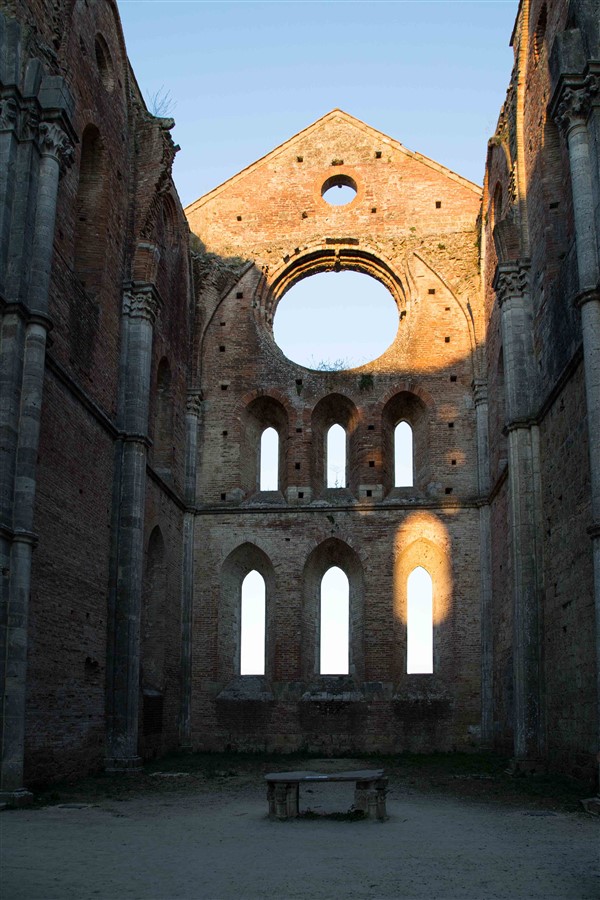
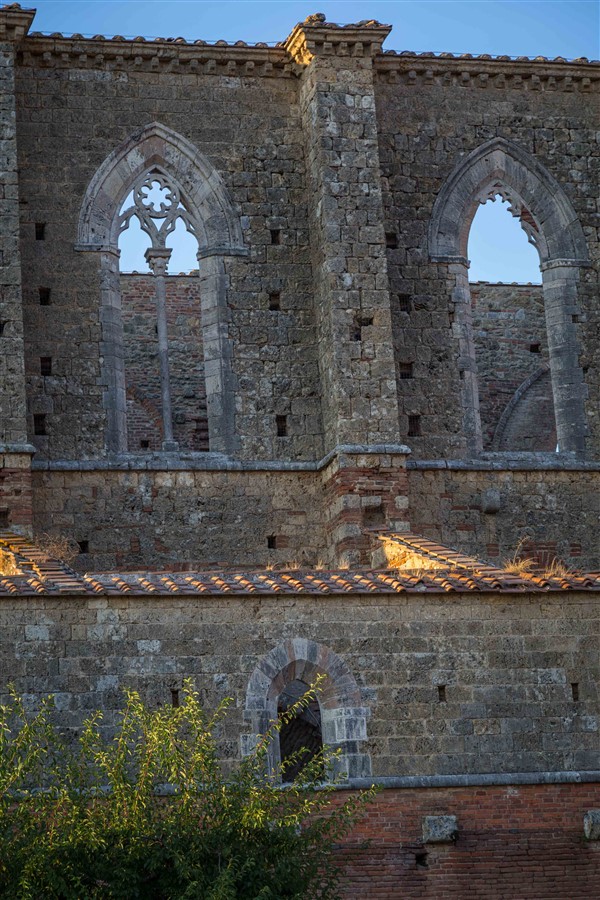
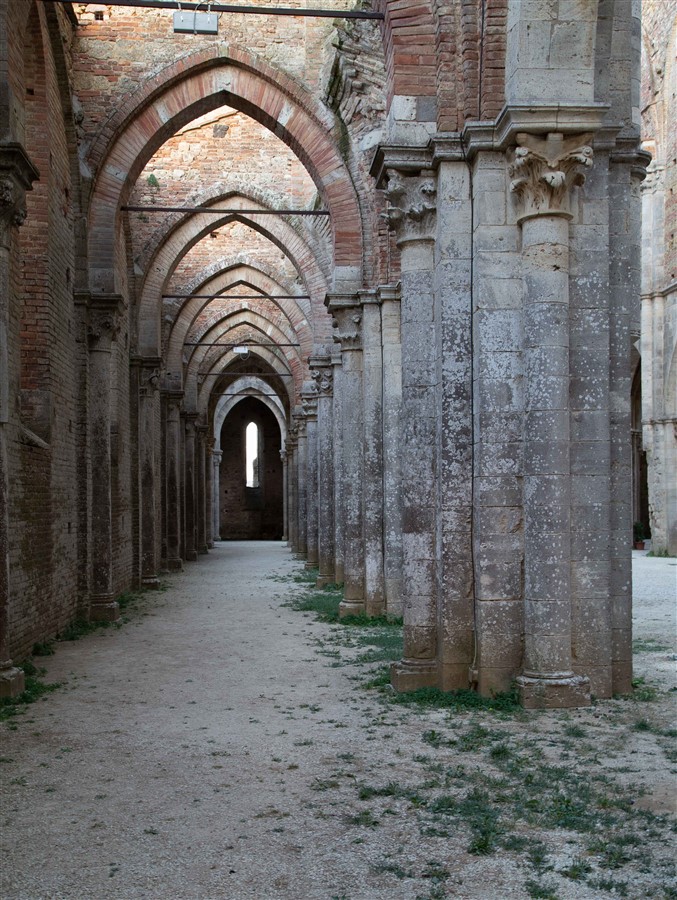
The Splendid Ruins of Abbazia di San Galgano

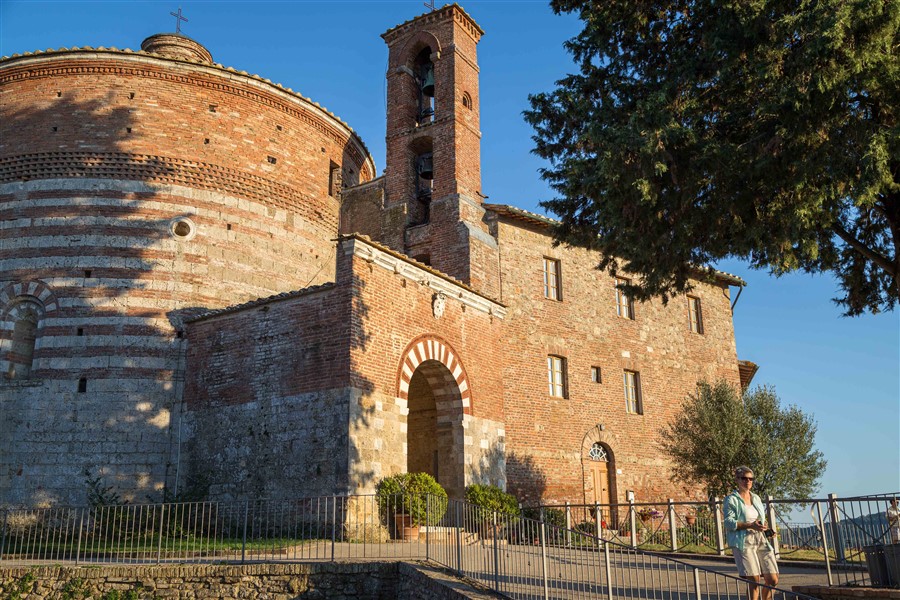
Although there are many spectacular abbey ruins across Europe, the ruins of the Abbey of Saint Galgano, while immensely attractive, seem to hold special interest because of the legend about its namesake. Galgano Guidotti (1148-1181) was a young knight born in the village of Chiusdino with a reputation for brutality and lust. After experiencing several visions featuring the Archangel Michael, he decided God was giving him a message to renounce his hedonistic life. Easier said than done, about as easy as splitting rock. When Galgano proceeded to demonstrate this point, his sword went through the stone like the proverbial knife through butter and has remained there ever since. Galgano went on to live as a pious hermit with ties to local Cistercian monks. That’s the version of the legend that I like. There are several other versions about how the sword came to be embedded in the rock, but they all end with a sword in a rock which cannot be extracted. It can be seen at the mausoleum built for Galgano on the secluded hill, Montesiepi, where he lived as a hermit.
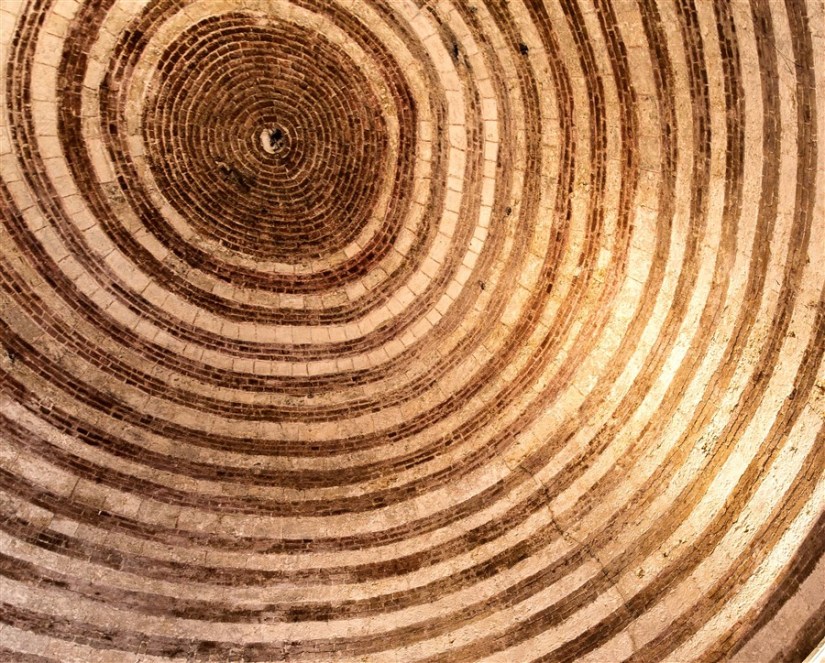
Can you believe I did not take a picture of the sword in the stone( you can see one here)? I was too busy marveling at the rotunda dome constructed of 24 concentric, alternating circles of white stones and terracotta bricks. Over the centuries, the rotunda was ravaged by passing armies and nearly destroyed but it was well restored in 1924.
The sword in the stone story that most are are familiar with is that of Excalibur and King Arthur, and it is quite plausible that these legends are connected. Consider:
- The Montesiepi sword has been shown to be of the 12th C.
- The Abbey, celebrating the rapidly growing cult of Saint Galgano, was built in the early 13th C. by the Cistercians, a French monastic order that propagated Arthurian romances during that period.
- The first mention of the “sword in the stone” motif in Arthurian romances was 1200.
- Around this time the tomb of King Arthur at Glastonbury was “discovered.”
- Finally, another name for Gawain, the most loyal and honored Knight of the Round Table, is Galganus or Galgano. He was the only one who had the privilege to use the sword Excalibur in battles.
So were the monks responsible for echoing Arthur in Tuscany or did that part of the story originate here and become incorporated into the Arthurian stories?
Because of the interest of wealthy noblemen and the growth in the number of monks and pilgrims devoted to Saint Galgano (he was canonized just four years after his death), the Cistercians were encouraged to build an abbey. The church was built in the Gothic style typical of this French monastic order and is said to be the model for Siena’s cathedral. The Abbey thrived for a hundred years after which it declined steadily owing to famine, the plague, marauding armies that often crisscrossed that territory. At one point even the leaden roof was sold, and after its complete abandonment in the late 18th C. its stones, columns and capitals were looted by local builders. Restoration that began in the early 20th C. has preserved enough of the ruins to attest to its splendor.

Abbazia della Santissima Trinità e di Santa Mustiola (dei monaci Vallombrosiani)
About five miles down the road from our home at Casabella is the above named Abbey which, while not in ruins, is no longer active. It is situated in the tiny hamlet of Torri (population 72 in 2011). Henceforth I will be using the name of the town rather than of the Abbey as I describe its most beautiful feature, the cloister.
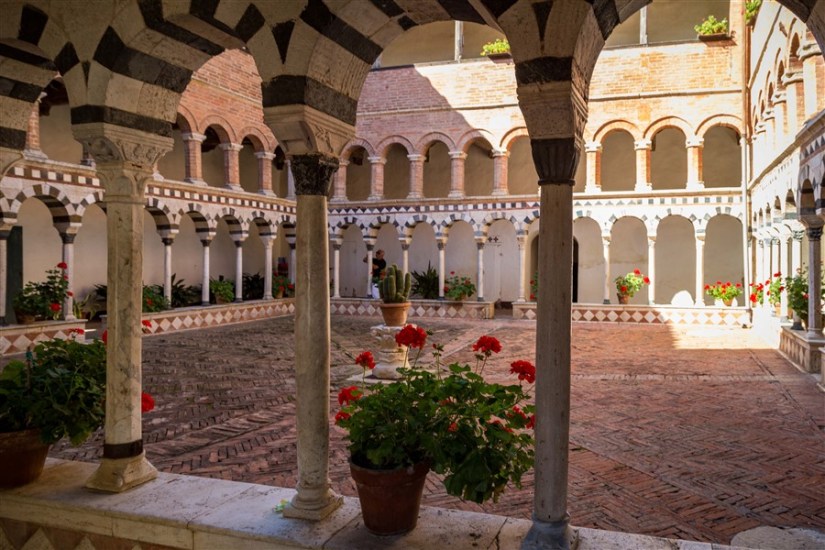
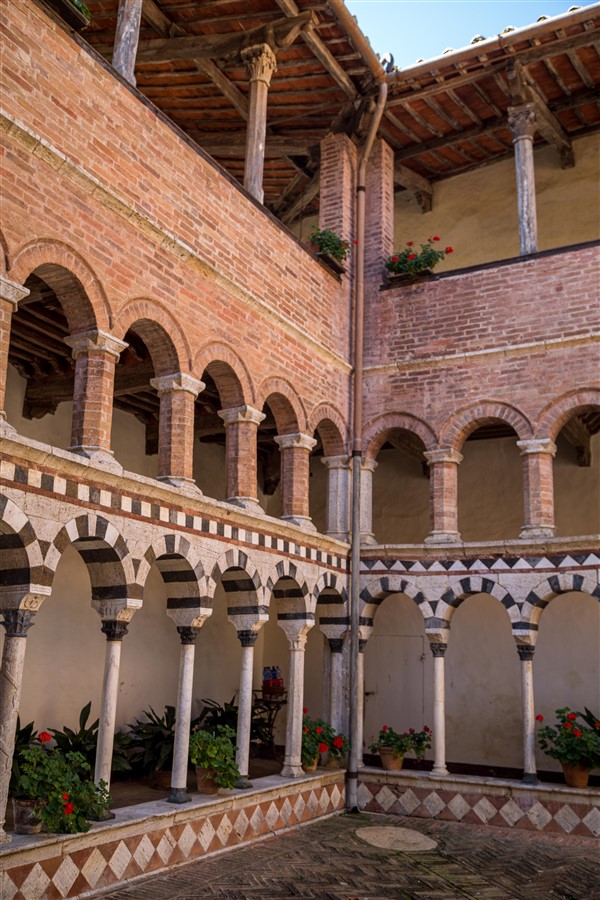
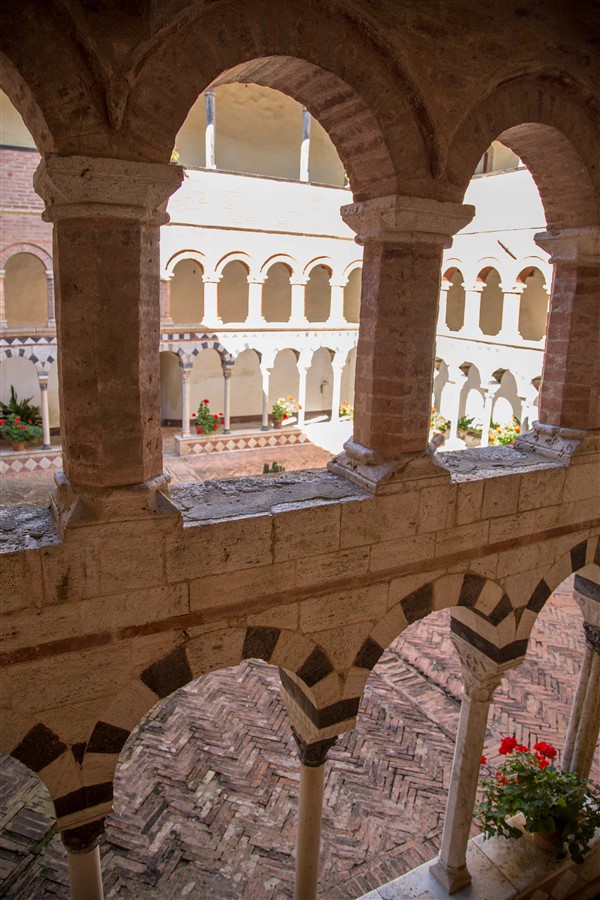
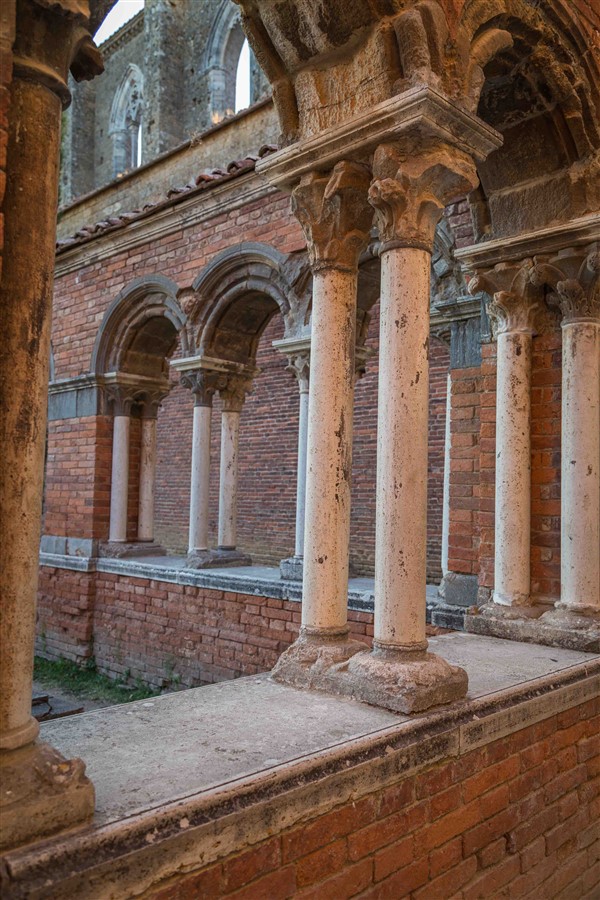
The cloister had loggias on three levels, each built about a century apart starting ~1200 but, uniquely, maintaining the original Romanesque style. The first level is constructed of black and white marble, the second of brick and the third of wood. The columns of the first and second level are offset; the floor of the quadrangle is brick laid in a parquet pattern.
The capitals on the lower level are simply but elegantly carved, each one different, with depictions of animals, symbols and local life.
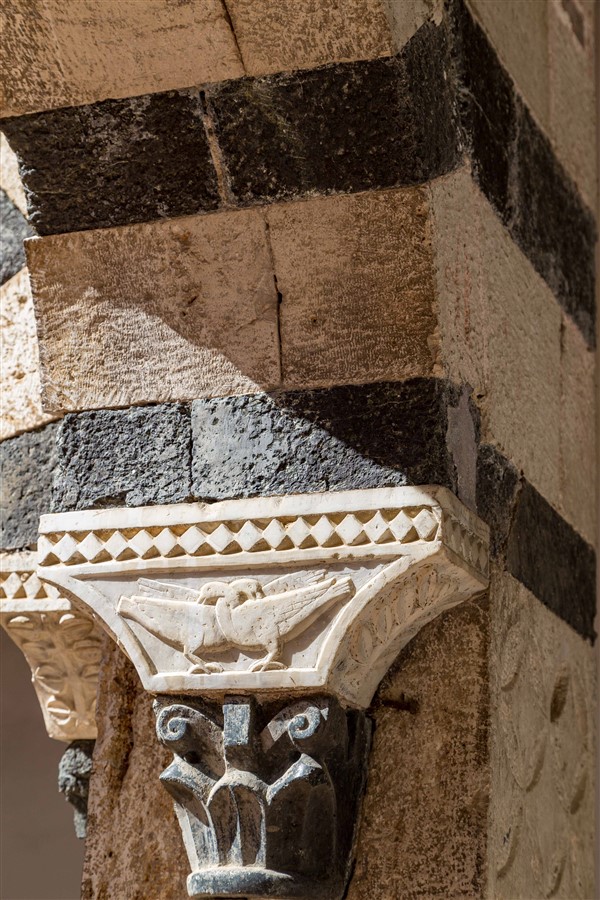

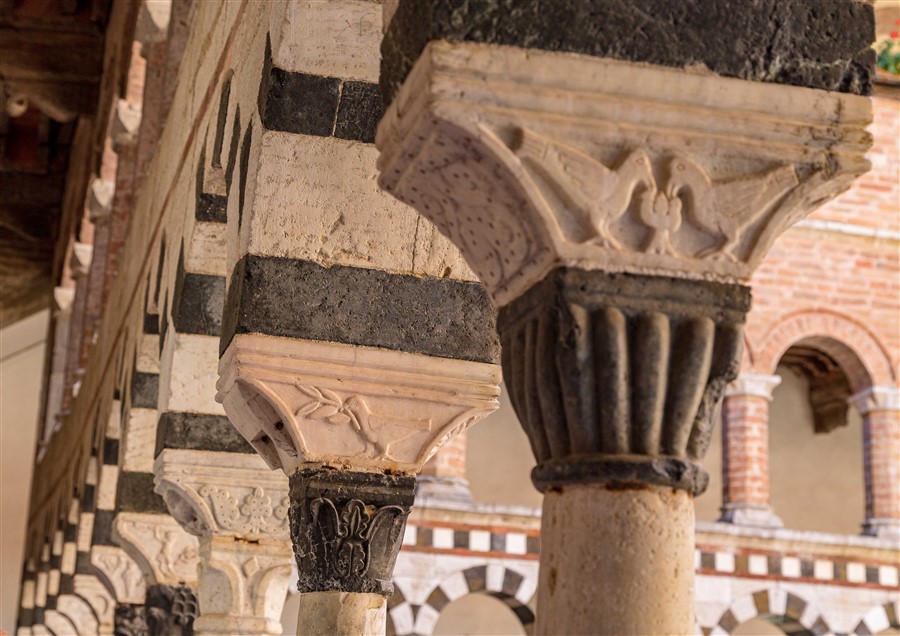
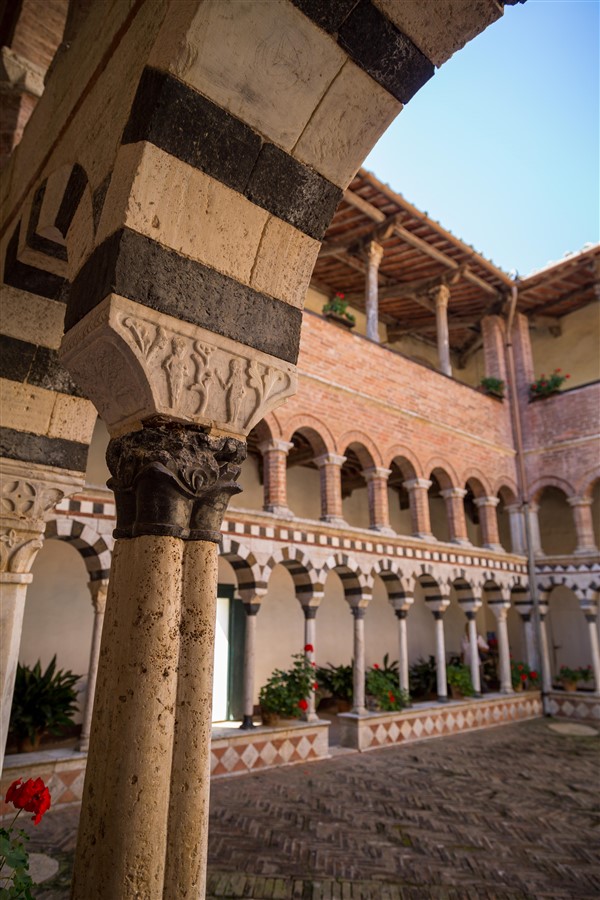

The cloister at Torri is one of the best kept secrets of Tuscany and may continue to be since it is available to the public on a very limited basis. The entire complex is privately owned having somehow escaped the return of previously secularized church property to the Vatican in the late 19th C. If you found these images as fascinating as I found this exceptional place, you can see many more here.
 Jconcetta's Journeys